Bench-tested dock repairs for DJI, Autel and Parrot fleets

Drone charging hub repair Houston TX done right the first time

When your charging hub stops recognizing batteries, Drone charging hub repair Houston TX gets you flying again without buying a new dock. We bench-test every port, replace fried contacts and rebuild power boards for DJI, Autel Robotics and Parrot chargers. Whether you fly commercially under FAA Part 107 or run a weekend Skydio, our techs in Harris County diagnose the fault the same day you drop it off.

↗
Fast online booking

Request service today

Tell us what is happening. Our local team will confirm your visit shortly.

No spam. No obligation. Just practical help.
Thanks — we'll call shortly to confirm your visit.
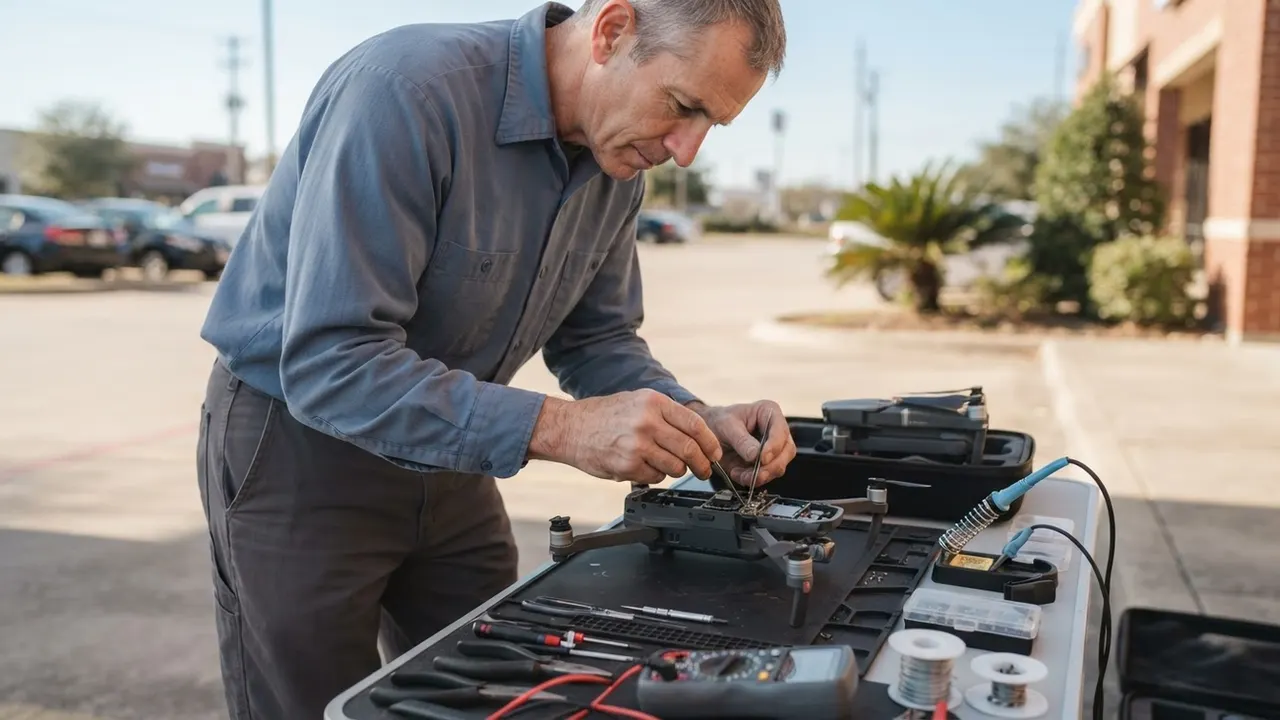
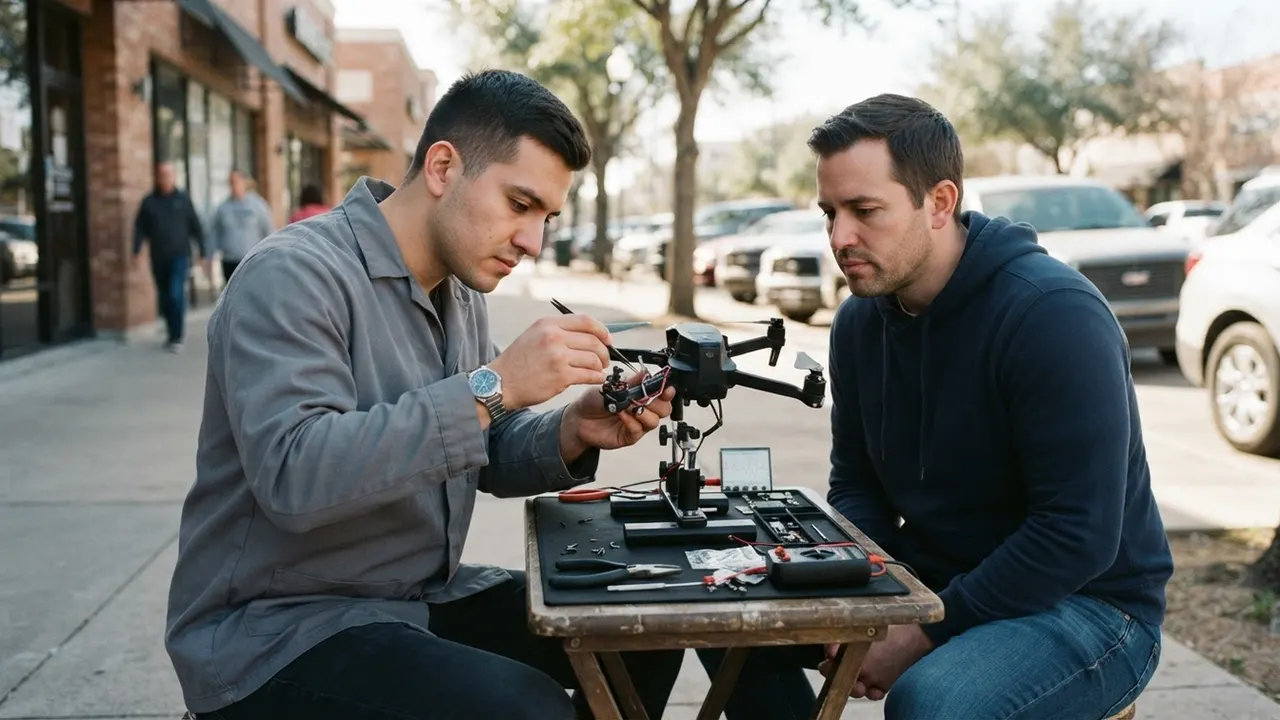
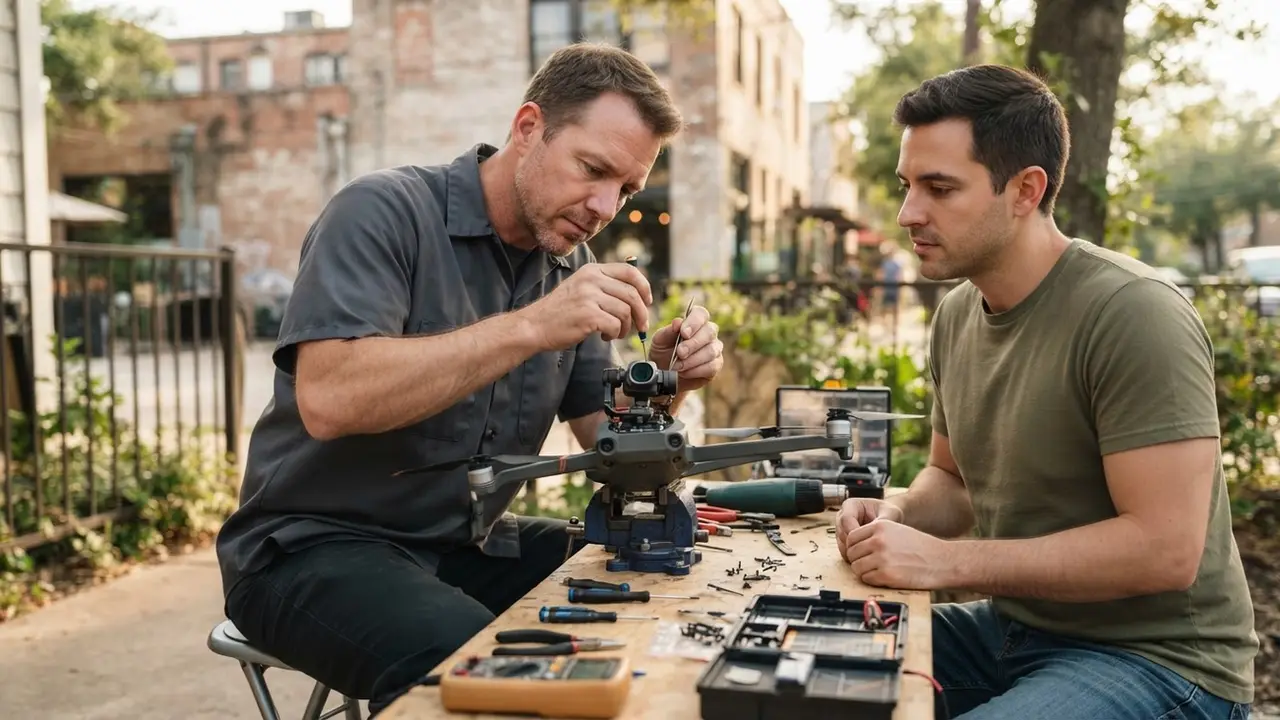
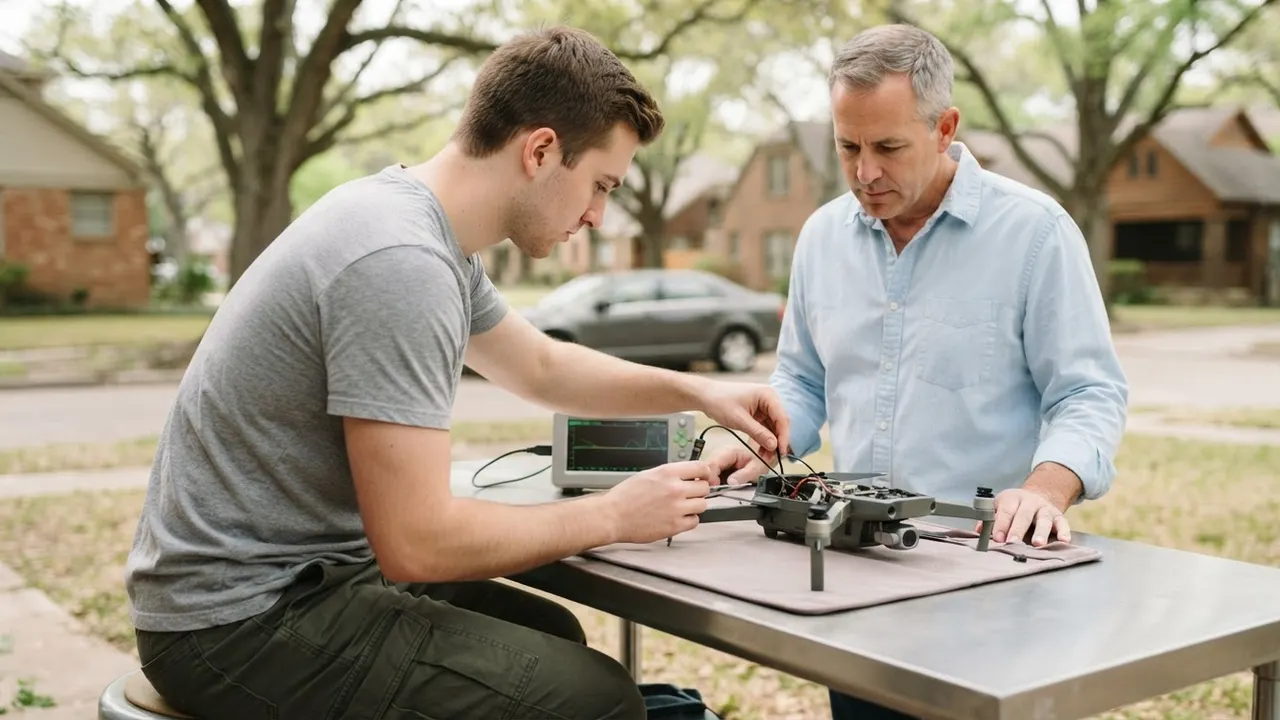
Drone repair in Houston : Drone repair professional inspecting the work area before starting
Careful work. Honest options.
About this service

What Drone charging hub repair Houston TX actually involves

Drone charging hub repair Houston TX is the bench-level service that restores multi-battery charging docks to full output after contact corrosion, board failure or firmware lockouts. A hub is more than a plastic tray: it holds a power supply, per-port regulators, temperature sensors and a control chip that talks to each battery. When one port dies, the rest often limp along at reduced amperage, which is why a hub that 'still works' can quietly cook your LiPo packs. We strip the unit, test every rail with a multimeter and oscilloscope, then repair or replace what failed.

Houston summers push charging hubs hard. Garage heat above 100 degrees Fahrenheit accelerates capacitor aging, and the humidity along the Gulf Coast corrodes the pogo pins that contact your battery terminals. We see this most in DJI and Autel docks stored in non-climate-controlled shops around the Energy Corridor and Clear Lake. If your hub flashes a red LED, refuses to charge one bay or shuts down mid-cycle, that is usually a fixable board fault, not a dead unit. Same day drone charging hub repair Houston TX keeps your fleet on schedule.

  • ✓ Same-day turnaround
  • ✓ Every port load-tested
  • ✓ Genuine-spec components
  • ✓ Fleet-friendly scheduling
What's included

What our charging hub repair covers

Every job starts with a full teardown and diagnostic. From there we repair what failed and verify the whole unit, not just the broken bay. If we find something outside the original quote, we call before doing the work.

✓

Full board diagnostic

Multimeter and oscilloscope testing on every voltage rail, plus a visual inspection for corrosion, burn marks and swollen capacitors. You get a written summary of what failed and why.

✓

Pogo pin and contact service

Corroded or pitted contacts get replaced with OEM-spec pins. We clean the surrounding housing and apply a corrosion inhibitor that holds up to Houston humidity.

✓

Regulator and fuse replacement

Failed voltage regulators and thermal fuses are swapped with matched components. We verify output at each port under a real battery load, not a dummy resistor.

✓

Load and thermal testing

Every port runs a full charge cycle while a thermal imaging camera monitors the board. Ports running hot or low get reworked before the unit leaves the bench.

✓

Housing and cable check

Cracked housings, frayed power cables and loose barrel connectors get repaired or replaced. A bad cable can mimic a dead port, so we test the whole charging chain.

✓

90-day workmanship warranty

Parts and labor we touched are covered for 90 days. If the same fault returns, bring it back and we will make it right at no charge.

How it works

How our charging hub repair process works

01

Intake and symptom check

You tell us what the hub is doing: dead port, red LED, buzzing, shutting off mid-charge. We log the model, serial number and battery types you run. Takes about ten minutes at the counter, and you get a written ticket with a job number before you leave.

02

Bench teardown

We open the housing, photograph the board and inspect for corrosion, burn marks and swollen capacitors. A multimeter and oscilloscope check each rail for voltage sag. This is where we find the difference between a $40 contact fix and a $150 board rebuild, usually within 90 minutes.

03

Repair or component swap

Corroded pogo pins get replaced, cracked solder joints get reflowed, failed regulators get swapped. If the control chip is dead, we pull a matching board from our parts stock. Most jobs finish the same day; rare board sourcing adds 24 to 48 hours.

04

Load and thermal test

Every port runs a full charge cycle with a known-good battery while a thermal imaging camera watches the board. Any port that runs hotter than 140 degrees Fahrenheit or drops below rated amperage goes back on the bench. This step takes 45 to 60 minutes.

05

Pickup and handoff

We walk you through what failed, what we replaced and how to store the hub to avoid a repeat. You get the old parts if you want them. Pay at pickup, and the 90-day workmanship warranty starts that day.

Tools & methods

Tools and methods on our bench

Purpose-built equipment, used by trained technicians — so the job is done accurately the first time.

Oscilloscope

Traces voltage ripple and signal integrity on the hub control board. Catches failing regulators that a simple voltage check would miss.

Multimeter

Measures voltage and amperage at every port under load. The first tool on any hub, and the one that confirms whether a repair actually worked.

Thermal imaging camera

Finds hot components during a full charge cycle. A port running 20 degrees hotter than its neighbours is a failure waiting to happen.

Soldering station

Temperature-controlled rework on regulators, pogo pins and board joints. Clean joints that survive vibration in a truck bed or a hard landing.

Compressed air blower

Clears dust and debris from housings and fan paths before reassembly. Dust buildup is a common cause of overheating in Houston garages.

Battery charger test rig

Known-good reference charger used to isolate whether a fault lives in the hub or in the battery. Saves customers from paying for the wrong repair.

Real results

Before and after.

Four-port DJI dock, two dead bays

Before

A commercial inspector in the Energy Corridor had two bays refusing to charge and two more running at reduced amperage. He was rotating three batteries through two working ports and losing an hour of flight time every day.

After

We replaced corroded pogo pins on the dead bays, swapped a failed regulator and load-tested all four ports. Charging time dropped from 95 minutes to 58 minutes per battery, and all four bays now hit full rated amperage.

Autel hub shutting down mid-cycle

Before

A Bellaire realtor's hub flashed red and cut out after ten minutes, every time. Two batteries had already swollen and been retired, and she was charging one pack at a time on a backup wall charger.

After

Bench teardown found a tripped thermal fuse and heat damage on the board from garage storage. We replaced the fuse, reflowed the joints and verified three full cycles with no shutdown. Charge amperage came back to spec on all ports.

Six-dock survey fleet, batch repair

Before

A Pearland survey crew had six docks with intermittent faults, two completely dead. LiDAR batteries were not charging reliably, and the crew was losing flight days to power problems.

After

We batched the set, logged serial numbers, repaired the two dead units and serviced the other four. Five docks returned in two days, the sixth by Thursday after a board swap. Zero cancelled flight days that week.

Problems we solve

Charging hub problems we fix every week

Most hub failures fall into a handful of categories. Here is what we see most in Houston and how we handle each one.

Ask a pro →
01

One or more ports stopped charging

We test each port individually under load. Most single-port failures are a corroded pogo pin or a blown regulator, both of which we replace the same day. If the fault is on the control board, we swap the board and retest every bay.

↗
02

Hub shuts off mid-charge

Mid-cycle shutdowns usually mean a thermal fuse tripped or a regulator is overheating. We run the hub under full load with a thermal imaging camera to find the hot component, replace it, then run three complete cycles before pickup.

↗
03

Red LED or error code on the dock

We test your batteries on a known-good charger and the hub with a known-good battery. That isolates the fault in minutes. Firmware lockouts get cleared on the bench; hardware faults get repaired. You leave knowing exactly which component failed.

↗
04

Battery swelling after dock use

We measure actual charge amperage at each port against the battery spec. Ports running high get recalibrated or the regulator gets replaced. We also inspect your existing packs and flag any that are already swelling so you can retire them safely.

↗
Transparent pricing

What charging hub repair costs in 2026

$75 - $220 depending on scope

Typical 2026 pricing for drone charging dock repair Houston runs $75 to $220. Contact cleaning and pogo pin replacement sit at the low end, around $75 to $110. Regulator or fuse replacement lands in the middle, roughly $120 to $170. Full board rebuilds or control chip swaps push toward $220, and if we need to source a rare board there may be a small parts markup. Diagnostics are included when you approve the repair. We quote before we start, and you approve the number before any work happens.

A new OEM dock runs $180 to $400 and often ships in a week. Bench repair keeps your existing unit, restores full rated output on every port and carries a 90-day workmanship warranty. For most Houston pilots, that is a third of the cost of replacing hardware that failed for a fixable reason.

01Number of failed ports

One dead bay is usually a contact or regulator fix at the low end. Three or four failed bays often point to a board-level fault, which takes longer and costs more to repair.

03Parts availability

Common DJI and Autel parts are on our shelf, so no markup and no delay. Rare or discontinued boards get sourced, which adds 24 to 48 hours and sometimes a small parts premium.

04Rush turnaround

Standard turnaround is same day for most jobs. If you need a two-hour rush because a job is booked, we can prioritize the unit for a modest rush fee, subject to parts being in stock.

Proof you can check

Credentials and reviews

✓
Manufacturer Authorized Repair CertificationDJI and Autel Robotics authorized service programs
✓
FAA Part 107 Remote Pilot CertificateFederal Aviation Administration
✓
OSHA Safety Compliance TrainingOccupational Safety and Health Administration
✓
ISO 9001 Quality Management AlignmentInternational Organization for Standardization
Customer reviews

What Houston pilots say

★★★★★
“Two bays on my DJI dock quit mid-week and I had roof inspections booked. Dropped it at 9 a.m., picked it up at 4. They replaced the pogo pins and reflowed a regulator. Charging back to full amperage on all four ports. Cost me $140 instead of $350 for a new hub.”
MT

Marcus T.Commercial Pilot, Energy Corridor

✓ Verified
★★★★★
“We run six docks for LiDAR work. They took the whole batch Monday and had five back Wednesday, one needed a board they sourced by Thursday. Serial numbers logged, old parts bagged. That is how you handle a commercial account.”
DK

Danny K.Survey Crew Lead, Pearland

✓ Verified
Good questions

Frequently Asked Questions

+1 281 555 4468 →

Most charging hub repairs in Houston TX run $75 to $220, with a typical job landing around $130. Contact cleaning and pogo pin replacement sit at the low end; full board rebuilds or control chip swaps push toward the top. Diagnostics are included when you approve the repair. If the hub needs a part we do not stock, we quote it before ordering.

Our bench serves all of Harris County, with drop-off points convenient to the Galleria Area, Spring Branch and Clear Lake. Pilots from Bellaire, the Heights and Pasadena use us regularly. Call +1 281 555 4468 and we will confirm the closest handoff and the current turnaround, usually same day for standard hub faults.

The three most common causes we see are corroded pogo pins from Gulf Coast humidity, a failed voltage regulator after heat exposure, and a firmware lockout that stops the hub from handshaking with newer batteries. A multimeter check tells us which one within minutes. Corrosion and regulator faults are repairable; lockouts usually clear with a board reset.

You can swap a fuse or clean contacts with isopropyl alcohol and a soft brush, and that fixes maybe one in five cases. Anything involving the board, regulators or pogo pin replacement needs a soldering station and a load tester. Charging hardware holds stored energy, so a wrong move can fry a $120 LiPo or start a fire. Bring it in if the simple fixes do not work.

Ready when you are

Get Drone charging hub repair Houston TX today

Bring your dock in before the next job and we will have it tested and repaired the same day in most cases. Call +1 281 555 4468, tell us the model and the symptom, and we will hold a bench slot. Every repair carries a 90-day workmanship warranty.

Book a Repair +1 281 555 4468 →
Request an appointment

Get your drone back in the air

Call us at +1 281 555 4468 or stop by the shop. We are open Monday through Friday, 8 a.m. to 6 p.m., and we answer emergency calls 24/7 for commercial operators. Most diagnostics are done the same day you drop off.

Call anytime+1 281 555 4468Email the office[email protected]
Office hoursOpen 24 hours · 7 days a week
Request received — our team will be in touch shortly.
Tap to call+1 281 555 4468