Grinding or clicking motor
We press out the worn bearing, inspect the stator for damage, and replace the bearing with a sealed unit rated for high-temperature operation. The motor is balanced and amp-tested before it goes back on your aircraft.
When a brushless motor seizes, overheats, or starts grinding mid-flight, Drone motor repair Houston TX is the fastest way back to the air. We service DJI, Autel Robotics, Parrot, and custom-built airframes for commercial Part 107 operators, real estate photographers, and weekend pilots from Katy to Clear Lake. Our bench techs diagnose ESC faults, bearing wear, and crash damage with a multimeter and oscilloscope before we ever quote a replacement. Most jobs are done in 24 to 48 hours.
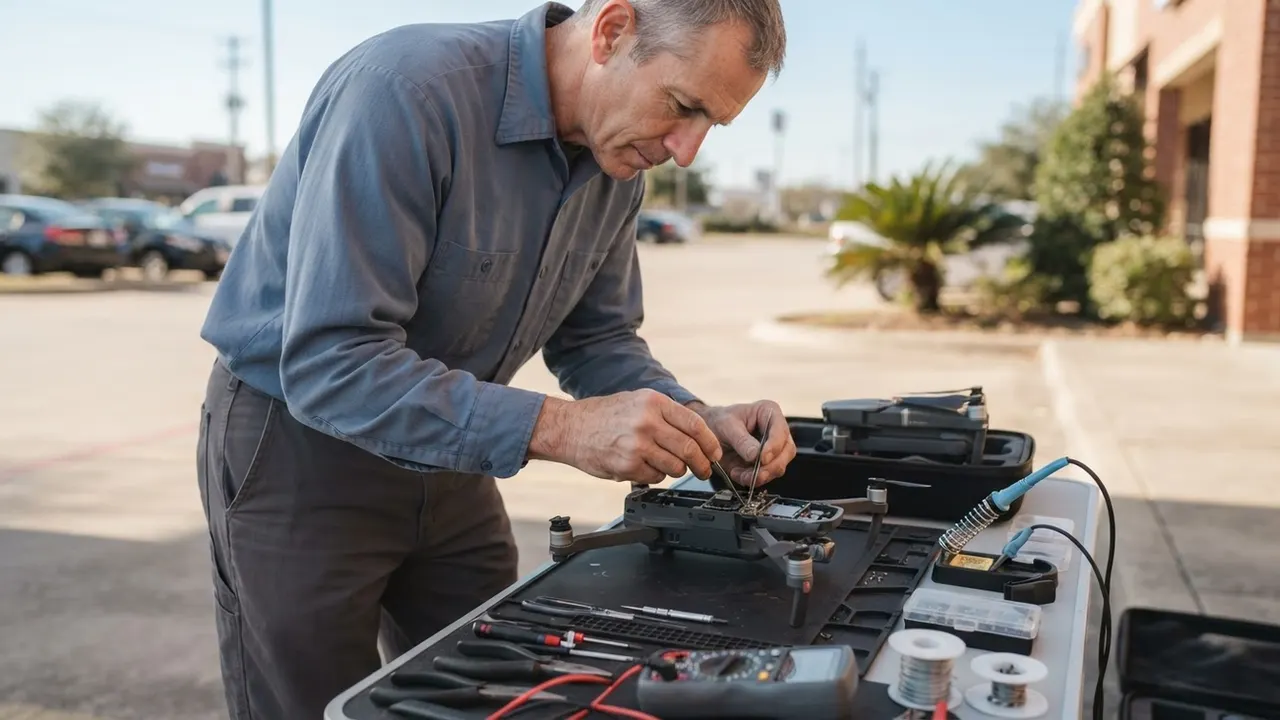
Drone motor repair Houston TX is the bench-level service that restores brushless motors, ESCs, and the surrounding power train to factory spec after a failure. We pull the motor can, inspect the stator windings for shorts, check bearing play by hand, and test the ESC signal with an oscilloscope. If the bearings are dry or the magnets have lost strength, we rebuild. If the windings are scorched, we replace. Every motor goes back on the frame with fresh threadlocker and a balanced propeller.
Houston heat and humidity punish drone motors harder than most owners expect. A 95-degree afternoon over the Energy Corridor can push motor temps past 140 degrees Fahrenheit, and that cooks bearing grease fast. We see a steady stream of DJI Inspire and Mavic units with intermittent motor failure after summer mapping runs. If you need drone engine repair Houston pilots trust, bring it in before a $40 bearing turns into a $400 arm replacement.
Every motor repair starts with a full bench diagnostic and ends with a test flight. We document each step and give you the data. Here is what is covered in a standard repair, and what we handle as an add-on when the diagnosis calls for it.
We test all four motors, not just the one you think is bad. A multimeter checks winding resistance, an oscilloscope reads ESC signal, and a thermal imaging camera spots a motor running hot. You get a written report with photos and amp draw numbers.
Bad bearings get pressed out and replaced. Scorched windings mean a new motor can. We use OEM parts for DJI and Autel Robotics, and iFlight or BetaFPV upgrades for custom builds. Every motor is balanced before it goes back on the frame.
A failing ESC kills motors. We inspect every ESC for burn marks, test signal timing, and replace any board showing heat damage. Solder joints are redone with a temperature-controlled soldering station for a reliable connection.
Unbalanced props wear bearings and cause vibration that damages sensors. We balance every propeller on a balancer and check blade tracking. This is included with every motor repair because it protects the work we just did.
We hover the aircraft for three to five minutes and log motor temps, current draw, and vibration. You get that log with your invoice. If any motor pulls more than 10 percent above its siblings, it goes back to the bench.
You drop the aircraft at our Houston bench or ship it in. We photograph every arm, motor, and propeller before touching anything. You get those photos by text or email the same day. This protects both of us and gives you a baseline for insurance claims.
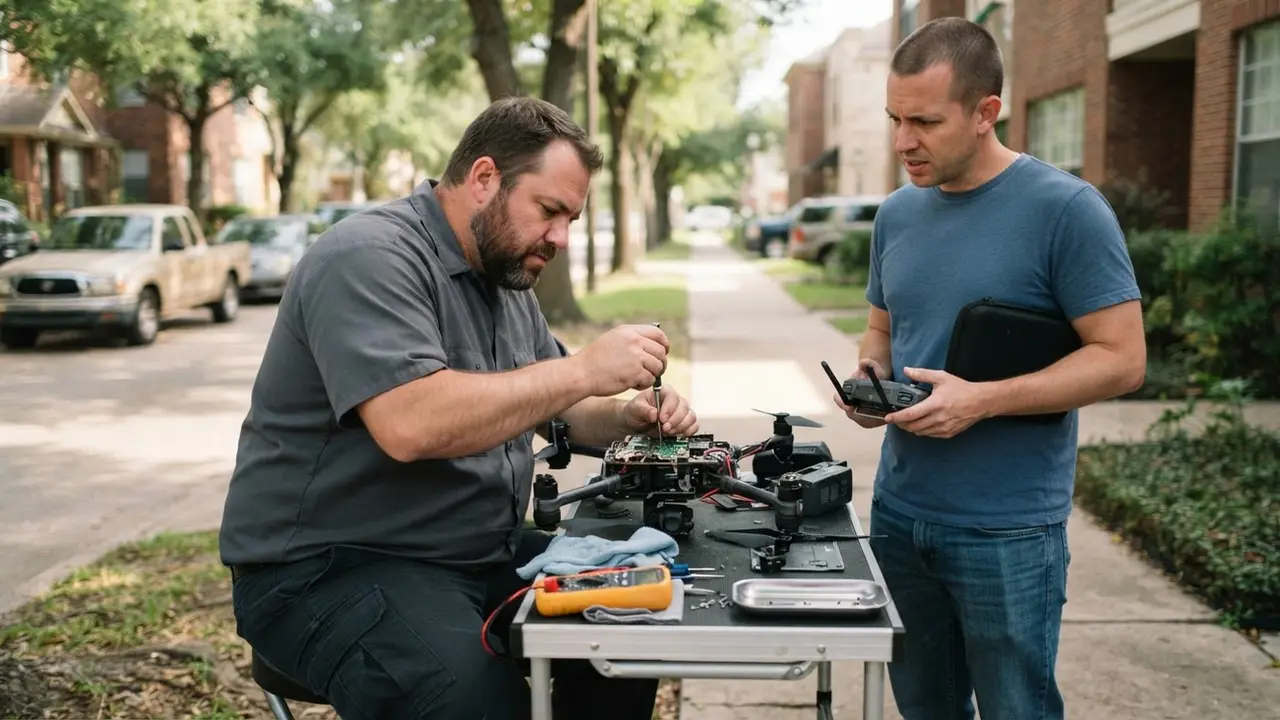
A tech spins each motor by hand, checks for bearing roughness, and runs a multimeter across the ESC leads. We use an oscilloscope to look at signal waveform and a thermal imaging camera to spot a motor running hot. This takes 30 to 45 minutes and tells us exactly what failed.
We pull the bad motor, clean the mount, and inspect the frame for crash damage or carbon fiber cracks. Bearings get pressed, windings get replaced, or the whole can gets swapped. Solder joints are redone with a temperature-controlled soldering station and leaded solder for reliability.
The new or rebuilt motor goes back on with fresh hardware. We mount a propeller and spin it on a balancer, then check amp draw at idle, hover, and full throttle. Any motor pulling more than 10 percent above its siblings gets pulled and rechecked.
We fly the aircraft in a controlled hover for three to five minutes, watching motor temps and current draw on the telemetry log. You get that log with your invoice. If anything looks off, it goes back to the bench before you ever see it.
Purpose-built equipment, used by trained technicians — so the job is done accurately the first time.
Reads the ESC signal waveform to catch timing faults and intermittent power delivery that a multimeter cannot see. This is how we diagnose a motor that tests fine on the bench but fails in the air.
Spots a motor running hotter than its siblings during a hover test. Houston summer heat makes thermal testing essential, because a motor that passes at 70 degrees can fail at 95.
Balances every propeller we install. Vibration from an unbalanced prop wears motor bearings and confuses the IMU, so this step protects the repair and the sensors.
Temperature-controlled soldering for ESC and motor leads. We use leaded solder on power joints for reliability and reflow every connection we touch during a repair.
Checks winding resistance and continuity on every motor. A shorted winding shows up here before it burns an ESC, which saves you the cost of a second repair.
Precision drivers for frame and motor hardware. We use the correct size for every fastener so we do not strip the heads on your carbon fiber frame or motor mounts.
Clears dust and debris from motor cans and ESC boards. Houston pollen and dust build up inside motors and cause overheating, so we clean every unit that comes through.
A commercial roof inspector brought in a DJI Mavic 3 Enterprise with a grinding rear motor. The aircraft had 340 flights logged and the bearing was dry. Amp draw on that motor was 18 percent above the other three.
We replaced the bearing with a sealed high-temp unit, balanced the propeller, and rechecked amp draw. All four motors now read within 4 percent of each other. The aircraft passed a five-minute hover test at 96 degrees ambient.
An agricultural operator near Katy had an Agras motor fail mid-season. The motor was seized and the ESC showed heat damage. The aircraft was losing flight time and the operator was renting a backup unit at $400 per day.
We swapped the failed motor with an OEM unit from stock, replaced the damaged ESC, and test-flew the aircraft the same day. Flight time returned to 14 minutes per battery, matching the pre-failure spec.
A hobby pilot in Clear Lake crashed a custom FPV build into a tree. Two motors had bent shafts and the frame arm was cracked. The aircraft vibrated badly and the video feed was shaky.
We replaced the damaged motors with iFlight upgrades, repaired the carbon fiber arm, and balanced the propellers. Vibration dropped enough that the pilot's onboard video was clean at full throttle.
Brushless motors fail in predictable ways, and Houston heat makes all of them worse. Here are the issues we see most often and what happens if you ignore them.
Ask a pro →We press out the worn bearing, inspect the stator for damage, and replace the bearing with a sealed unit rated for high-temperature operation. The motor is balanced and amp-tested before it goes back on your aircraft.
We test the motor under load with a thermal imaging camera, check for a dragging bearing or shorted winding, and verify the ESC is delivering clean power. If the motor is undersized for your payload, we recommend an upgrade.
We trace the signal from the flight controller to the ESC to the motor with an oscilloscope. Most intermittent faults are a cracked solder joint or a failing ESC, both of which we repair on the bench.
We straighten or replace the arm, recheck motor alignment, and balance the propeller. If the carbon fiber frame is cracked, we repair or replace that section so the motor sits true.
$150 - $850 depending on scope
Typical 2026 pricing for drone motor repair Houston TX runs $150 to $350 for a single motor, including parts and labor. A full set of four motors with ESC testing runs $450 to $850. Crash damage that needs frame or arm work adds $100 to $300. We diagnose first for $75, and that fee is credited toward the repair. You get a written quote with photos before we start, so there are no surprises when you pick up the aircraft.
You are paying for a bench diagnosis with an oscilloscope and thermal camera, OEM or upgrade parts, a balanced propeller, and a logged test flight. That process is why our motor repairs carry a 1-year workmanship warranty and why most pilots do not come back with the same problem.
A standard DJI Mavic motor costs less than a large Inspire or Agras motor. OEM parts for Autel Robotics and Skydio also vary. We stock common motors and quote the exact part number before we order anything.
One bad motor is a $150 to $350 repair. If a crash damaged two or more, the per-motor labor drops because we already have the aircraft open. A full set of four with ESC testing runs $450 to $850.
A failed ESC adds $80 to $200 to the job. If the flight controller was damaged, that adds $150 to $400 and requires a full recalibration. We test both during diagnostics so the quote is accurate.
Crash damage that bends an arm or cracks the carbon fiber frame adds $100 to $300. We repair the frame first, then align the motor, because a misaligned motor will fail again quickly.
“One of my Inspire 2 motors started grinding during a roof inspection off I-10. Houston Drone Repairs Pros had it on the bench that afternoon, found a bad bearing, and replaced it plus the ESC. I was back on the job two days later. The amp draw log they sent with the invoice was a nice touch.”
Marcus T.Part 107 Operator, Energy Corridor
✓ Verified“My Mavic 3 kept yawing right no matter how I trimmed it. They diagnosed a failing rear motor and a swollen LiPo battery in one visit. The drone motor repair Houston TX pricing was fair and they showed me the old parts. Flies straight now.”
Priya S.Real Estate Photographer, The Heights
✓ Verified“We run four Agras units and motor failures during spraying season cost us real money. These guys set up a maintenance schedule and now we swap motors before they fail. Turnaround is fast and the documentation keeps our Part 107 records clean.”
Danny R.Agricultural Drone Operator, Katy Area
✓ VerifiedMost single-motor repairs run $150 to $350 in 2026, including parts and labor. A full set of four motors with ESC testing runs $450 to $850. Crash damage that requires frame or arm work adds $100 to $300. We quote after bench diagnostics, so you know the number before we start.
Our bench serves all of Harris County, with drop-off points convenient to the Galleria Area, Energy Corridor, and Clear Lake. If you are in Katy, Sugar Land, or The Woodlands, you can ship the aircraft in. We text you tracking and photos the day it arrives.
Three signs point to a failing motor: a grinding or clicking sound when you spin the propeller by hand, one motor running noticeably hotter than the others after a flight, and intermittent power loss or a yaw drift you cannot trim out. Any of those means it is time for bench diagnostics.
You can replace a bolt-on motor if you have a hex driver set and a soldering station, but bearing replacement and winding repair need a press and an oscilloscope to verify. Most DIY motor swaps fail because the ESC was the real problem. We diagnose both for $75, credited toward the repair.
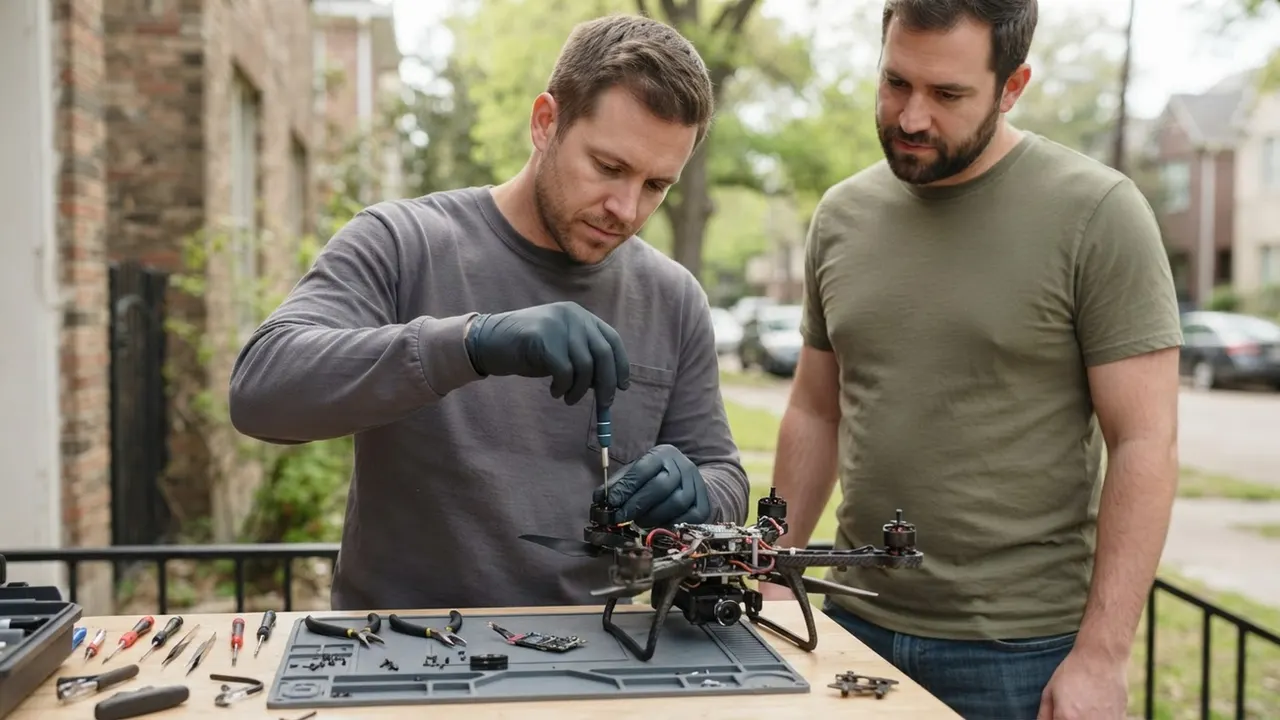 Drone RepairGeneral airframe and electronics repair for Houston pilots. If your motor failure came from a crash, we inspect the frame, gimbal, and flight controller at the same time so you are not making two trips to the bench.Explore →
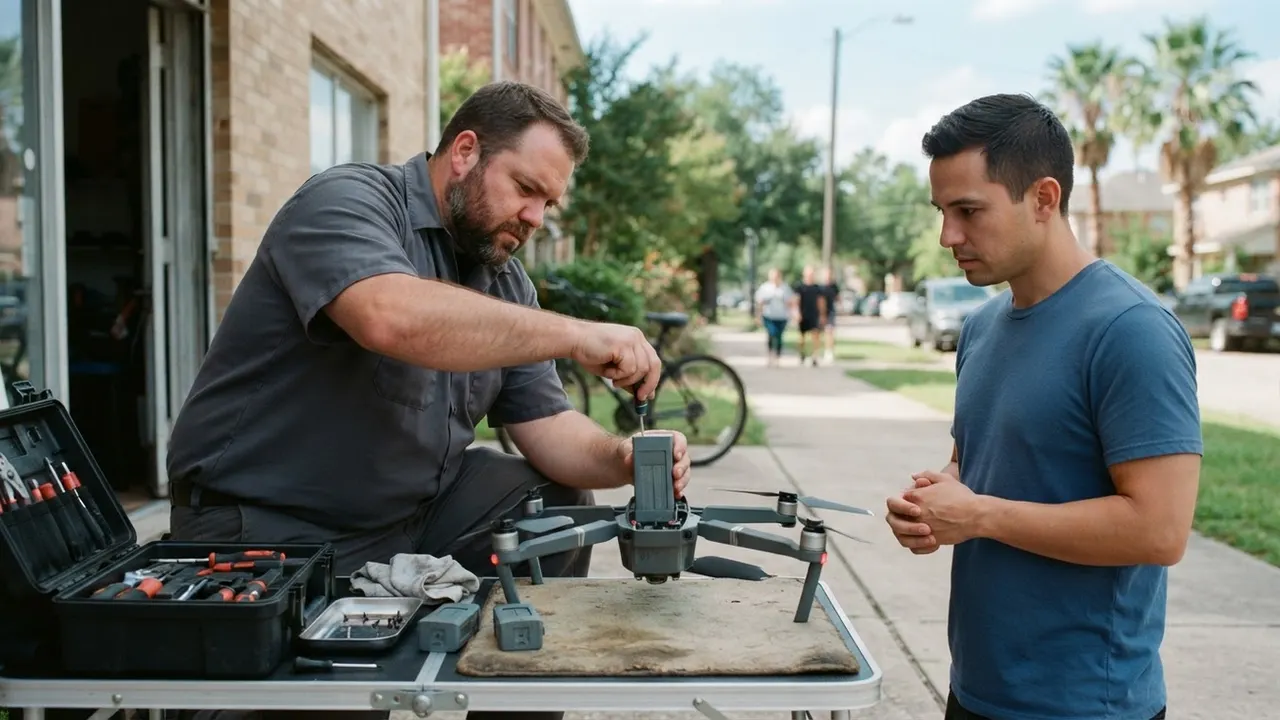 Drone Battery ReplacementSwollen LiPo batteries stress motors and ESCs. We test cell balance and internal resistance, then replace packs that are sagging under load. A fresh battery often fixes the overheating that looked like a motor problem.Explore →
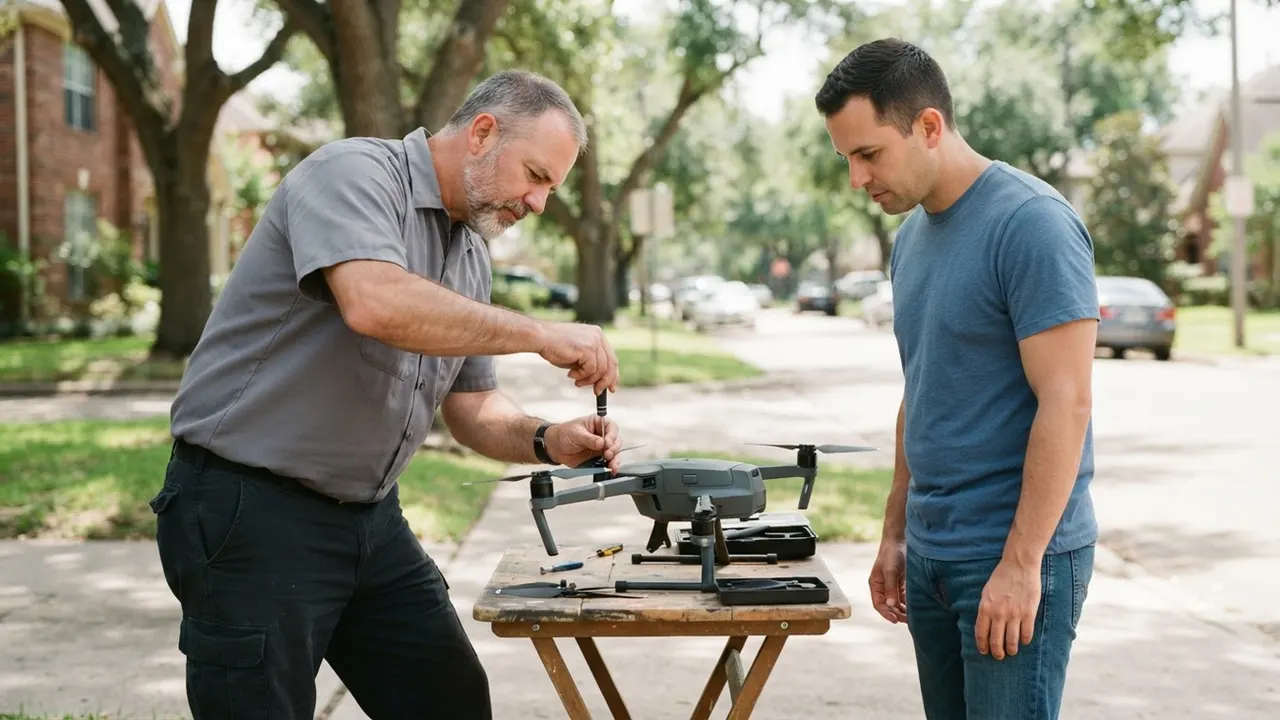 Drone Propeller ReplacementA bent or unbalanced propeller causes vibration that wears motor bearings fast. We balance every prop we install and check blade tracking. This is the cheapest way to protect the motors you just paid to repair.Explore →
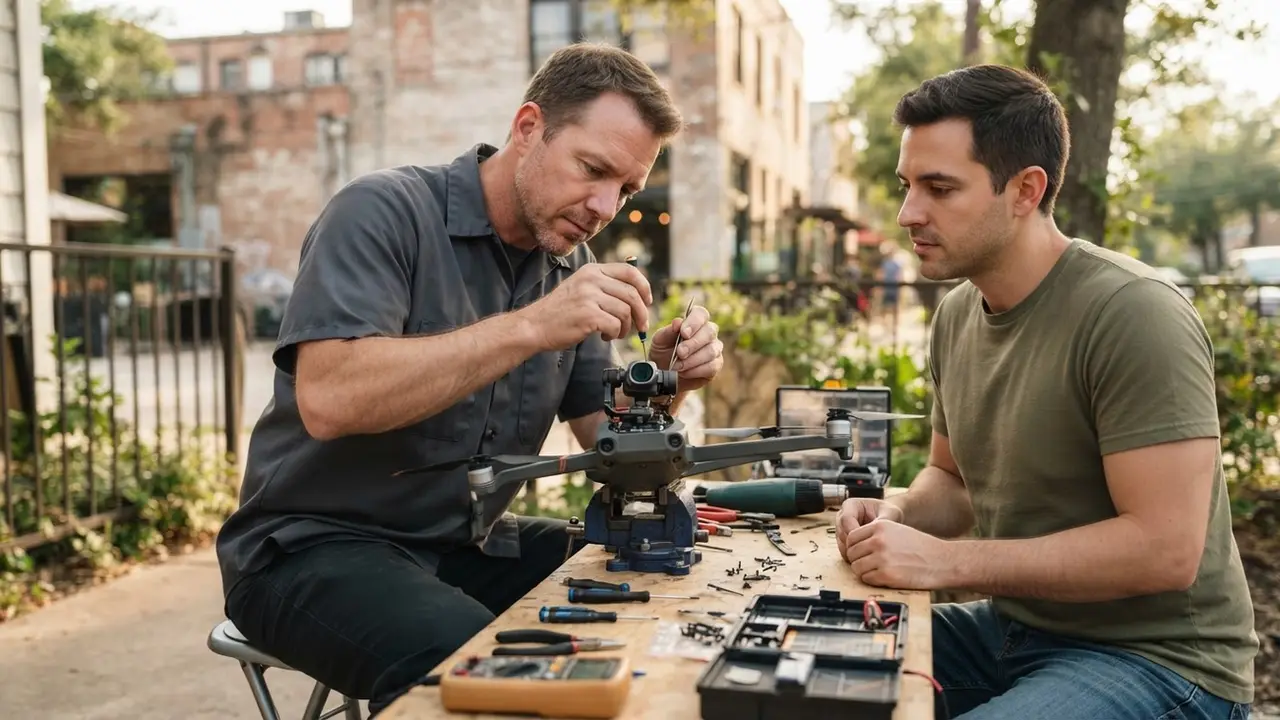 Drone Gimbal RepairCrash damage that kills a motor often tweaks the gimbal too. We straighten or replace gimbal arms, recalibrate the IMU, and test camera stabilization before the aircraft leaves the bench.Explore →
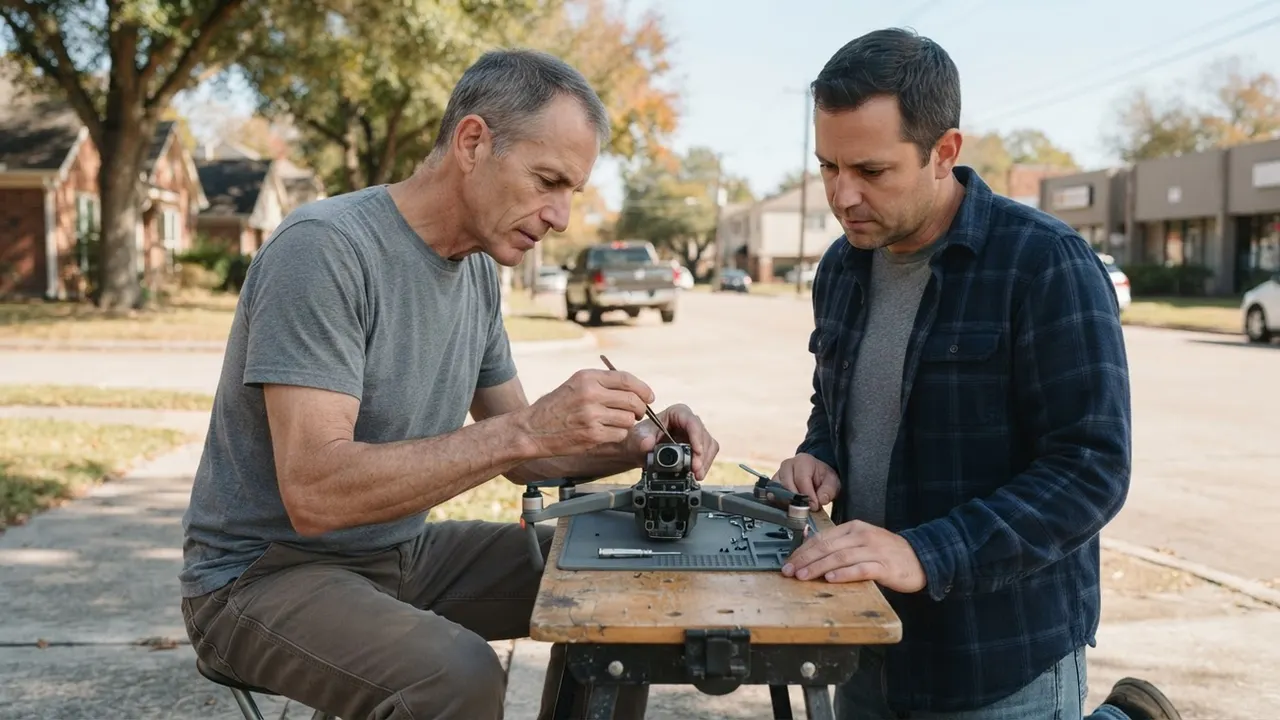 Drone Camera RepairCamera black screen or lens damage after a hard landing? We repair camera modules and ribbon cables on DJI and Autel Robotics gimbals. Motor and camera work can be combined in one bench visit.Explore →
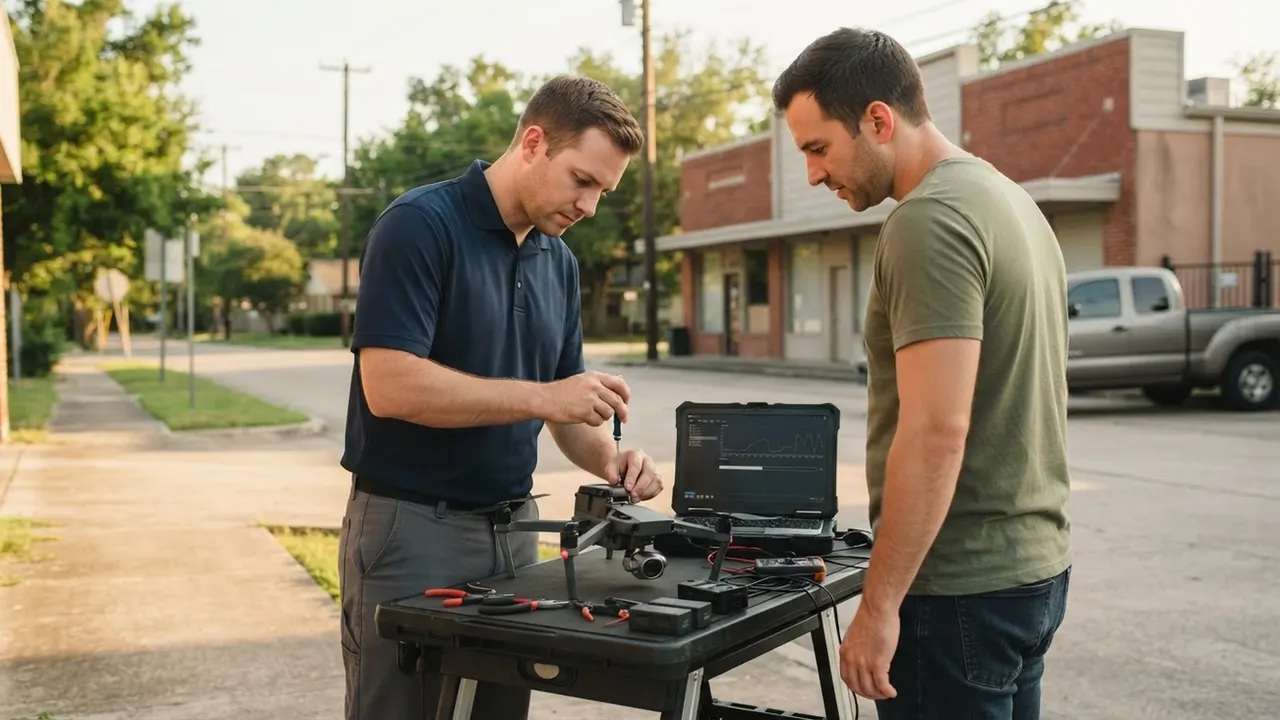 Drone Firmware UpdatesOutdated firmware can cause erratic motor behavior and ESC timing issues. We flash the latest manufacturer firmware and recalibrate the ESCs after a motor replacement so everything talks on the same protocol.Explore →
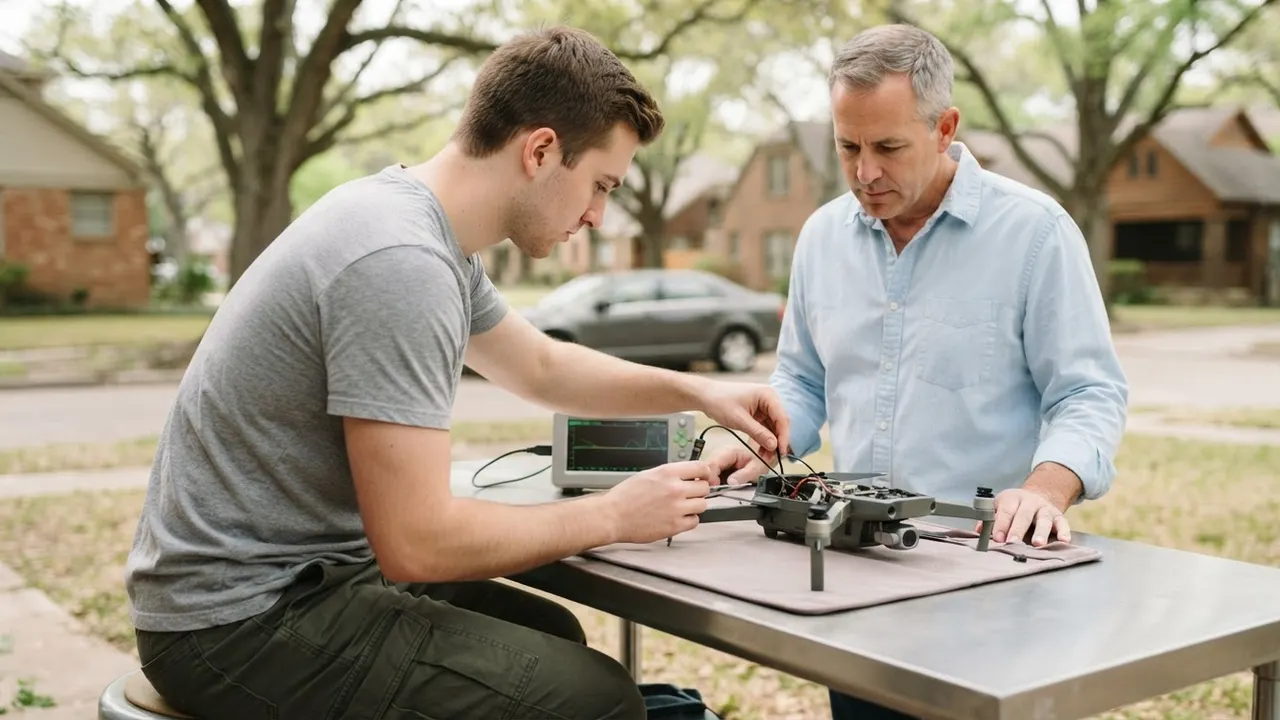 Drone Software RepairCompanion app crashes, waypoint errors, and flight log corruption get fixed here. If your motor repair included a flight controller swap, we reload and verify the software before test flight.Explore →
 Drone Water Damage RepairHouston humidity and bayou landings corrode motor windings and ESC boards. We strip, clean, and dry the power train, then replace any component showing corrosion before it shorts in flight.Explore →
Call +1 281 555 4468 or drop your aircraft at our Houston bench. We diagnose every motor with a multimeter and oscilloscope, quote the repair, and have most pilots flying again within 48 hours. Parts and labor warrantied for 1 year.
Book a Repair +1 281 555 4468 →Call us at +1 281 555 4468 or stop by the shop. We are open Monday through Friday, 8 a.m. to 6 p.m., and we answer emergency calls 24/7 for commercial operators. Most diagnostics are done the same day you drop off.