01
Intake and diagnostics
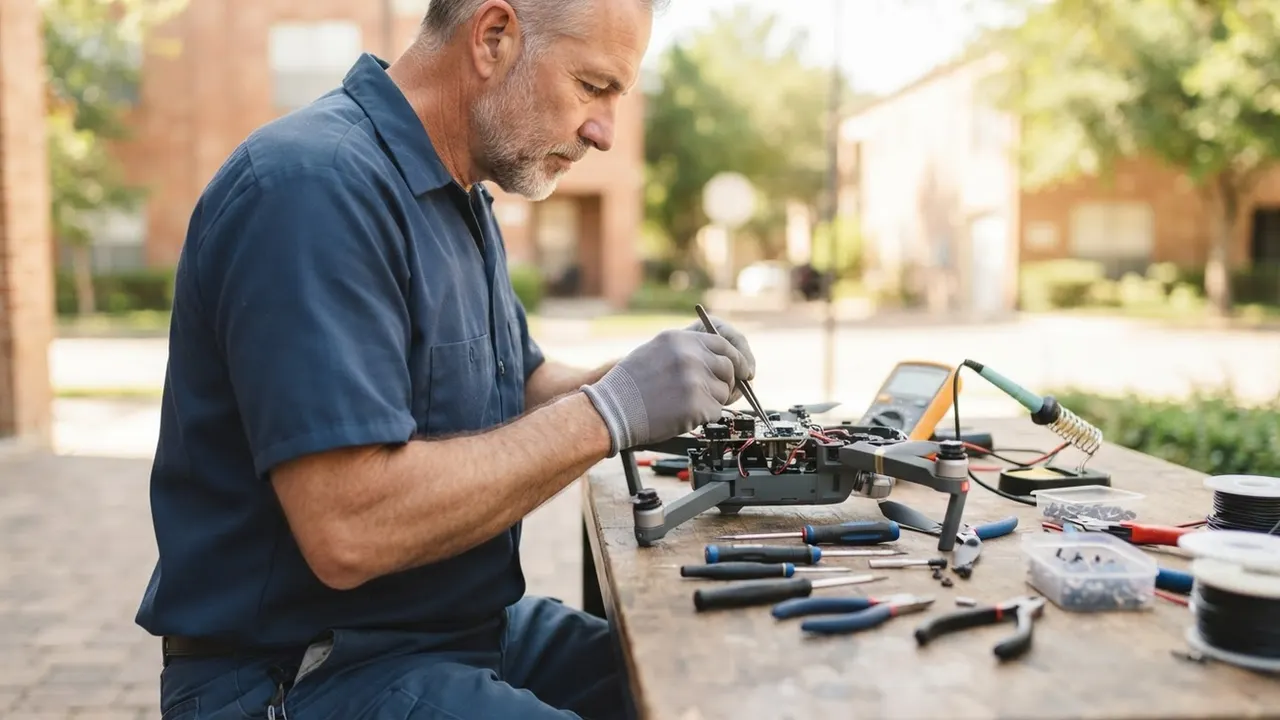
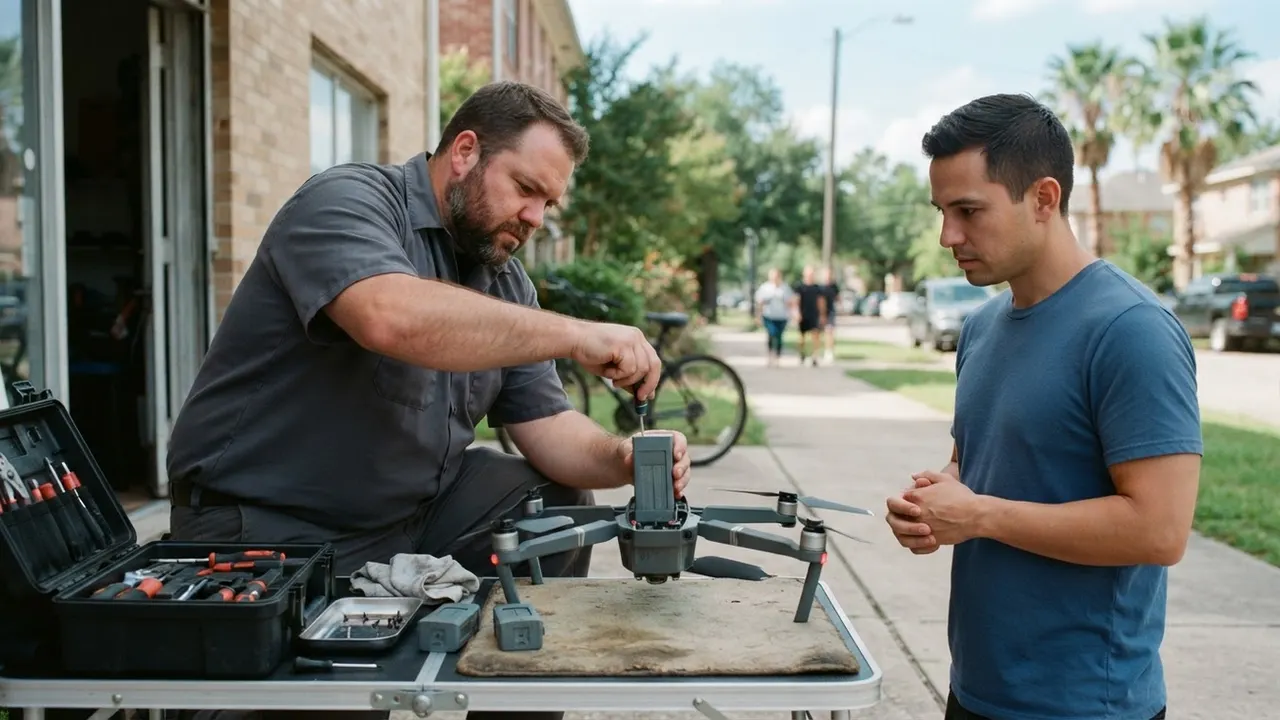
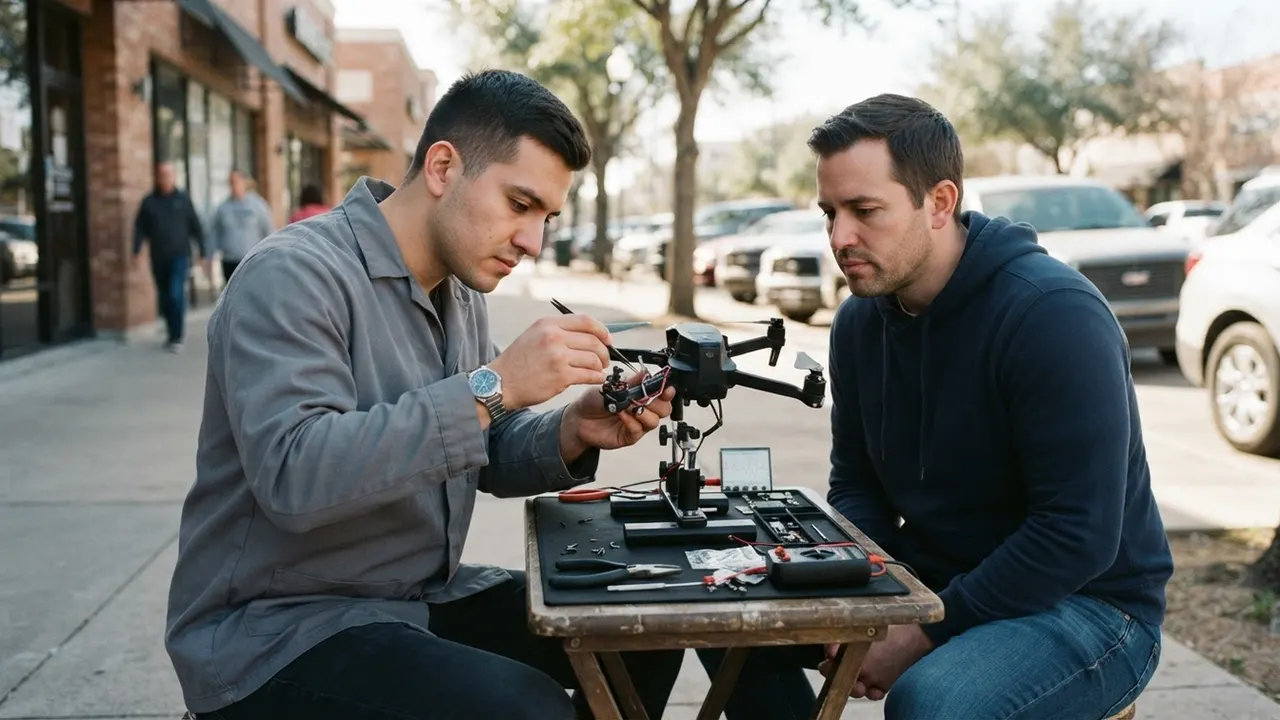
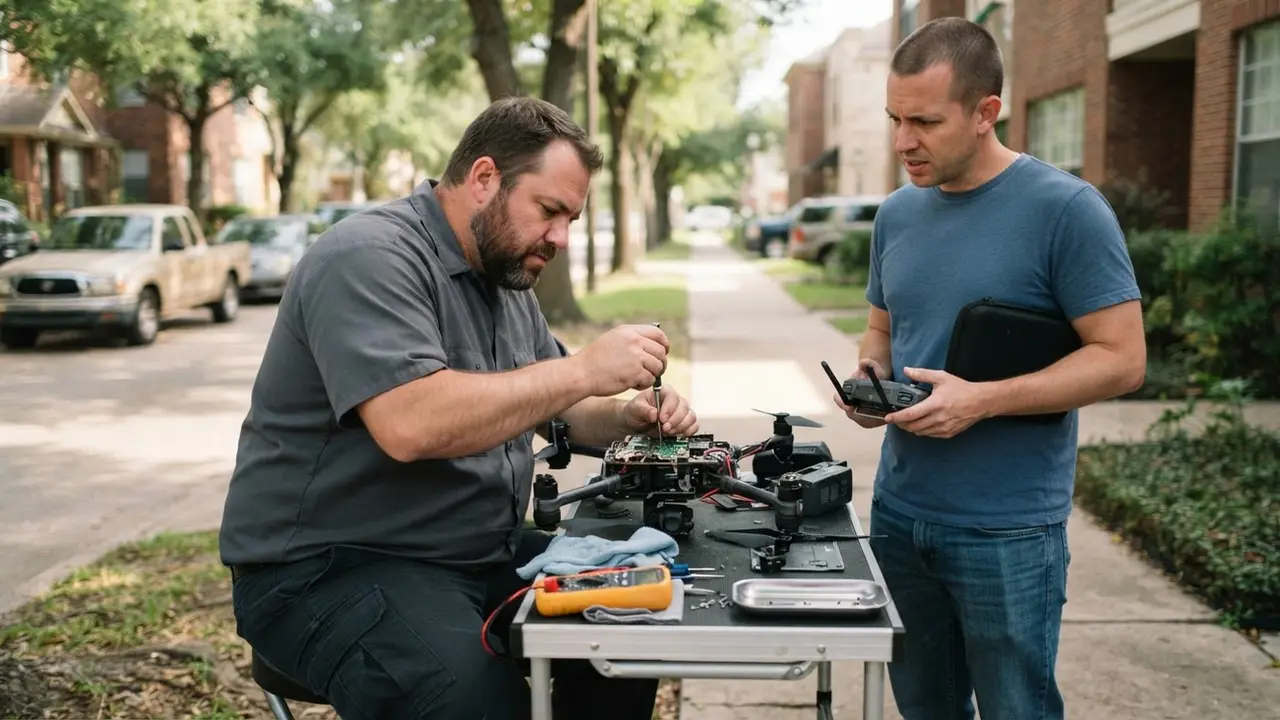
You bring the aircraft, controller, and batteries. We log the current firmware version, serial number, and any error codes showing in the app. We also check for crash damage, propeller damage, or battery swelling that would make a firmware flash pointless until hardware is fixed. This takes 15 to 20 minutes and costs nothing if you proceed with the update.
02
Version verification
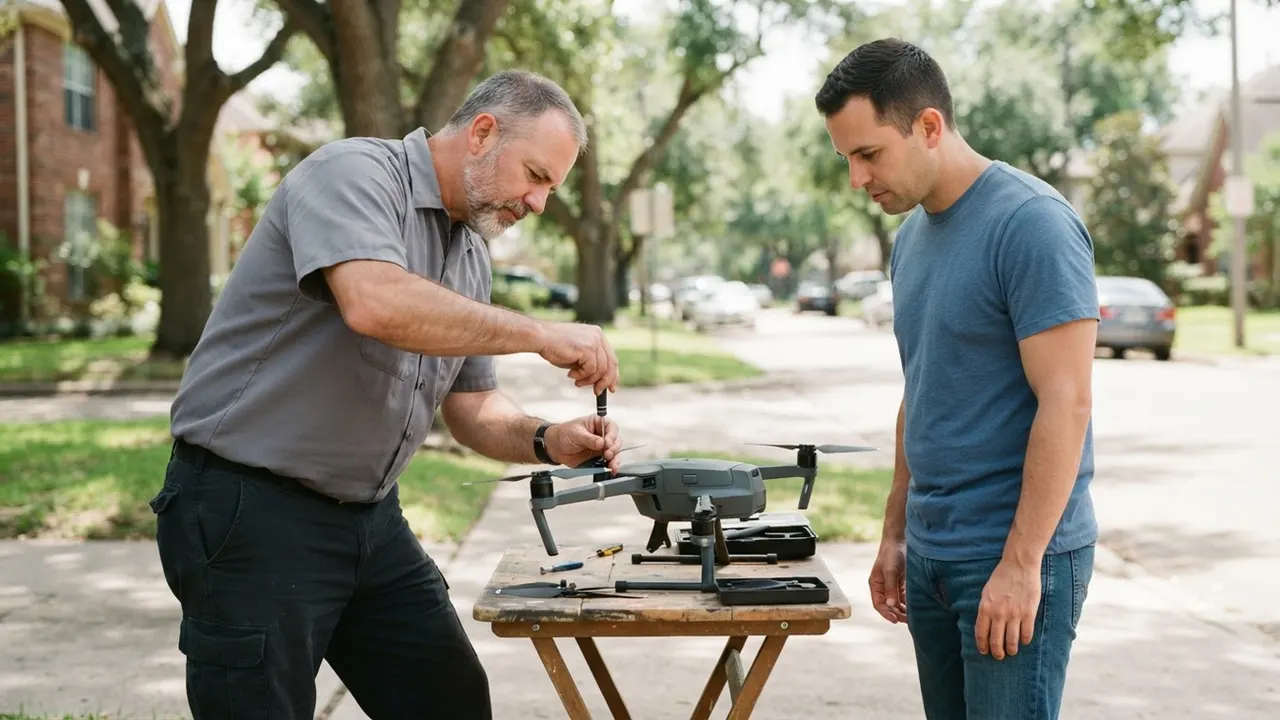
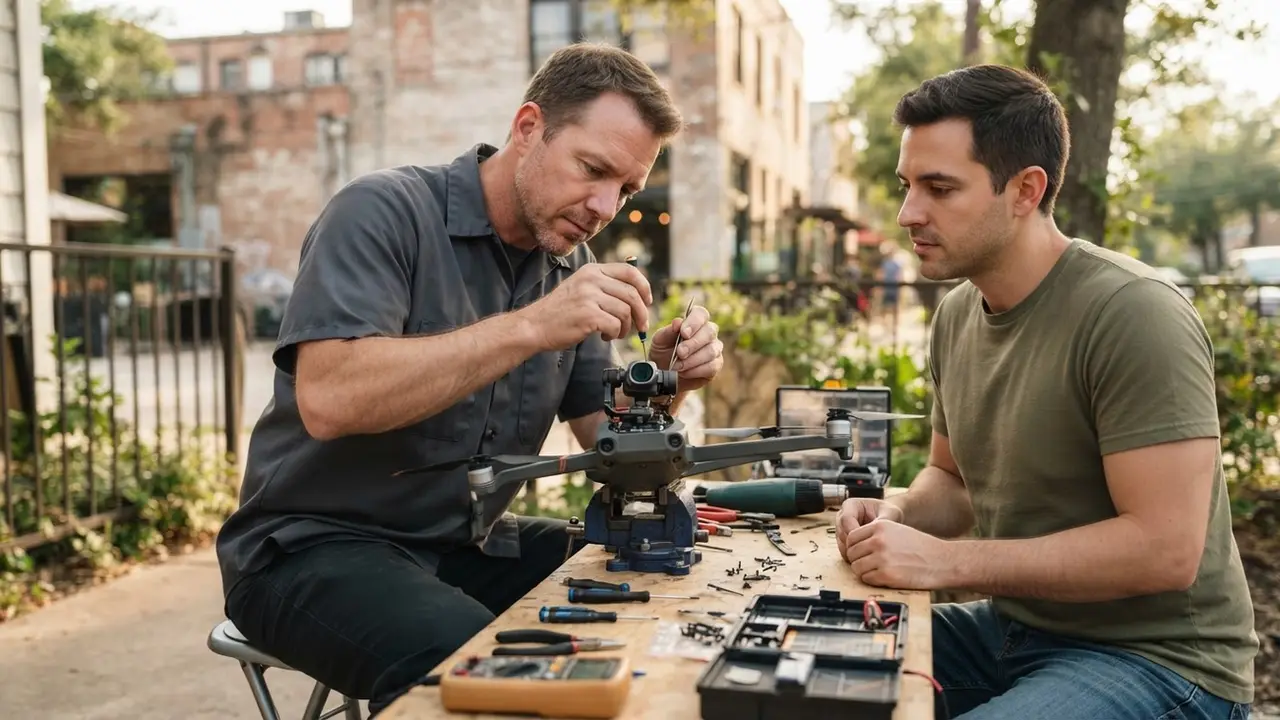
We confirm the correct firmware build for your exact model, region, and accessory set. DJI, Autel Robotics, Parrot, Skydio, and Yuneec all publish different branches for different hardware revisions. Flashing the wrong branch is how drones get bricked. We check twice, then flash once.
03
Flash and calibration
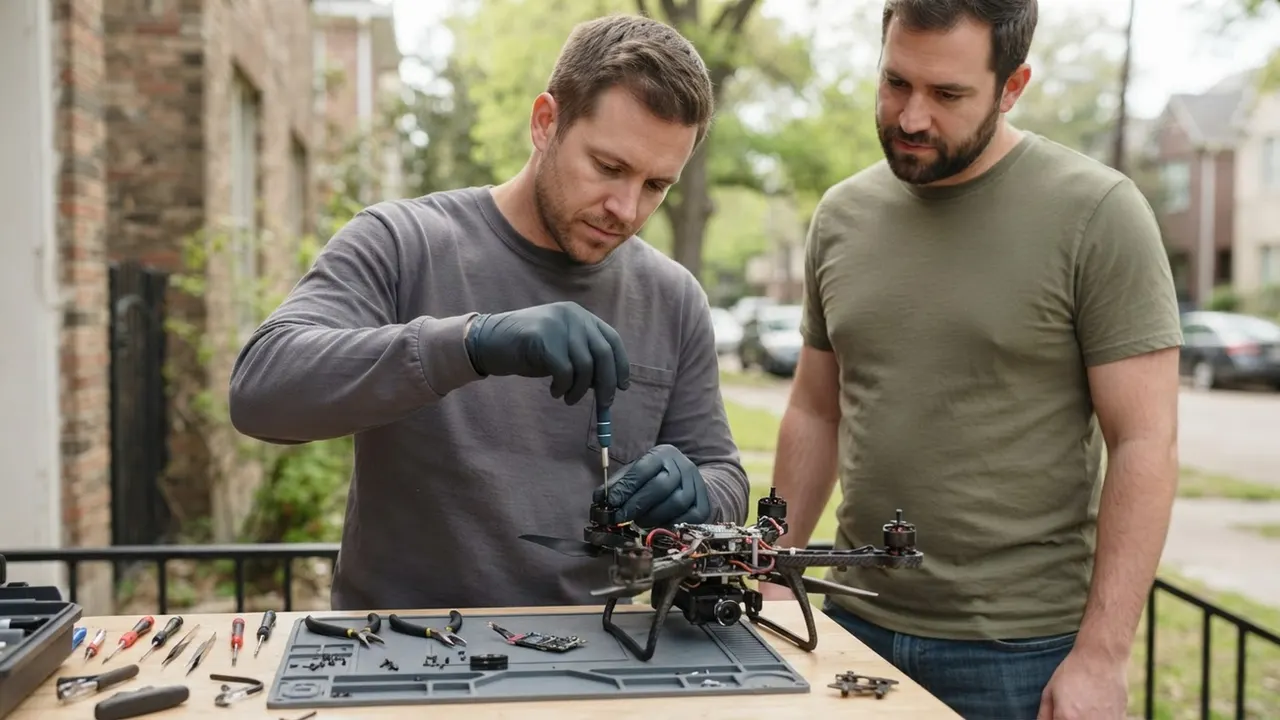
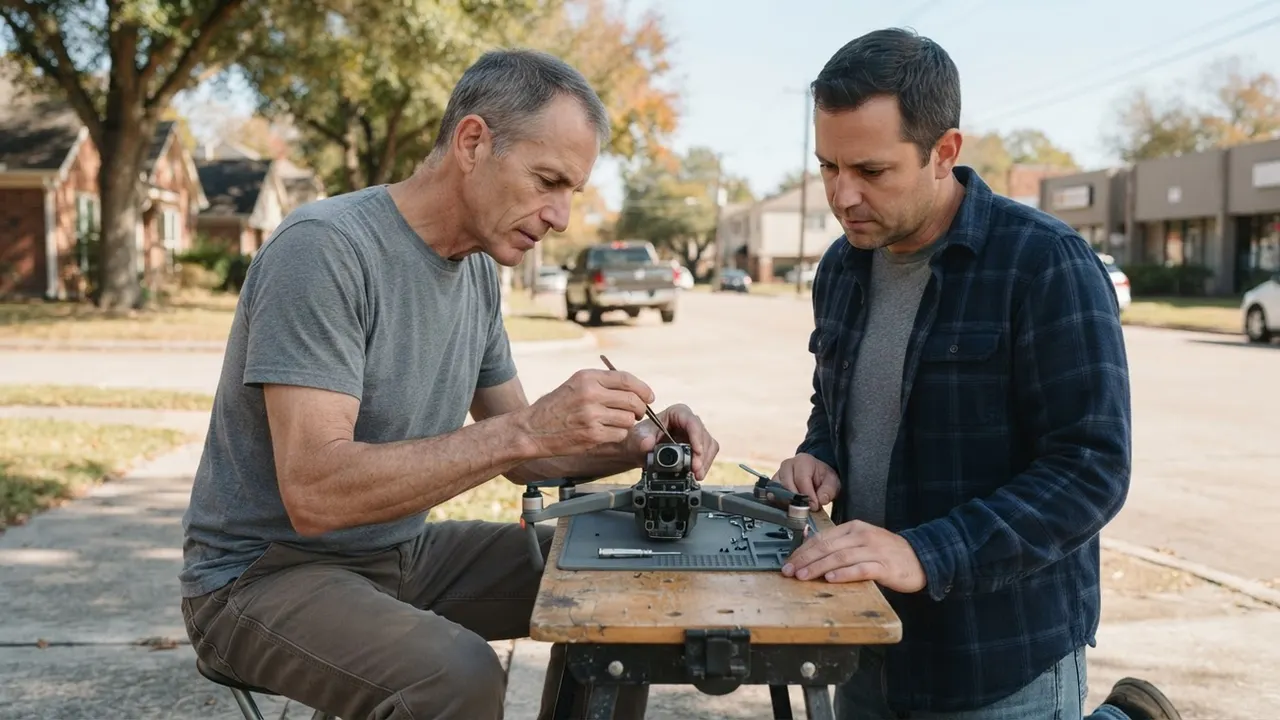
We flash the flight controller, ESCs, gimbal, and camera modules over a wired connection, never over the air. After the flash we run an IMU calibration stand and compass calibration, then verify gimbal range with a calibration tool. This step takes 30 to 45 minutes and is where most of the value lives.
04
Bench and hover test
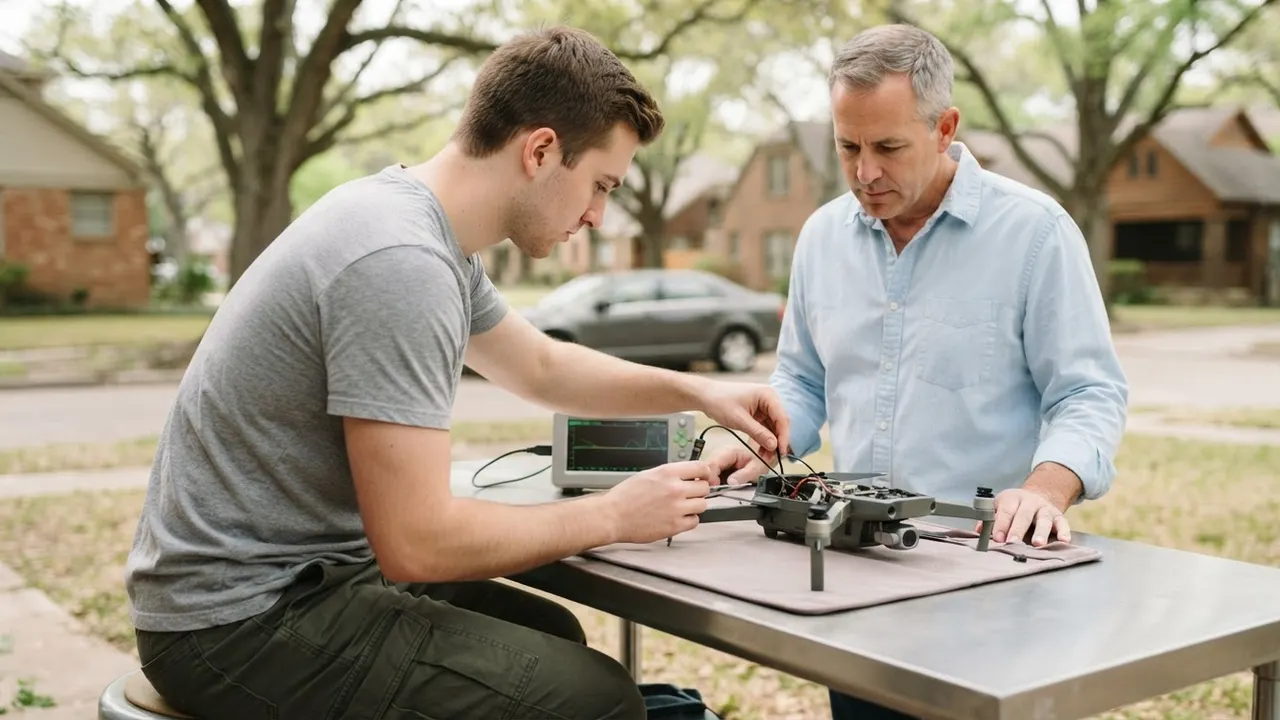
We spin the motors on the bench with a multimeter and oscilloscope watching current draw, then do a controlled hover test in GPS and ATTI modes. We check signal range, return-to-home behavior, and camera feed. If anything is off, we reflash and retest before calling you.
05
Handoff and documentation
You get the aircraft back with a printed sheet showing old firmware version, new version, calibration results, and test flight notes. We walk you through any app settings that changed and flag anything that needs attention later, like a battery nearing end of life or a propeller showing stress marks.