Stock drone overheats in summer heat
We add airflow channels over the ESC stack, run conservative battery charge rates, and coat exposed boards. A build tuned for 98-degree afternoons keeps flying when stock aircraft are grounded.
Drone custom builds Houston TX means we spec the frame, motors, ESCs, and flight controller around the job you need done, then solder and test every joint before you pick it up. Whether you race at a field off Beltway 8 or fly thermal inspections in the Energy Corridor, our technicians handle the whole custom drone assembly in Houston. Most builds are ready in three to seven days.
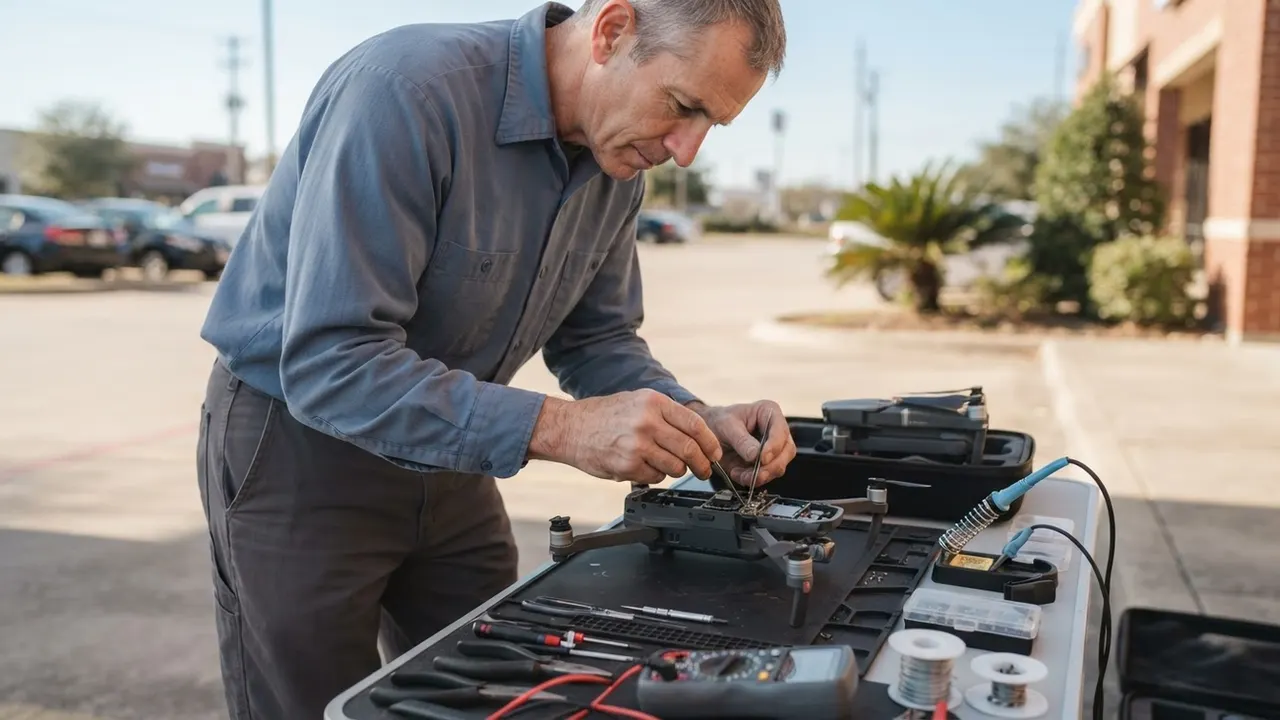
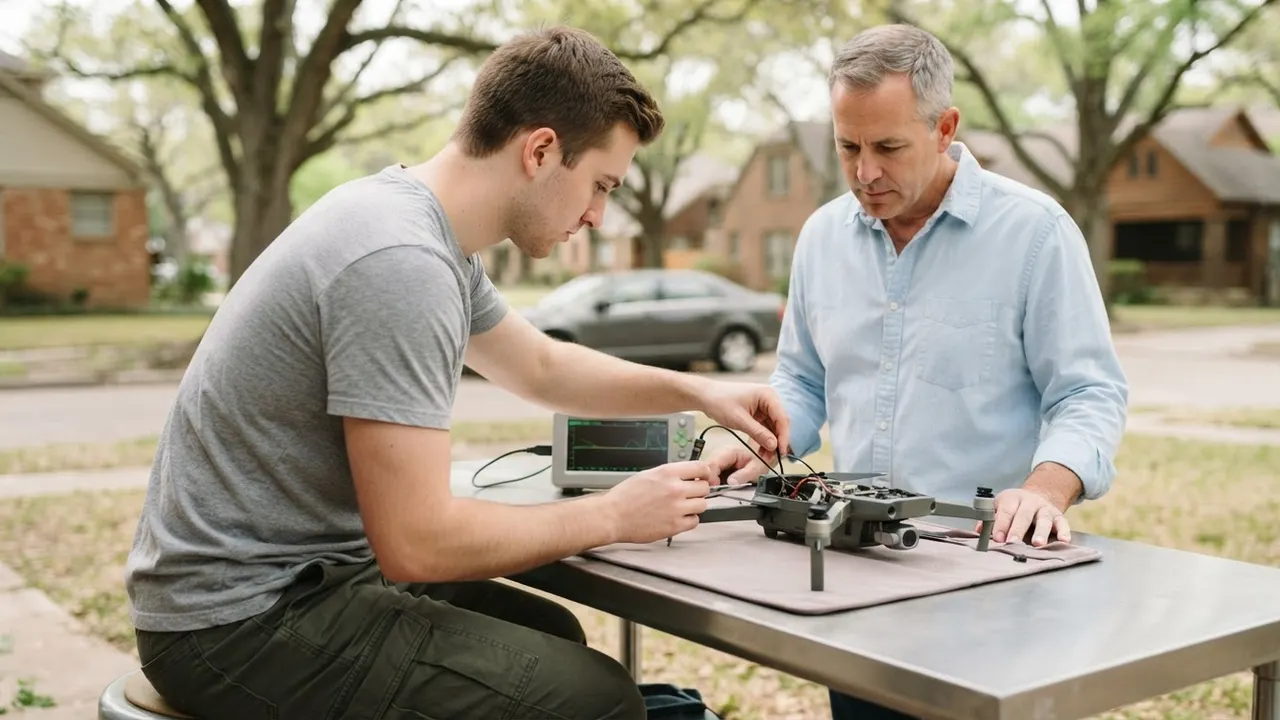
A custom build starts with a conversation about payload, flight time, and where you fly. From there we match a carbon fiber frame to brushless motors, ESCs, a flight controller, and a receiver, then choose propellers, LiPo batteries, and antennas that fit the weight and range you need. Every solder joint gets checked with a multimeter and an oscilloscope, and the finished aircraft runs through bench tests and a hover test before it leaves the shop.
Houston flying is hard on electronics. Summer heat pushes LiPo batteries past 110 degrees inside a case, humidity off the Gulf corrodes exposed pins, and storm-season wind gusts hit 30 mph without warning. That is why a stock airframe often fails here. A Houston TX drone custom builds job accounts for heat management, conformal coating on boards, and antenna placement that survives a signal loss event near the Ship Channel.
Every build is different, but the core work is the same. Here is what comes standard and what we quote separately so you know exactly where your money goes.
We match frame, motors, ESCs, flight controller, receiver, propellers, and battery to your payload and flying style. You approve the list before we order. We source from DJI, iFlight, BetaFPV, and other suppliers we have used for years.
Carbon fiber frame assembly, motor mounting, and all power and signal soldering. Every joint gets a multimeter check and a pull test. We use a temperature-controlled soldering station to avoid cold joints that fail in flight.
IMU, compass, and gimbal calibration, plus firmware flashing to the latest stable release. We set failsafe behavior and transmitter model memory. This stage is where most off-the-shelf drones fall short.
Motor bench test with an oscilloscope check, followed by a real hover test with logged flight time and post-flight motor temperatures. You get the numbers, not just a handshake. If something is off, we fix it before you pick up.
A short session covering your transmitter settings, battery charging routine, and pre-flight checks. We show you how to swap a propeller and what to look for after a hard landing. Bring your charger so we can verify it together.
We ask what you fly, where you fly, and what you carry. Racing, cinematic, thermal, or LiDAR work all pull the parts list in different directions. This call takes 15 to 20 minutes and ends with a written parts list and a fixed price.
We order from DJI, iFlight, BetaFPV, and other suppliers we trust. Most components land at our bench in two to four business days. If a part is backordered, we tell you the same day and offer an equivalent that keeps the build on schedule.
We assemble the carbon fiber frame, mount the brushless motors, and solder the ESCs, flight controller, and receiver. Every connection gets a multimeter check and a pull test. This stage runs one to two days depending on the frame size.
We calibrate the IMU, compass, and gimbal, then run the motors on a test stand. An oscilloscope check catches noisy signals before they become a mid-flight failure. Firmware gets flashed to the latest stable release for your flight controller.
We fly the aircraft in an open area, log the hover time, and check motor temperatures after landing. You get the build, the parts list, and a short walkthrough of your transmitter settings. Most customers fly the same day they pick up.
Purpose-built equipment, used by trained technicians — so the job is done accurately the first time.
Temperature-controlled soldering for power and signal joints. Consistent heat prevents cold joints that fail under vibration.
Continuity and voltage checks on every power connection before the first power-up. Catches shorts that would fry a flight controller.
Signal inspection on receiver and ESC lines. Finds noisy signals that cause failsafe events before they show up in flight.
Balances every propeller set to reduce vibration that wears motors and blurs camera footage.
Levels the frame for accurate accelerometer and gyro calibration, which is the foundation of stable hover.
Checks motor and ESC temperatures after bench and hover tests. Hot spots point to timing or airflow problems.
Aligns gimbal axes so your camera stays level through aggressive maneuvers and wind gusts.
A 5-inch racer came in with a cracked arm, two bent motors, and a receiver that would not bind. The pilot had missed two club races and was ready to buy a new frame.
We replaced the arm and motors, re-bound the receiver, and balanced a fresh propeller set. The quad was back in the air in 48 hours and posted its best lap time of the season the following weekend.
A roofing company was flying a stock drone with a thermal camera taped to the frame. Flight time had dropped to 12 minutes and the gimbal drifted constantly, ruining footage.
We built a mid-size frame around their camera, added reinforced landing gear, and logged 26 minutes of hover time with the payload mounted. Gimbal drift dropped to under one degree.
A survey firm's LiDAR unit was mounted on an undersized frame. Motors ran hot after 15 minutes and one ESC failed mid-job, forcing a re-flight of a 40-acre tract.
We spec'd a heavy-lift frame with high-capacity batteries and a reinforced payload mount. The completed platform flew the full 40-acre survey on one pack with motor temps under 140 degrees.
Stock drones fail in predictable ways here. Heat, humidity, wind, and rough landings expose weak points fast. A purpose-built airframe closes those gaps before they cost you a flight.
Ask a pro →We add airflow channels over the ESC stack, run conservative battery charge rates, and coat exposed boards. A build tuned for 98-degree afternoons keeps flying when stock aircraft are grounded.
We place antennas away from power lines, use quality receivers, and test real-world range on the bench. You get a documented range figure so you know your safe operating distance.
We build with standard mounts and common propeller sizes, and we stock spares at our Harris County bench. Most crash repairs turn around in 48 hours using parts already on the shelf.
We size motors, ESCs, and batteries around your actual payload weight, then test hover time with the payload mounted. You know the real flight time before you take the job.
$650 - $2,400 depending on parts and payload
Typical 2026 pricing for a custom build in Houston runs $650 to $2,400 in parts and labor. Racing quads sit at the low end, cinematic rigs in the middle, and thermal or LiDAR platforms at the top. The parts list drives most of the cost, so a build using components you already own costs less. We quote a fixed price after the spec call, and that number does not change unless you change the spec. If you are comparing drone custom builds cost Houston TX across shops, ask what testing is included before you compare the totals.
You are paying for a tested aircraft, not a box of parts. Every build leaves with logged hover time, calibrated sensors, and a parts list you can reorder from. That is what keeps you flying instead of troubleshooting.
A 5-inch carbon fiber racing frame costs far less than a heavy-lift platform with reinforced arms. Larger frames also need bigger motors and ESCs, which raises the parts total.
Budget motors work for casual flying, but commercial work benefits from higher-grade brushless motors and ESCs with better heat tolerance. This is often the biggest single line item.
Mounting a camera and gimbal adds cost. Thermal cameras and LiDAR units need reinforced mounts, extra wiring, and longer test flights, which adds labor and parts.
High-capacity LiPo batteries cost more per pack, and most commercial pilots want two or three. We match capacity to your flight-time target rather than overselling packs you do not need.
“I brought them a pile of BetaFPV parts and a vague idea about a 5-inch racer. They asked two questions about my transmitter and had a parts list back the same afternoon. Build was done in four days, balanced props, clean solder joints. It flies better than anything I have bought off the shelf.”
Marcus T.FPV Racer, East End
✓ Verified“We needed a thermal rig that could handle 30-minute inspections in August heat. They built it around our camera, added airflow over the ESCs, and logged the hover time before handoff. Two months in and it has not skipped a beat. The FAA Part 107 setup was a nice bonus.”
Priya S.Roof Inspector, Energy Corridor
✓ Verified“Crashed my build into a tree near the bay and cracked the frame. They replaced the arm, rebalanced the motors, and recalibrated the IMU in two days. Price was fair and they showed me the old parts. I will not take my drones anywhere else.”
Danny R.Hobbyist, Clear Lake
✓ VerifiedMost custom builds run $650 to $2,400 in parts and labor, with racing quads at the low end and thermal or LiDAR platforms at the top. The parts list drives the number more than the labor does. We quote a fixed price after the spec call, so there are no surprise charges when you pick up the aircraft.
Our bench is in Houston and we serve all of Harris County, from the Heights and Montrose to Katy, Pearland, and Clear Lake. You can drop off parts or have them shipped directly to us. Call +1 281 555 4468 and we will confirm whether your build fits our current schedule.
At minimum you need a frame, four brushless motors, ESCs, a flight controller, a receiver, propellers, a LiPo battery, and a transmitter. Camera rigs add a gimbal and camera module. Thermal and LiDAR builds add a payload mount and heavier landing gear. We supply the full list or work with parts you already own.
Yes. Every build includes IMU and compass calibration, a motor bench test with an oscilloscope check, and a hover test with logged flight time. We also verify transmitter range and battery health before handoff. You leave with the test numbers, not just a promise that it flies.
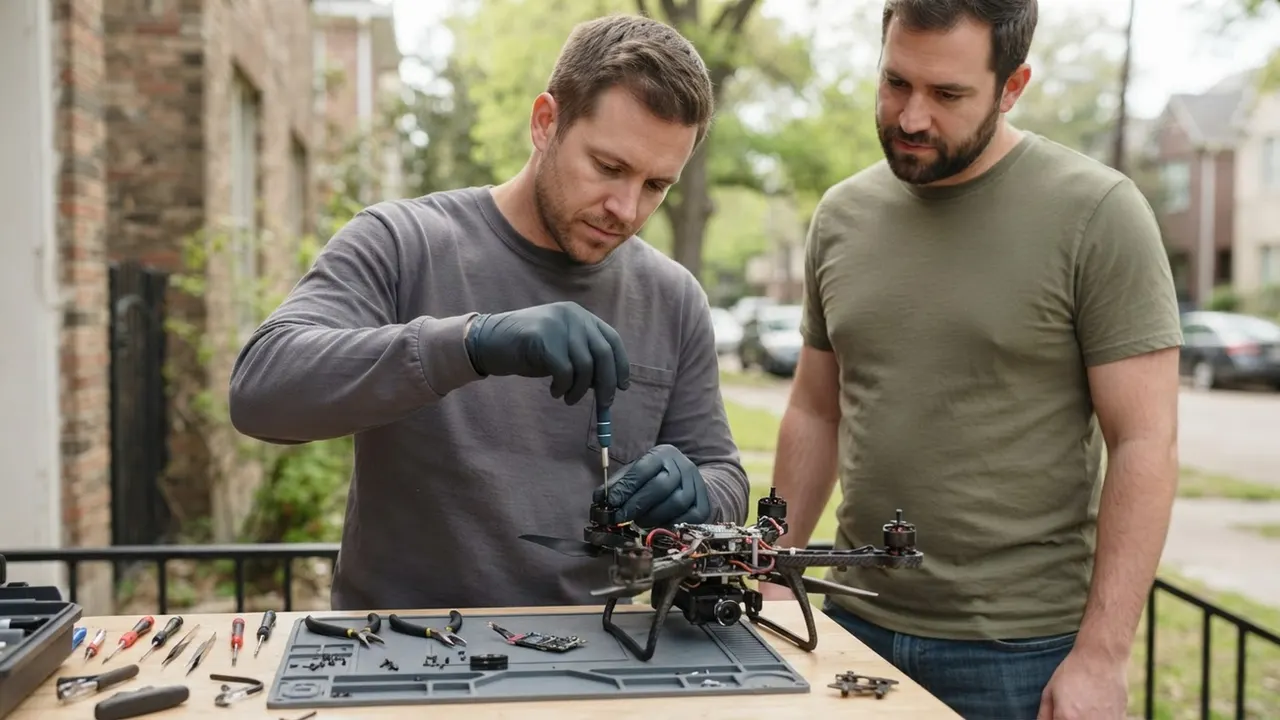 Drone RepairWhen a build takes a hard hit, our repair bench handles crash damage, frame cracks, and board-level faults. We diagnose with a multimeter and oscilloscope, then replace only what failed. Most Houston repair jobs turn around in two to four days.Explore →
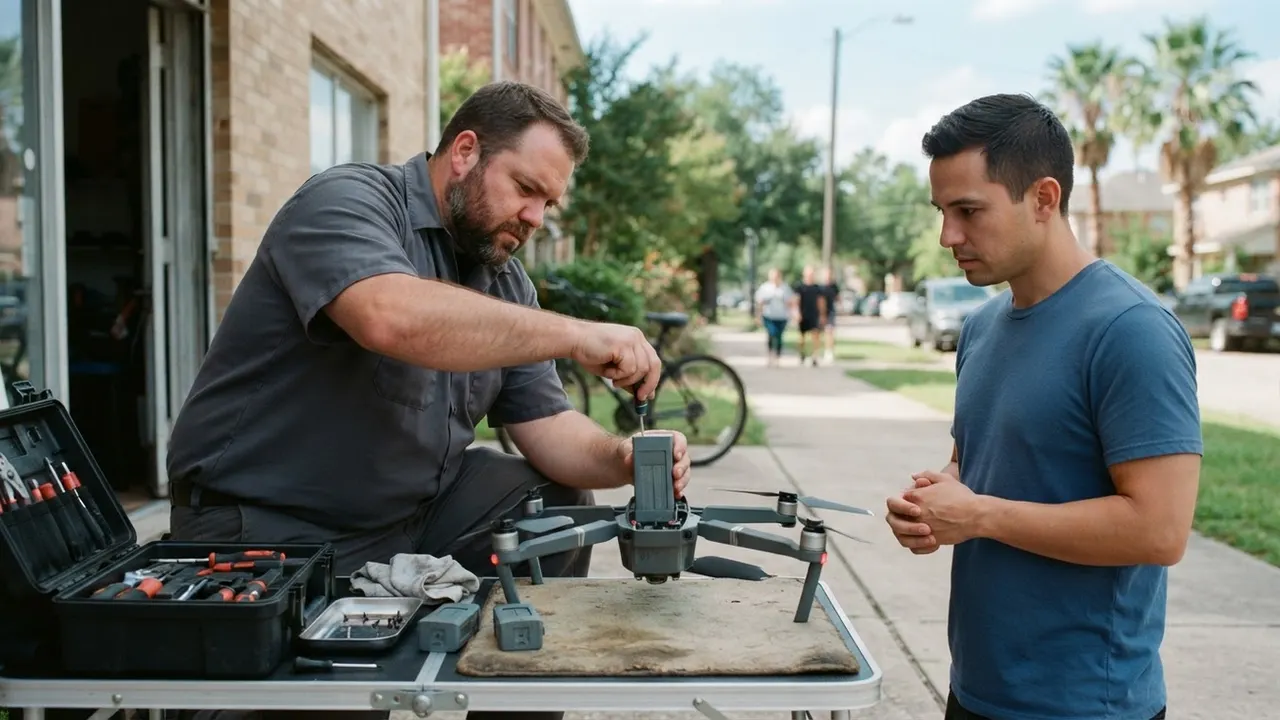 Drone Battery ReplacementHeat and age swell LiPo packs, and a swollen battery is a fire risk in your case. We test internal resistance, replace failing cells or whole packs, and match the C rating to your build's motor draw. Bring your charger so we can check it too.Explore →
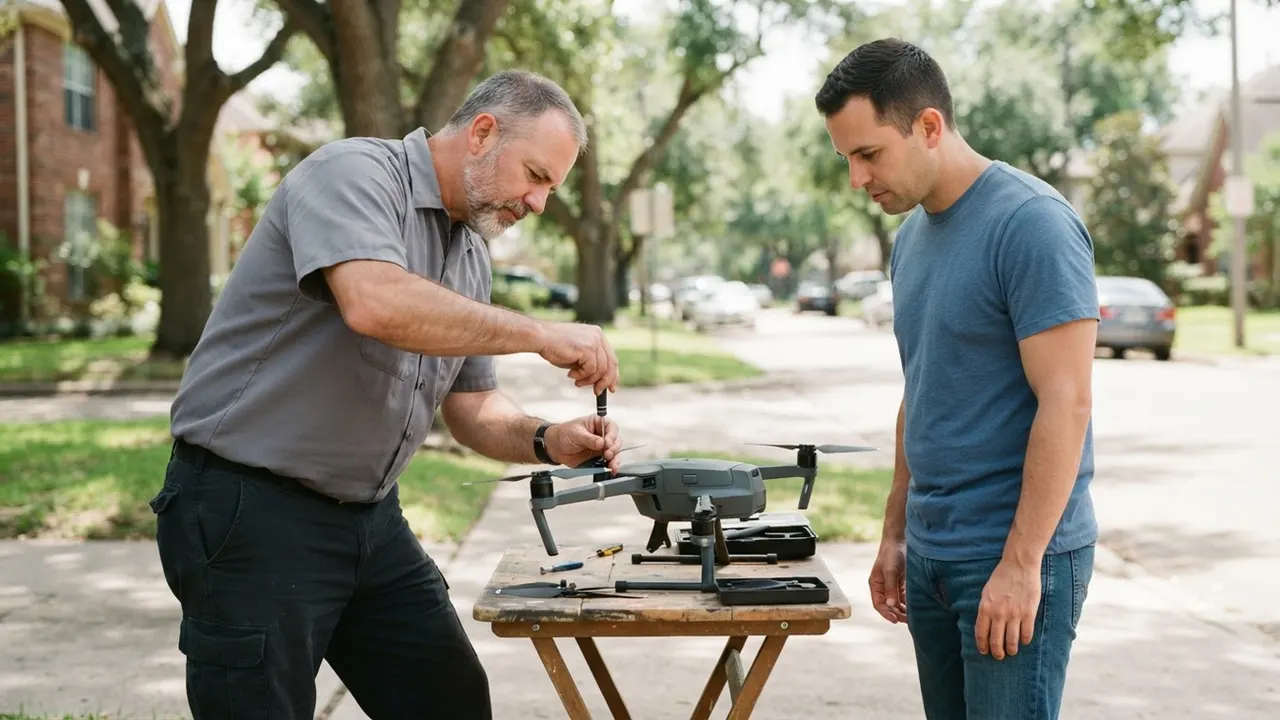 Drone Propeller ReplacementBent or chipped propellers cause vibration that wears motors and blurs camera footage. We balance every replacement set on a propeller balancer and match pitch to your frame. Keep a spare set in your bag before race day in Houston.Explore →
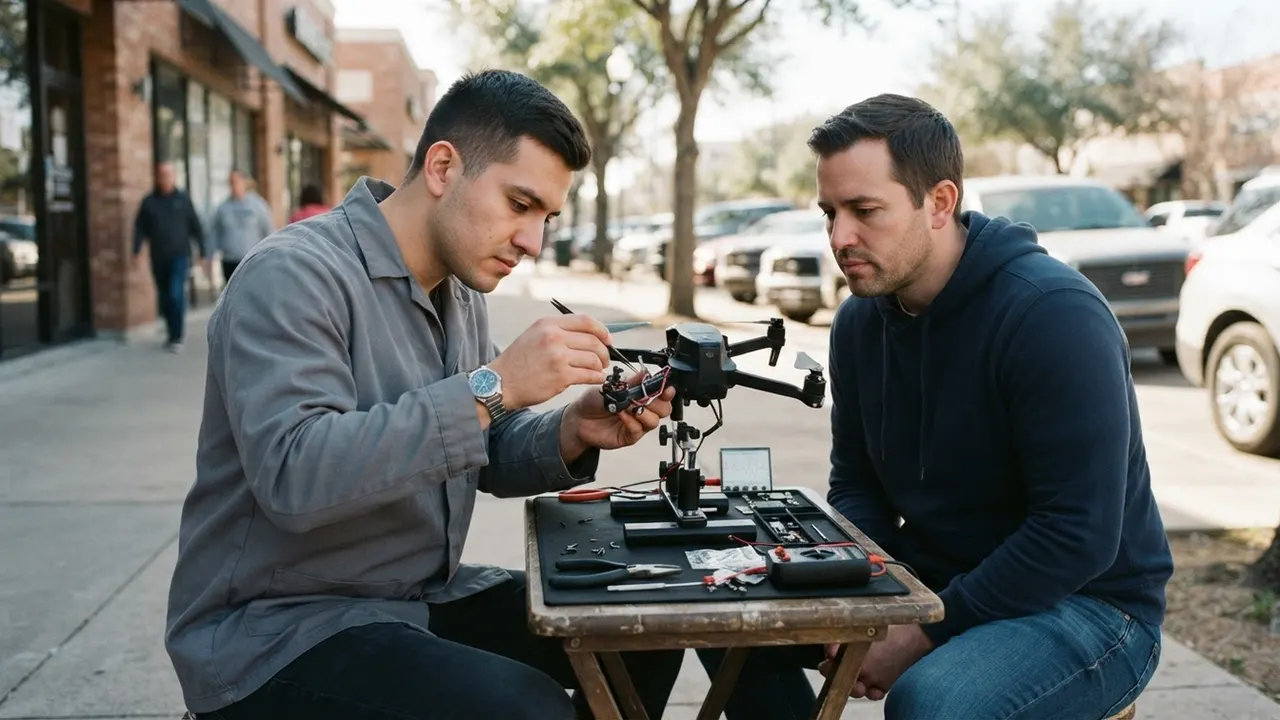 Drone Motor RepairA motor that clicks, drags, or runs hot needs attention before it fails mid-flight. We test windings, bearings, and bell runout, then replace or rebuild the motor. Matching the replacement to your ESC timing keeps the whole power system balanced.Explore →
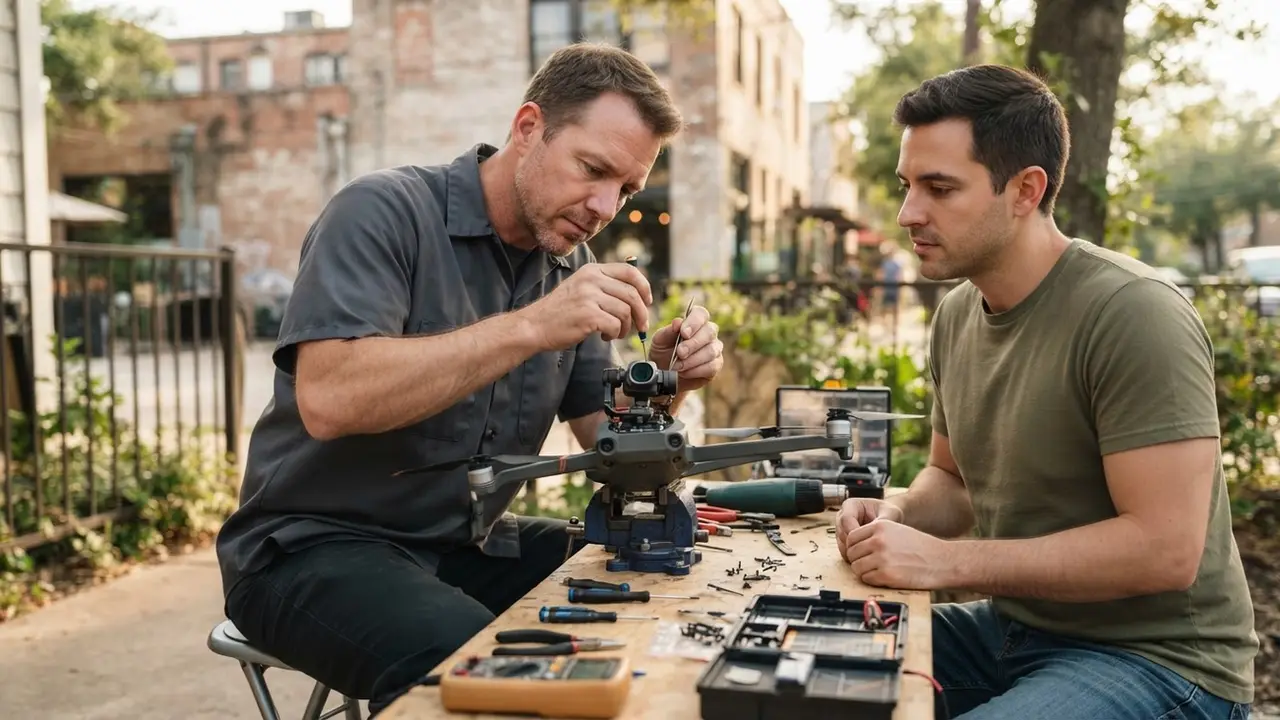 Drone Gimbal RepairGimbal malfunction shows up as drift, jitter, or a camera that will not level. We inspect ribbon cables, recalibrate with a gimbal calibration tool, and replace stripped gears. Most gimbal repairs return smooth footage within 48 hours.Explore →
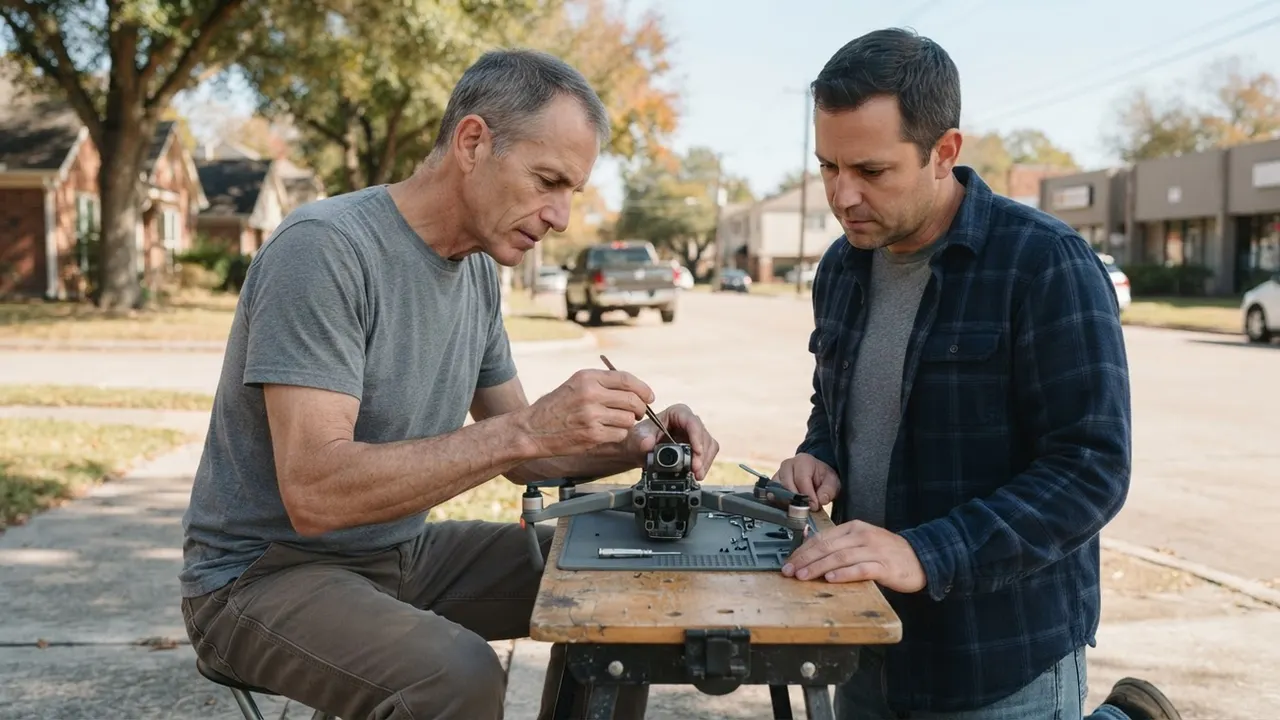 Drone Camera RepairA camera black screen usually traces to a ribbon cable, a firmware issue, or impact damage. We test the module on the bench, reflash firmware, and replace the camera if the sensor is gone. Your custom build keeps its original lens profile.Explore →
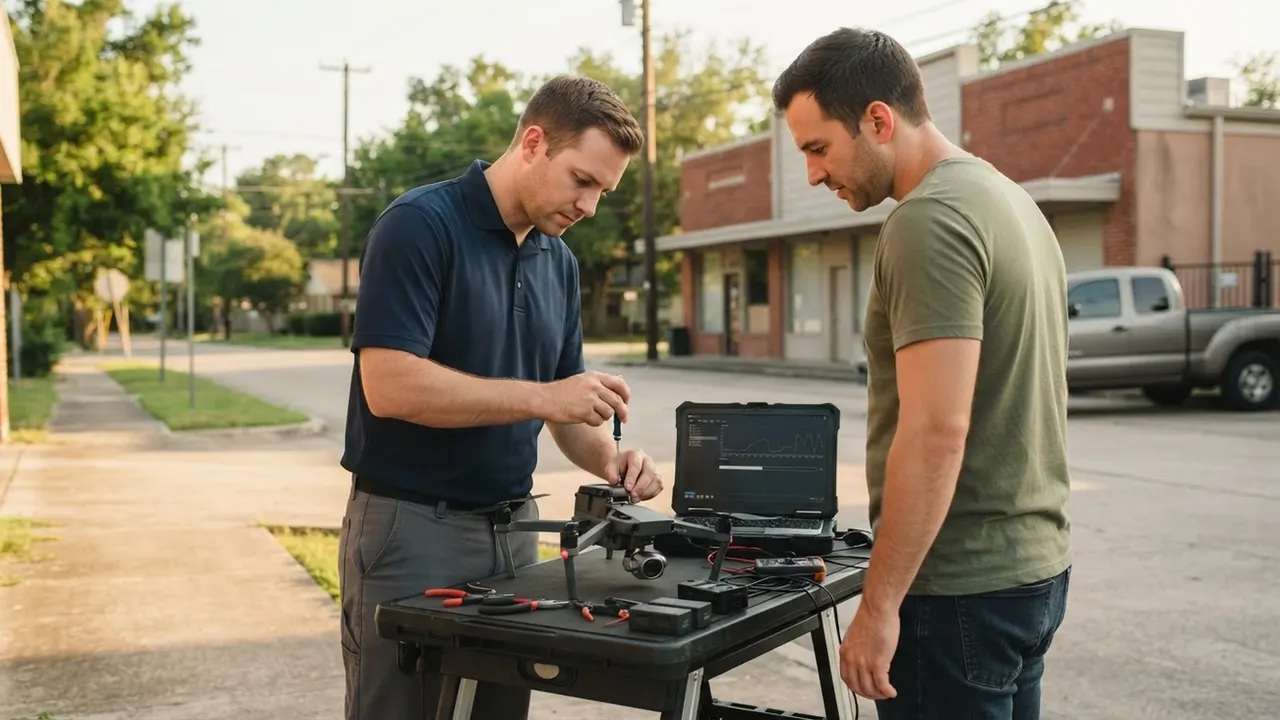 Drone Firmware UpdatesFirmware issues cause compass calibration errors, signal loss, and odd flight behavior. We flash the latest stable release for your flight controller and ESCs, then re-run calibration. Every custom build leaves our bench on current firmware.Explore →
 Drone Software RepairCorrupted parameters, failed updates, and app pairing problems all fall under software repair. We restore factory defaults, reload your tune, and verify the transmitter binds cleanly. Bring your phone or tablet so we can test the app with you.Explore →
Tell us what you want to fly and we will spec the parts, quote a fixed price, and give you a pickup date. FAA Part 107 testing and a 1-year workmanship warranty come standard on every build. Call +1 281 555 4468 and let's get your airframe in the air.
Start My Build +1 281 555 4468 →Call us at +1 281 555 4468 or stop by the shop. We are open Monday through Friday, 8 a.m. to 6 p.m., and we answer emergency calls 24/7 for commercial operators. Most diagnostics are done the same day you drop off.