01
Intake and history
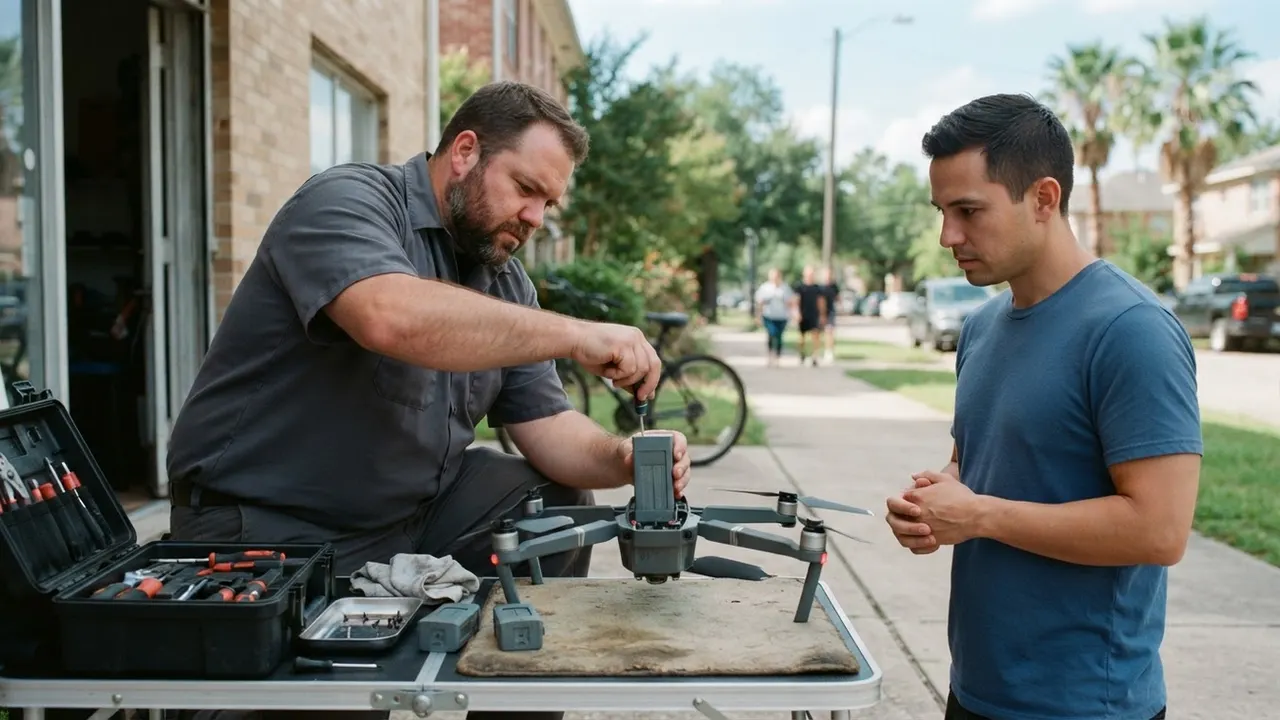
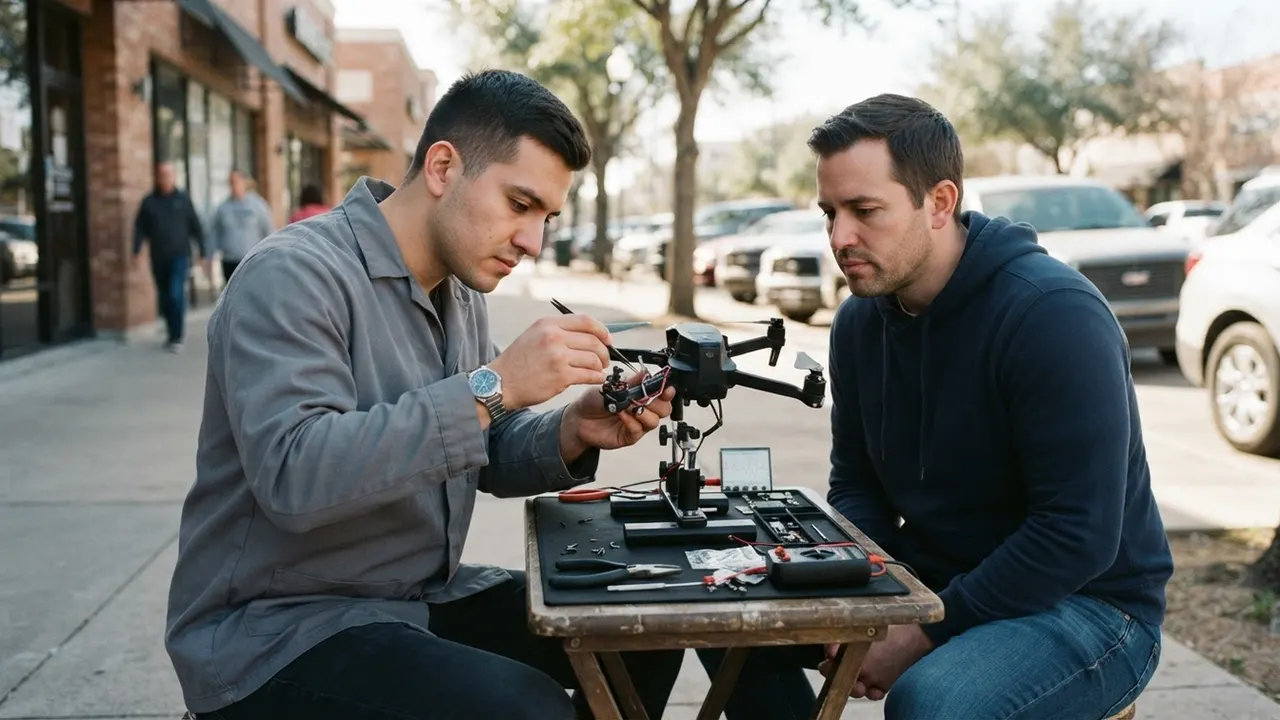
We log the model, firmware version, and what happened before the failure. A crash, a firmware update, a wet landing, or a battery that sat in a hot car all point in different directions. This takes about 10 minutes and shapes the whole test plan.
02
Visual teardown
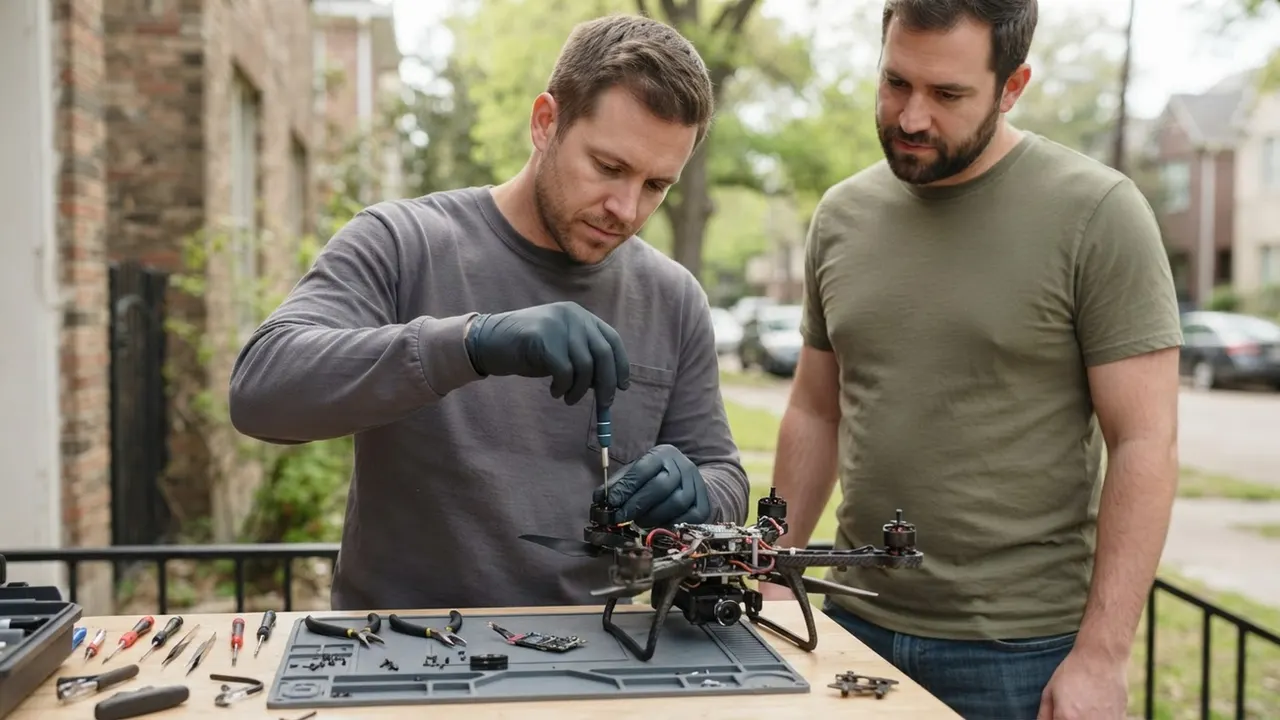
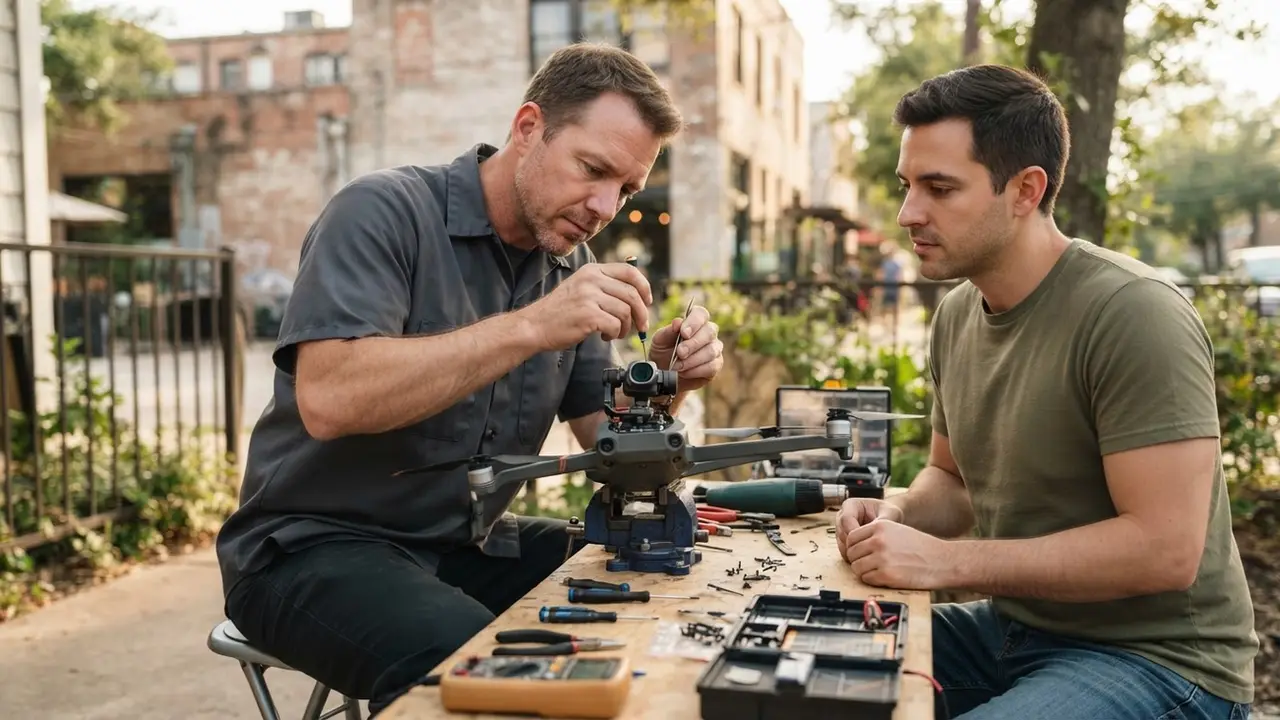
Shells come off and we inspect carbon fiber frames, landing gear, and antenna mounts under bright light. Crash damage shows up as hairline cracks and stress marks that are invisible with the shell on. Compressed air clears dust from the motor bells and gimbal housing.
03
Electronics bench test
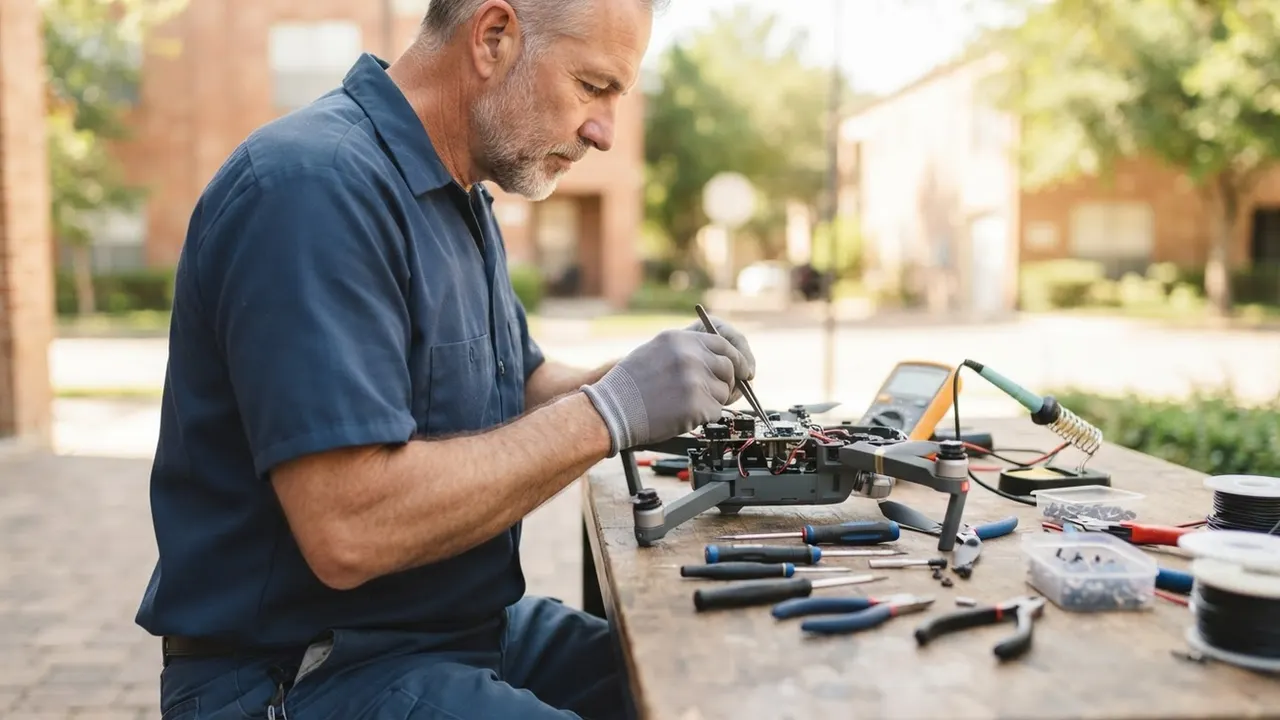
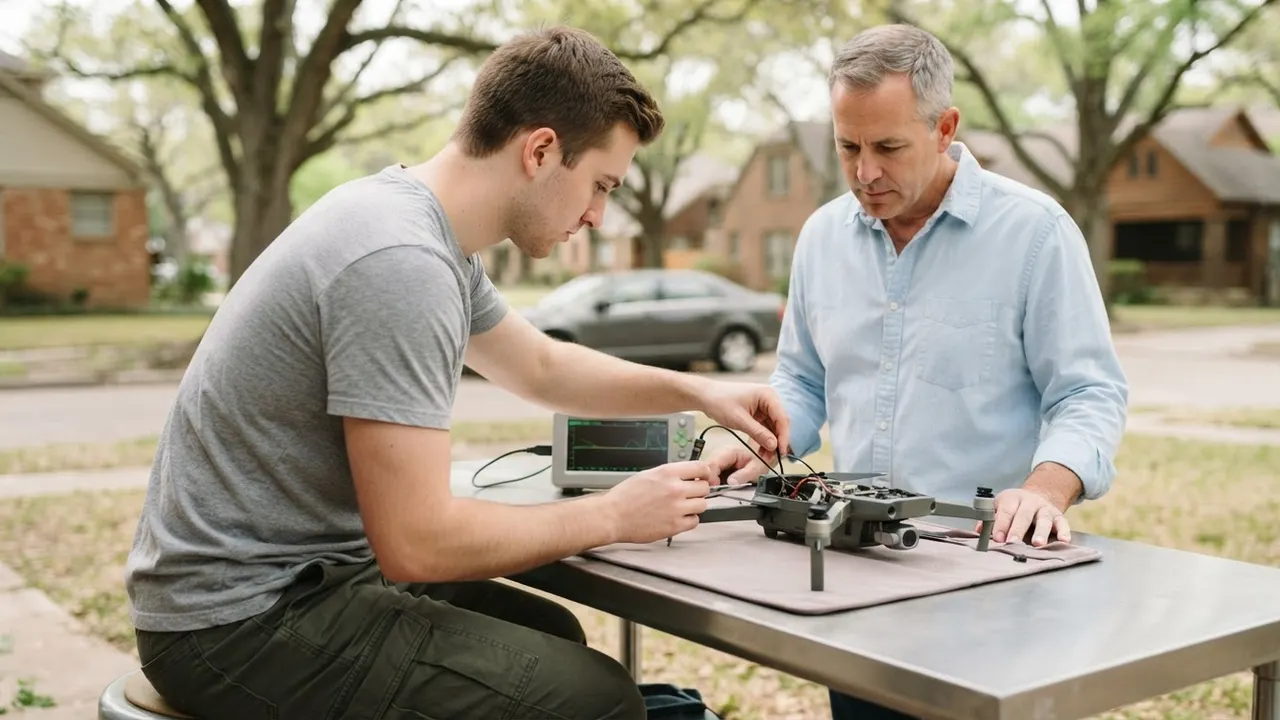
A multimeter and oscilloscope check brushless motors, ESCs, and the flight controller for voltage sag and signal noise. We spin each motor through a hex driver set and log RPM variance. A propeller balancer confirms whether vibration is a blade issue or a bearing issue.
04
Sensor and gimbal sweep
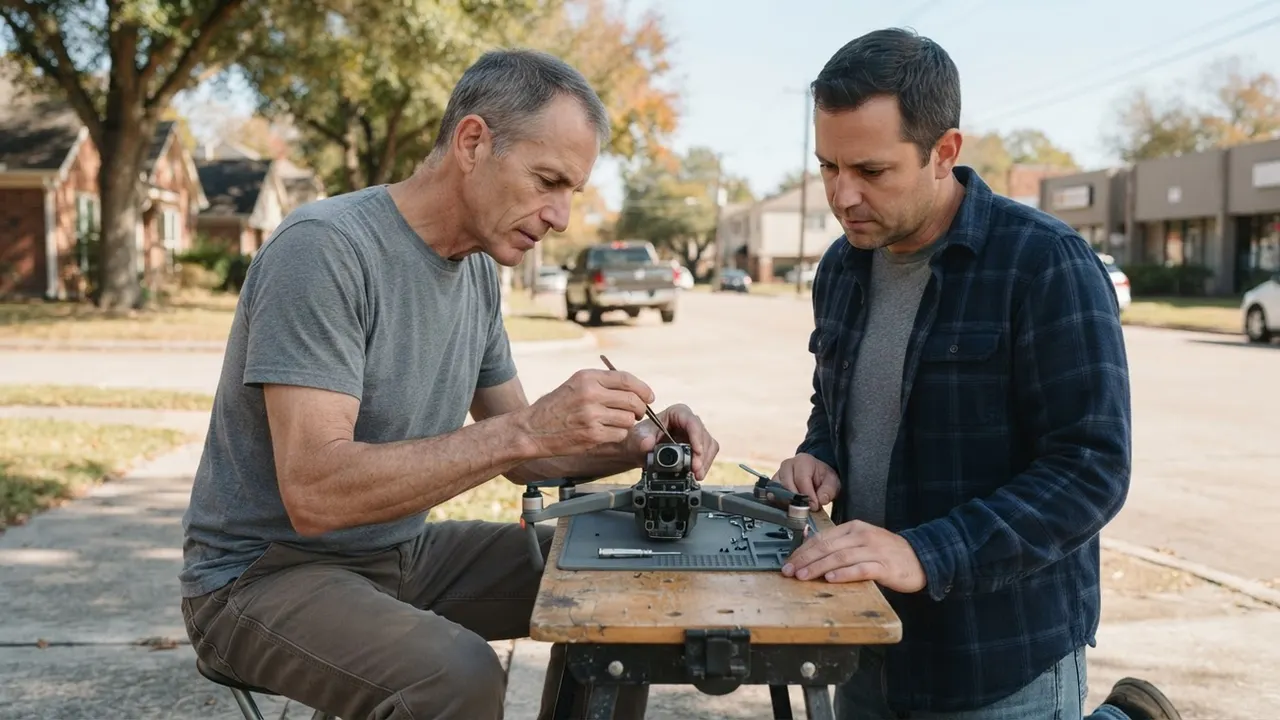
The IMU calibration stand and gimbal calibration tool verify that the aircraft knows which way is down. Compass calibration errors, drifting horizons, and camera black screens usually trace back to this stage. Takes 20 to 30 minutes depending on the airframe.
05
Flight test and report
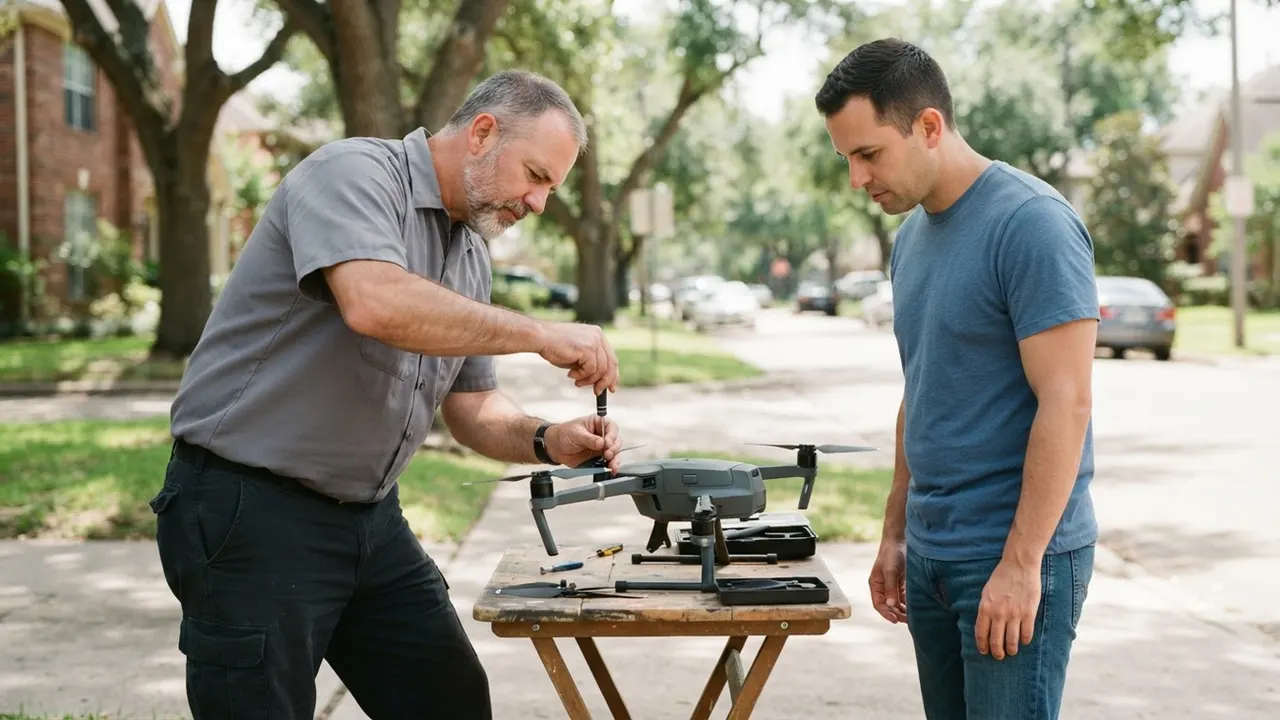
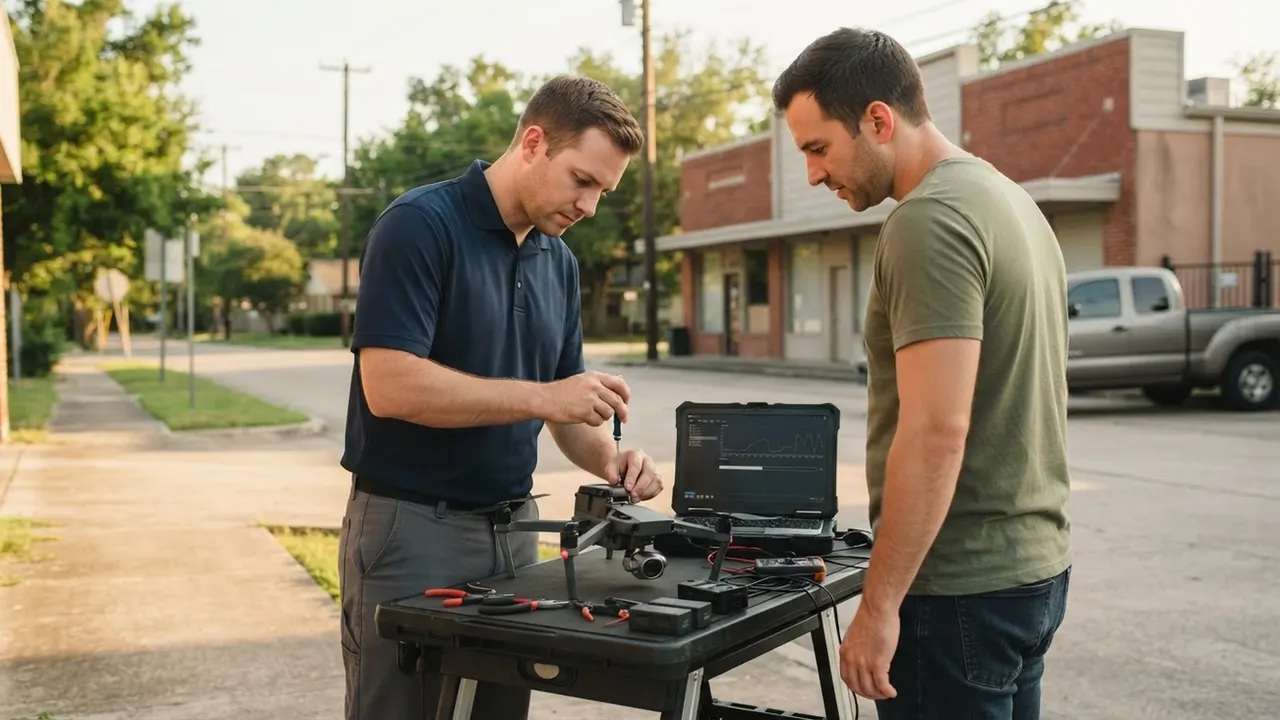
Every aircraft that powers on safely gets a controlled hover and a short figure-eight. We watch for signal loss, yaw drift, and gimbal twitch in real flight. You get the findings, the parts list, and a firm price before any repair begins.