Sticks drift and will not hold center
We replace the stick modules with matched parts, calibrate travel and confirm center on the bench. Most stick jobs run $95-$160 and finish the same day, so you are back to clean orbits fast.
When your sticks stop responding mid-flight, you need drone remote controller repair Houston TX pilots actually trust. We bench-test gimbals, antennas and LiPo power boards on DJI, Autel Robotics and Hubsan gear, then quote the fix before we solder. Most Houston jobs are diagnosed the same day you drop off, whether you fly commercially under FAA Part 107 or just weekends over Buffalo Bayou.
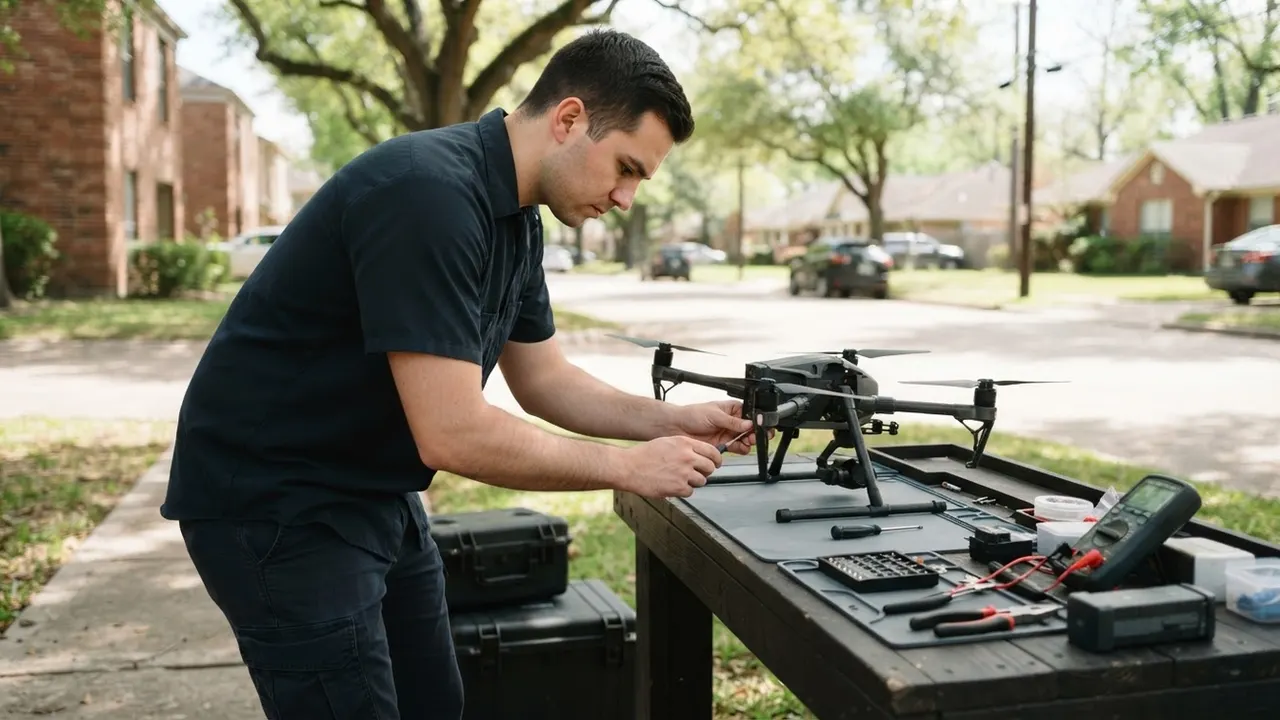
Drone remote controller repair Houston TX is the bench service that restores a transmitter's sticks, switches, antennas and charging circuit to factory spec. We open the shell, inspect the gimbal calibration tool readings, test the battery charger output and probe the mainboard with a multimeter. If a stick pot is worn or an antenna connector is cracked, we replace it. If firmware is the culprit, we reflash and re-pair. You get a controller that arms, links and holds signal at 2.4 GHz and 5.8 GHz again.
Houston summers cook transmitter batteries and Gulf humidity corrodes antenna traces, so we see a steady stream of signal loss and compass calibration error calls from Clear Lake to Katy. If you searched drone remote controller repair near me Houston after a crash on the bayou, bring the whole kit. We test the radio against your aircraft, not just on the bench, so pairing problems do not follow you home.
Every ticket covers a full radio inspection, not just the part you complained about. We test sticks, switches, antennas, charging and firmware, then range-test against your aircraft. Parts are billed separately and quoted up front, so you always know what the repair costs before we start.
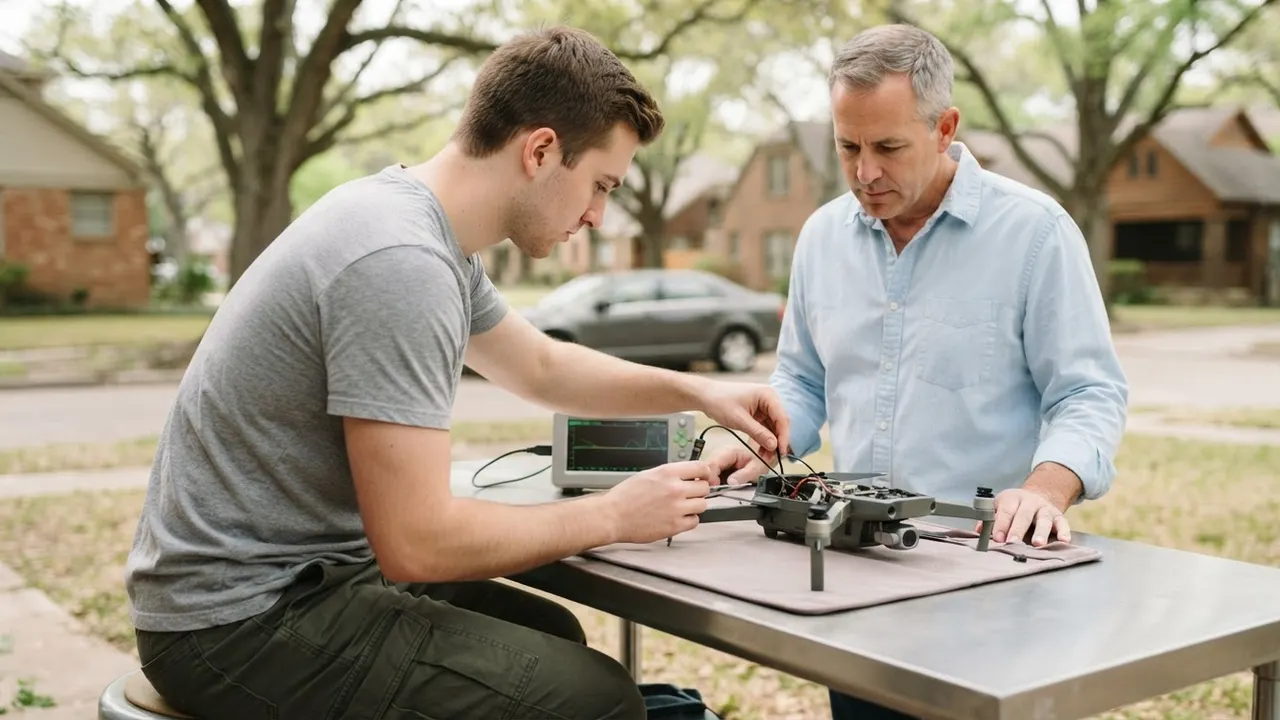
Multimeter sweep of the power board, oscilloscope check on the signal line and stick-travel test on every channel. We also inspect antenna connectors and the charging port under magnification. Diagnostics run $45 and credit toward the repair.
Worn potentiometers cause drift that ruins smooth footage. We replace stick modules and switches with matched parts, then calibrate travel so center is center. Most stick jobs finish in under 90 minutes of bench time.
Cracked leads and corroded traces kill range. We replace antennas, reflow RF joints and test both 2.4 GHz and 5.8 GHz bands. If your controller is rated for 6 miles, we confirm it reaches spec before handoff.
A flaky charging port leaves you guessing on battery state. We test input voltage, repair or replace the port and confirm the controller charges to full. Swollen LiPo packs get quarantined and replaced on the same ticket.
We flash matched firmware to controller and aircraft, then re-pair and confirm channel mapping. Part 107 pilots get the firmware version noted on the ticket for maintenance records. Pairing and verification take about 15 minutes.
Final step is a live range test past 300 feet, plus a walkthrough of the repair. You leave with the old parts and a 90-day workmanship warranty. If signal drifts in that window, we re-open the ticket at no charge.
You hand us the controller, the aircraft if you brought it, and a two-line description of the fault. We log the serial, photograph the shell and note any crash damage or battery swelling. Takes about 10 minutes at the counter, and you get a ticket number by text.
A tech opens the shell and runs a multimeter across the power board, checks stick potentiometers with an oscilloscope and inspects antenna connectors under magnification. We test the battery charger and confirm whether the fault is the radio, the aircraft receiver or a firmware mismatch. Verdict and quote go out the same day.
Once you approve the quote, we replace what failed: stick modules, gimbal calibration tool checks, antenna leads, charging ports or the mainboard. Board-level work happens at a soldering station under a thermal imaging camera so we do not cook nearby components. Most repairs finish inside 90 minutes of bench time.
We flash the latest manufacturer firmware, then re-pair the controller to your aircraft and confirm channel mapping. If you fly under FAA Part 107, we note the firmware version on your ticket so your records stay clean. Pairing usually takes 15 minutes and we test both 2.4 GHz and 5.8 GHz bands.
Final step is a live range test in our lot: arm, hover, walk the sticks and confirm telemetry holds past 300 feet. We hand you the controller, the old parts and a 90-day workmanship warranty on the repair. If anything drifts in that window, bring it back and we re-open the ticket at no charge.
Purpose-built equipment, used by trained technicians — so the job is done accurately the first time.
Voltage and continuity checks on the power board, charging port and battery leads. Catches brownouts and dead ports before they reach the sticks.
Signal-line inspection on stick potentiometers and RF paths. Shows whether a fault is mechanical or electronic, which decides the repair.
Board-level rework on antenna leads, charging ports and mainboard joints. Temperature-controlled so nearby components stay intact.
Finds shorted components and hot joints after water damage or a crash. Speeds up board-level diagnosis on DJI and Autel radios.
Confirms gimbal response tied to controller input, so we can separate radio faults from gimbal faults during diagnostics.
Clears dust and grit from stick housings and antenna connectors before reassembly. Keeps potentiometers clean after repair.
Precision disassembly of controller shells without stripping case screws. Every screw goes back where it came from.
A commercial roof inspector in the Energy Corridor was losing signal past 200 feet on every flight. Two antenna connectors were cracked and one RF joint had corrosion from a humid summer.
We replaced both antenna leads, reflowed the RF joint and re-paired the radio. Range test hit 1,200 feet clean, and the controller went back on the inspection calendar the next morning.
A Clear Lake pilot dunked a Hubsan controller during a low pass over the water. It powered on but would not pair, and two board joints showed visible corrosion.
We ultrasonic-cleaned the board, dried it 24 hours and reflowed the corroded joints. The controller paired on the first try, and the pilot walked out for $185 instead of buying a $400 replacement.
A real estate photographer in The Heights could not hold a smooth orbit because the left stick drifted off center. Footage was unusable and reshoots were eating into job time.
We replaced both stick modules with matched parts, calibrated travel and flashed firmware. Turnaround was one day, and the next shoot produced clean orbits with no drift.
Most controller faults fall into a handful of categories, and we see all of them weekly. Here is what we find, what it costs you if you ignore it, and how we fix it on the bench.
Ask a pro →We replace the stick modules with matched parts, calibrate travel and confirm center on the bench. Most stick jobs run $95-$160 and finish the same day, so you are back to clean orbits fast.
We test antenna leads, reflow RF joints and replace cracked connectors. Both bands get range-tested past 300 feet against your aircraft before handoff, so you know the link holds.
We test input voltage, repair or replace the port and quarantine any swollen pack. Replacement LiPo batteries are quoted up front, and we confirm a full charge cycle before you leave.
We flash matched firmware to both ends, re-pair and confirm channel mapping. Part 107 pilots get the version logged on the ticket. Pairing and verification take about 15 minutes.
$95 - $450 depending on parts and board-level work
Typical 2026 pricing in this area runs $180-$450 for most controller repairs, with simple stick swaps starting at $95 and diagnostics at $45. The final number depends on parts, board-level work and whether water damage is involved. We quote before we solder, so you approve the number before any work starts. If the repair is not worth it, we tell you straight and credit the diagnostic toward a replacement recommendation.
A $240 controller repair beats a $600 replacement radio every time, and it keeps your existing pairing, firmware and stick feel intact. We credit the $45 diagnostic toward the job, so the number you approve is the number you pay.
Stick modules, antennas and charging ports are inexpensive; mainboards and DJI Smart Controller assemblies are not. Parts are quoted at cost plus a small bench markup, and we return every old part.
Board-level repair with a soldering station usually costs a fraction of a full controller swap. We only recommend a swap when the mainboard is beyond rework.
A quick dunk that gets to us within 48 hours is a $185-$250 clean and reflow. Long-soaked boards with heavy corrosion can push toward the top of the range.
DJI and Autel parts are readily available; niche brands like BetaFPV and iFlight may need ordered components. We tell you the lead time before you commit.
“My DJI Smart Controller started dropping signal past 200 feet on roof inspections. Houston Drone Repairs Pros found a cracked antenna connector, replaced it and re-paired the radio the same afternoon. Range test hit 1,200 feet clean. That controller is still flying daily six months later, and the $240 bill beat a new radio by a mile.”
Marcus T.Part 107 pilot, Energy Corridor
✓ Verified“I dunked my Hubsan controller in the bayou and figured it was gone. They ultrasonic-cleaned the board, dried it for a day and reflowed two corroded joints. Total was $185 and it paired on the first try. They even walked me through the stick calibration so I could do it myself next time.”
Priya S.Hobby pilot, Clear Lake
✓ Verified“Stick drift was ruining my orbit shots. They swapped both stick modules for $95, flashed firmware and range-tested it against my Air 3 before I paid. Turnaround was one day. I have sent two other photographers here since and both got the same fast bench time.”
Danny R.Real estate photographer, The Heights
✓ VerifiedMost repairs land between $180 and $450, with simple stick swaps starting at $95. Diagnostics are $45 and credited toward the job. A DJI Smart Controller mainboard repair sits at the top of that range; a Hubsan stick replacement sits at the bottom. We quote before we solder, so the number you approve is the number you pay.
Our bench serves all of Harris County, with drop-off points convenient to the Galleria, Energy Corridor and Clear Lake. Call +1 281 555 4468 and we will confirm the nearest intake spot. If you are in ZIP 77069, 77068 or 77063, we are typically a 15-20 minute drive. Mail-in is available for pilots outside the loop.
The three most common causes we see are a failed antenna connector, a firmware mismatch after an app update, and a swollen LiPo that no longer delivers stable voltage. Gulf humidity accelerates corrosion on antenna traces, which is why signal loss spikes after a wet summer. We isolate the fault on the bench in under an hour.
Yes. Every repair ends with a re-pair to your aircraft and a range test past 300 feet. We confirm channel mapping, return-to-home behavior and telemetry on your tablet before handoff. If you fly under FAA Part 107, we note the firmware version on your ticket so your maintenance records stay current.
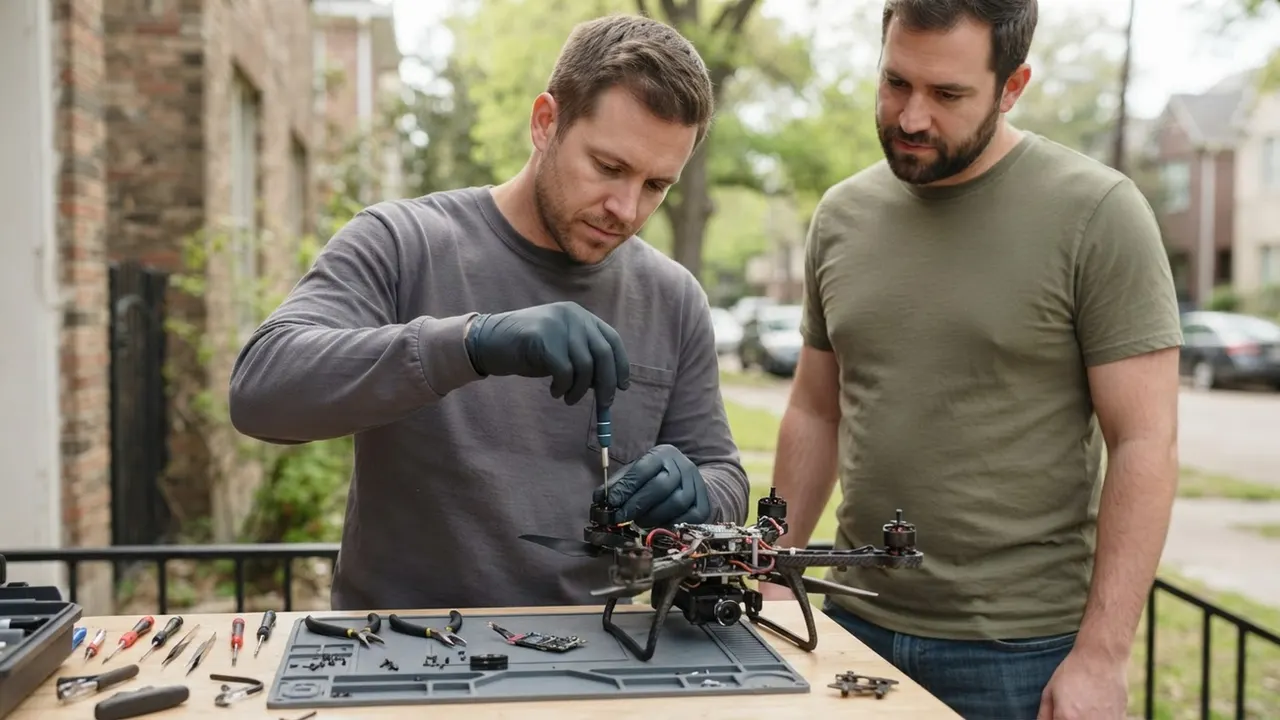 Drone RepairWhen a hard landing damages more than the radio, our full drone repair bench handles airframe, motor and board work in one ticket. Houston pilots often pair it with controller service so the whole kit is tested together before the next flight.Explore →
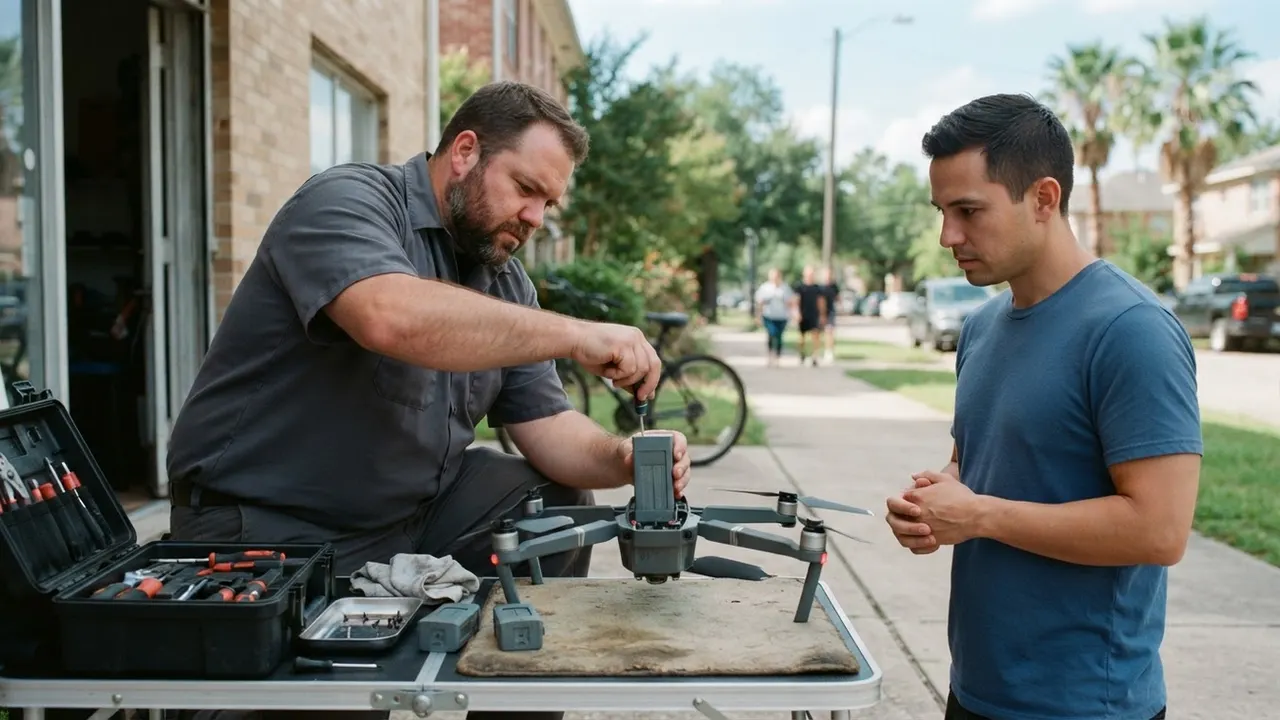 Drone Battery ReplacementSwollen LiPo packs are a leading cause of transmitter brownouts. We test cell voltage under load and replace packs that no longer hold spec, so your controller gets clean power through every stick input.Explore →
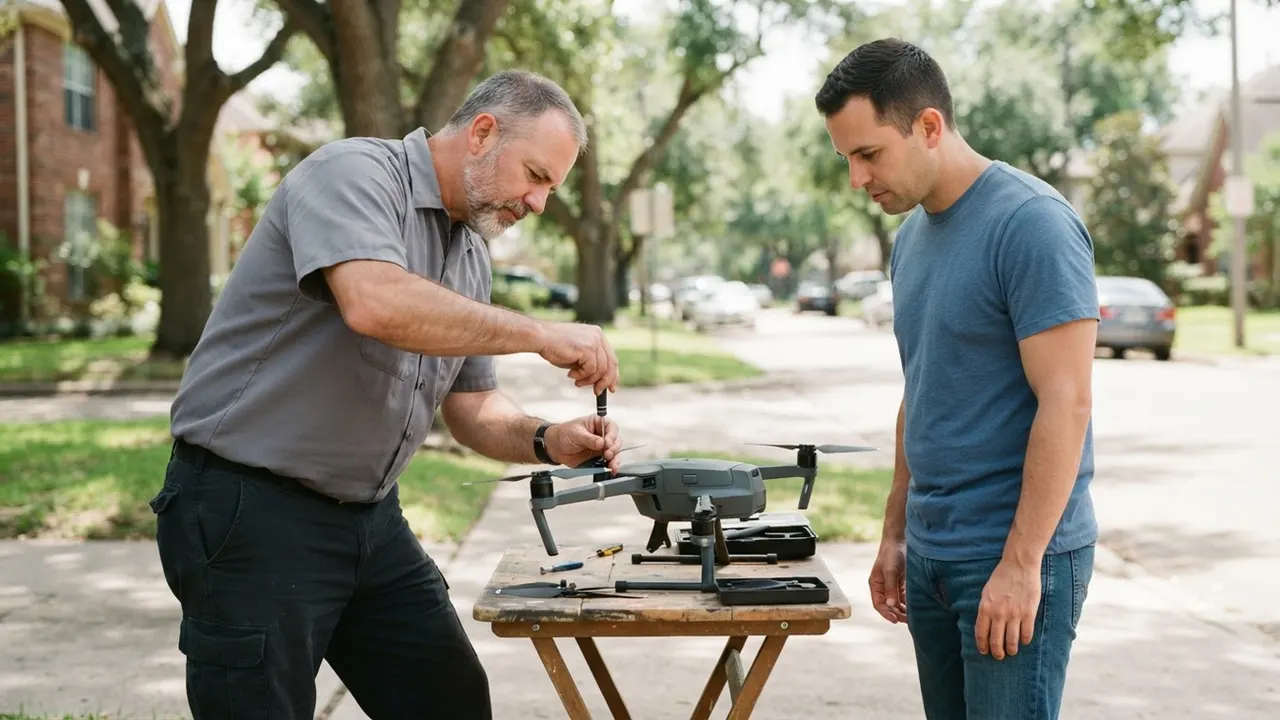 Drone Propeller ReplacementBent props cause vibration that masks controller faults during test flights. We swap damaged blades before range testing so we can tell a radio problem from a balance problem.Explore →
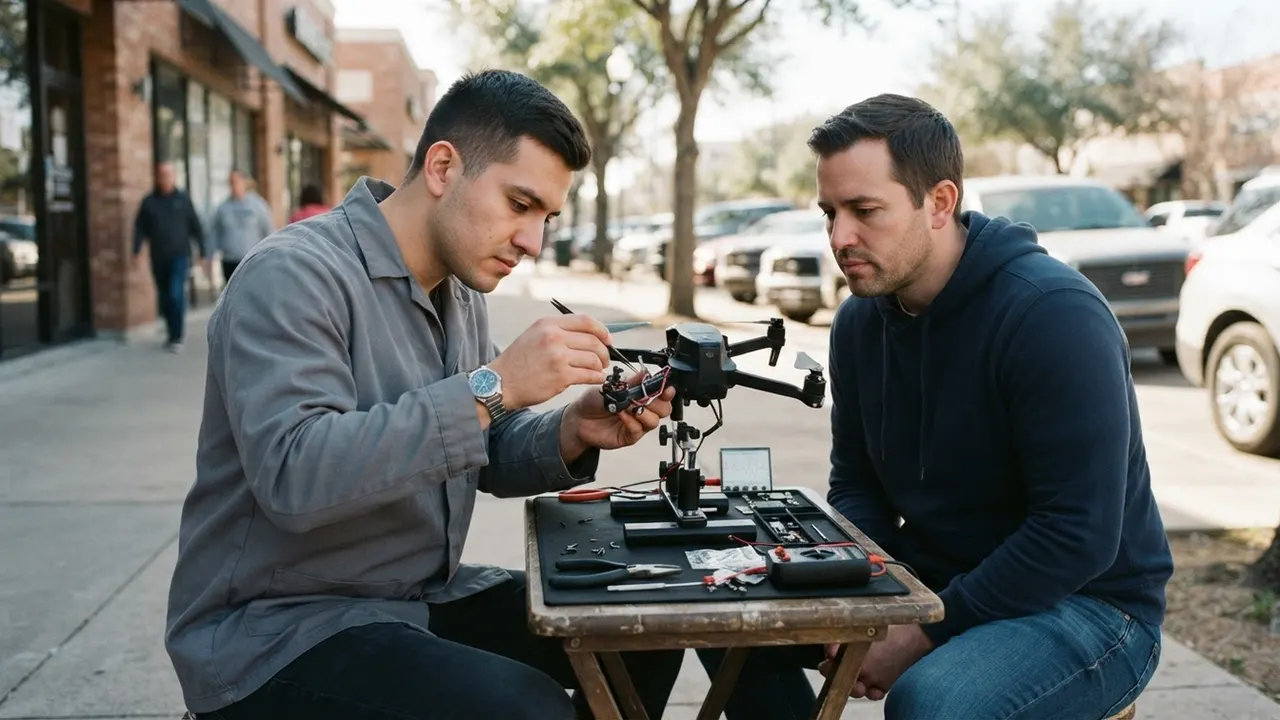 Drone Motor RepairA failing brushless motor can mimic a transmitter fault by causing erratic response. We bench-test each motor and ESC so you are not paying for radio work that will not solve the real issue.Explore →
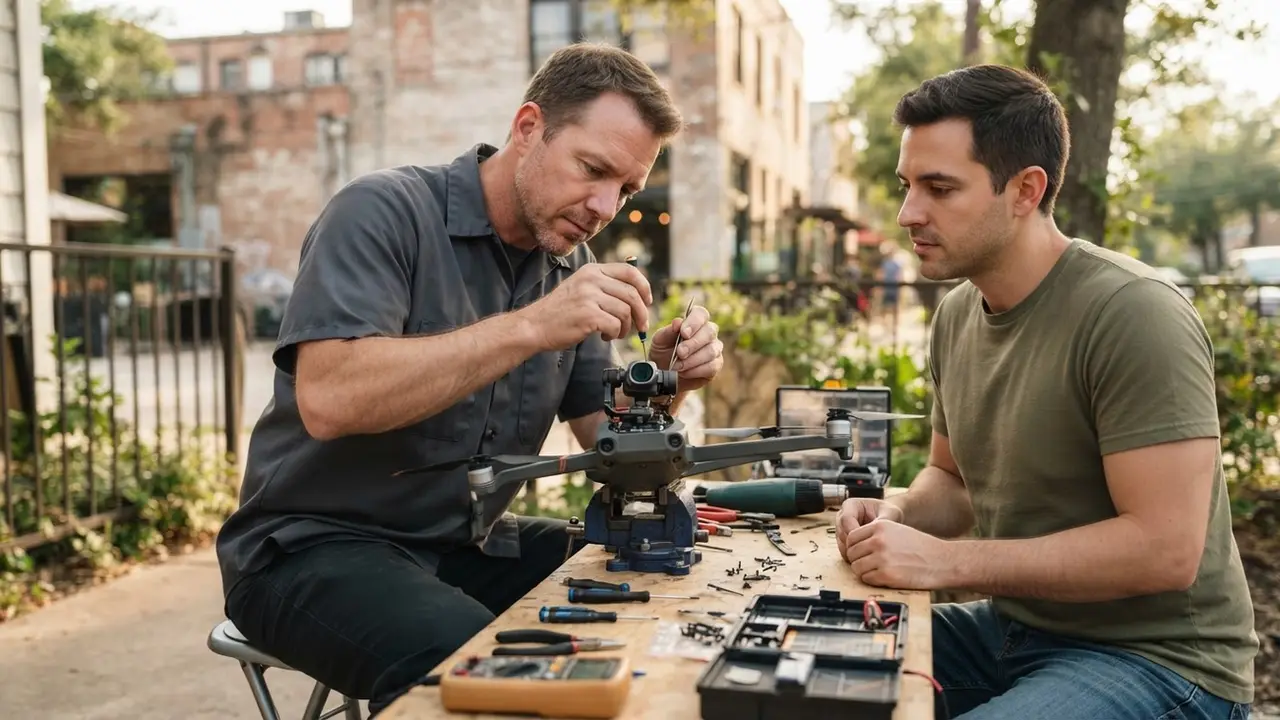 Drone Gimbal RepairGimbal malfunction often shows up as unresponsive camera tilt on the controller. We separate gimbal faults from radio faults during diagnostics so the repair goes to the right bench.Explore →
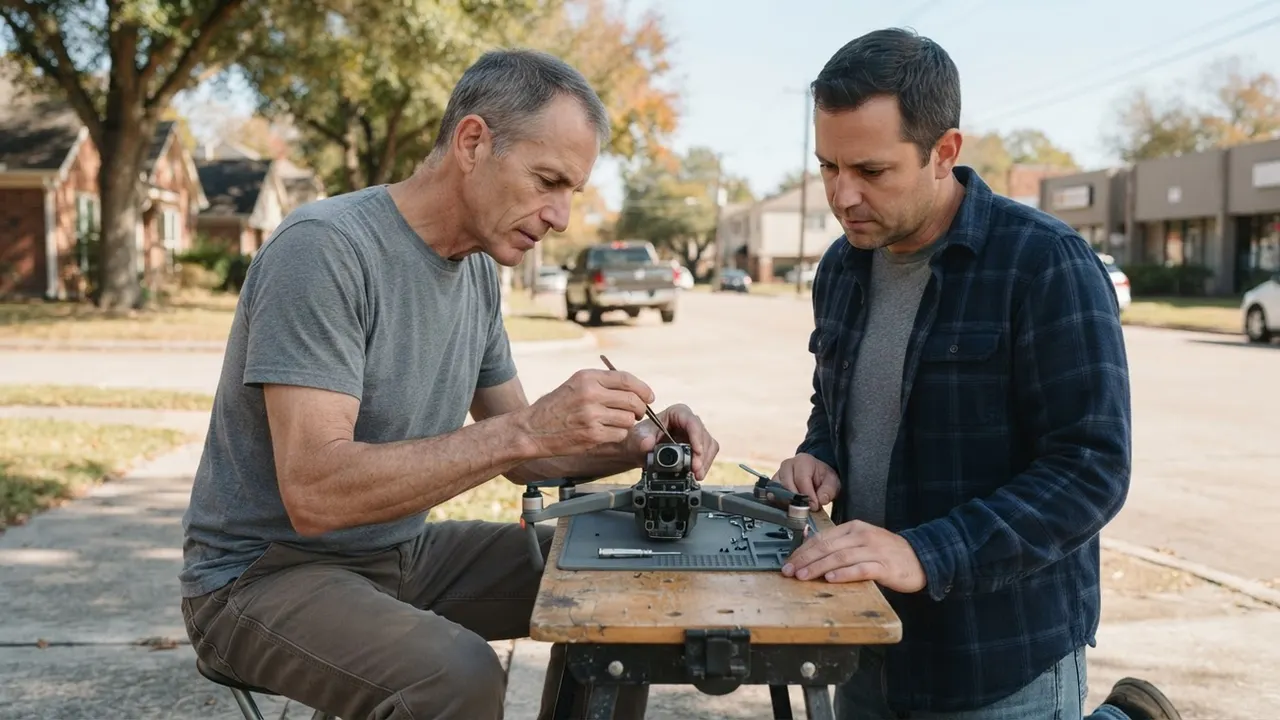 Drone Camera RepairA camera black screen can trace back to a controller video board or a failed camera module. We test both ends of the signal path before quoting.Explore →
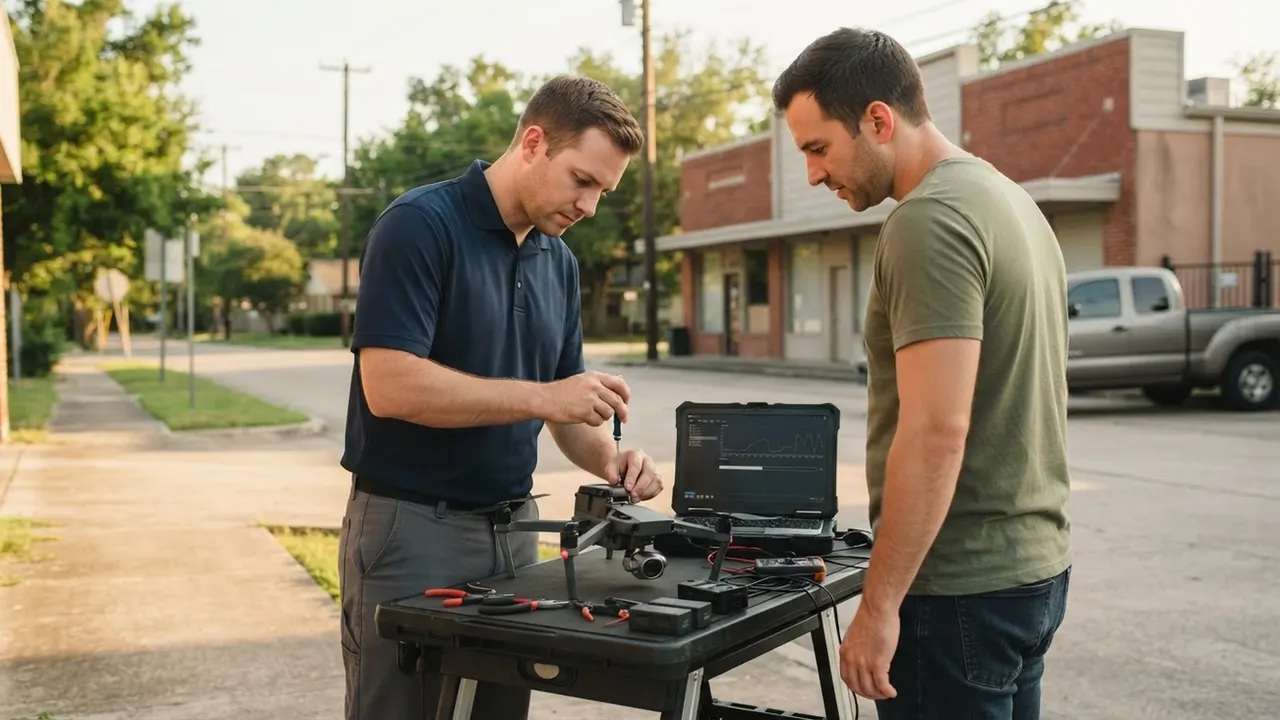 Drone Firmware UpdatesFirmware mismatches are a top cause of pairing failures. We flash matched firmware to controller and aircraft, then re-pair and range test so the link holds.Explore →
 Drone Software RepairApp crashes and corrupted flight logs can look like radio failure. We reinstall and re-sync the control app, then confirm stick response on the bench.Explore →
Call +1 281 555 4468 and we will book your bench slot, usually the same day. Diagnostics are $45 and credited toward the repair, and every job carries a 90-day workmanship warranty. Bring the controller and the aircraft if you can, and we will range-test before you leave.
Book a repair +1 281 555 4468 →Call us at +1 281 555 4468 or stop by the shop. We are open Monday through Friday, 8 a.m. to 6 p.m., and we answer emergency calls 24/7 for commercial operators. Most diagnostics are done the same day you drop off.