IMU, compass, and gimbal tuning done right the first time

Drone sensor calibration Houston TX that stops drift and flyaways

Drone sensor calibration Houston TX is the fastest way to stop a quad that drifts, toilet-bowls, or refuses to hold a hover. We handle Houston TX drone sensor calibration for DJI, Autel Robotics, Parrot, and Skydio owners who need their aircraft flying straight again. If your drone is pulling left, losing GPS lock, or throwing compass errors, bring it in today.

↗
Fast online booking

Request service today

Tell us what is happening. Our local team will confirm your visit shortly.

No spam. No obligation. Just practical help.
Thanks — we'll call shortly to confirm your visit.
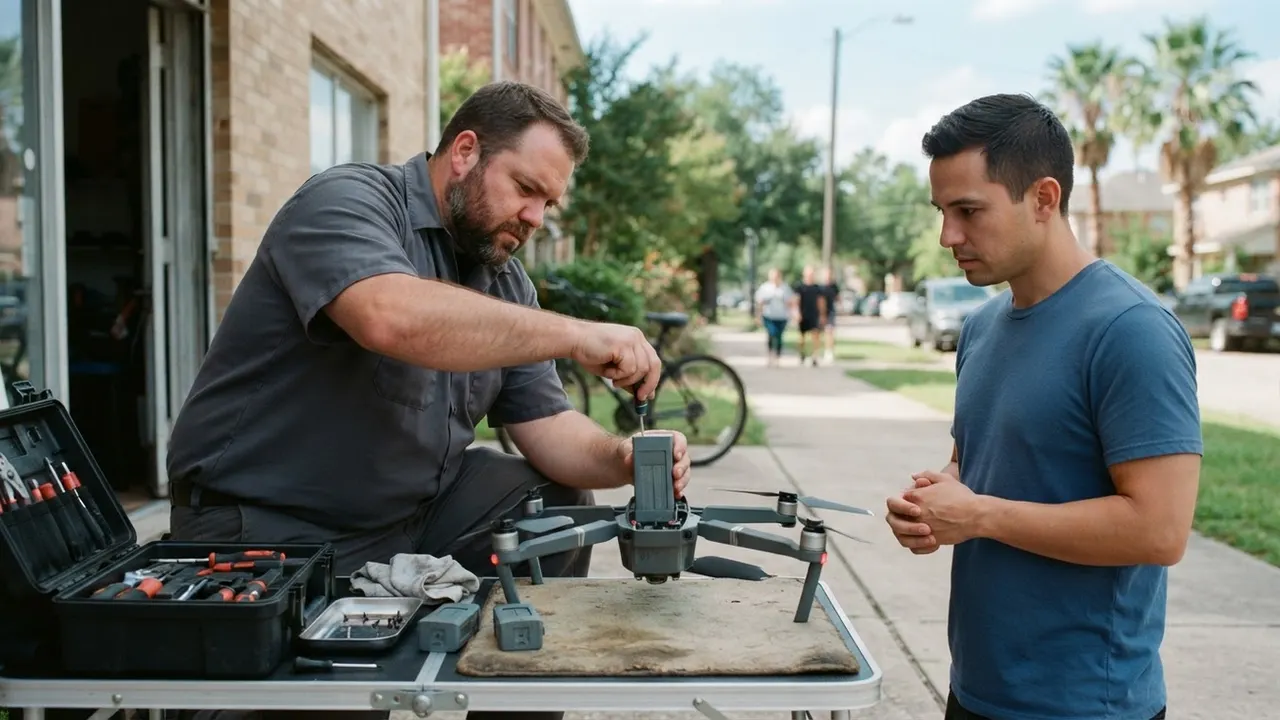
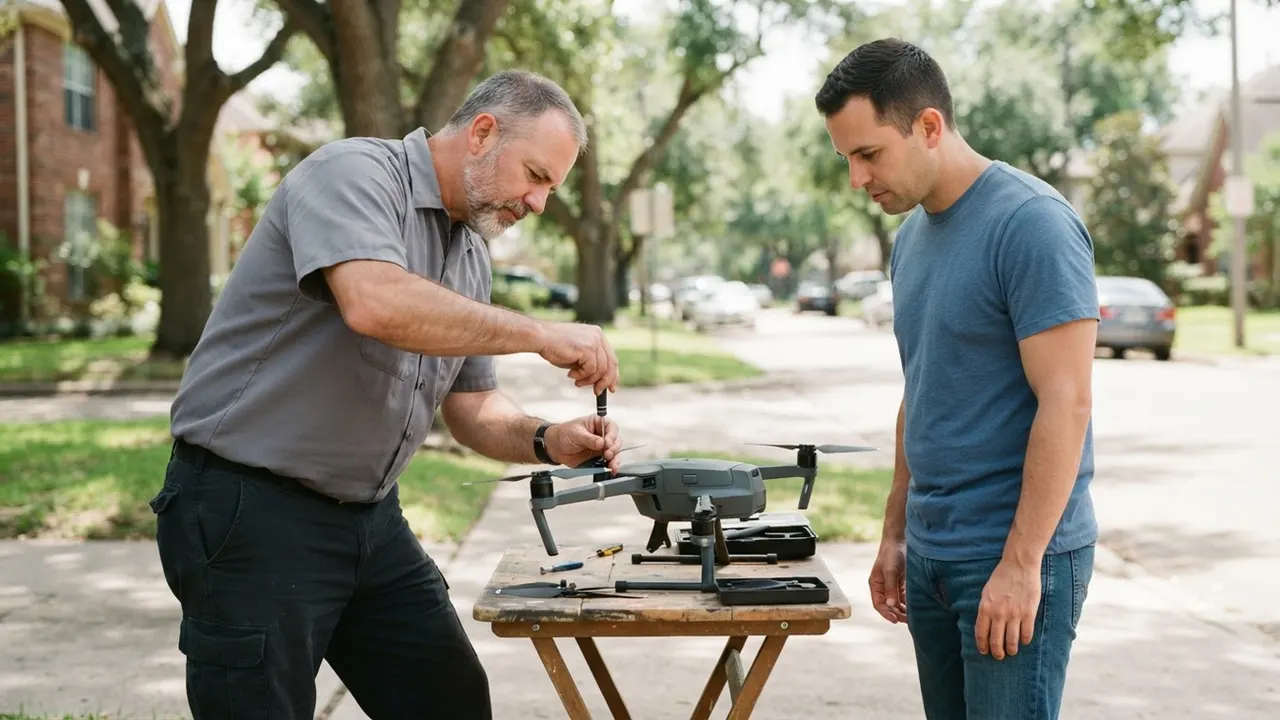
Drone repair in Houston : finished result of a high-quality Drone repair job
Careful work. Honest options.
About this service

Drone sensor calibration Houston TX done by working techs

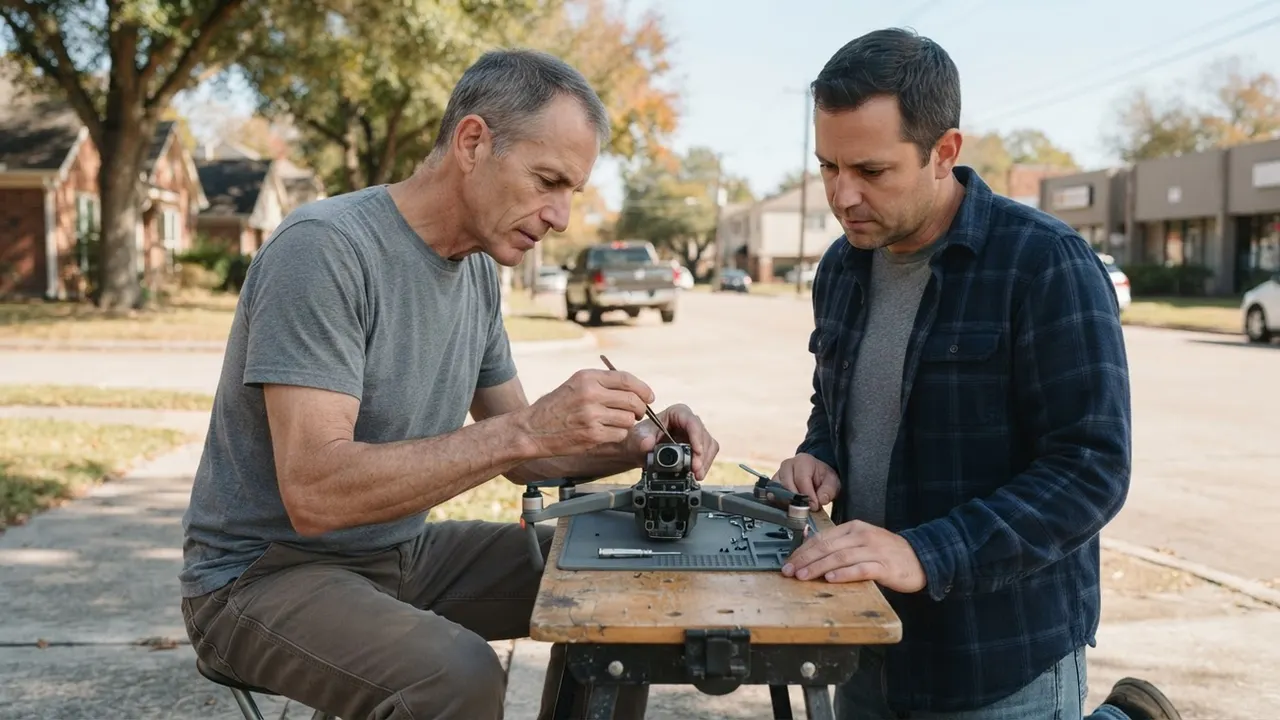
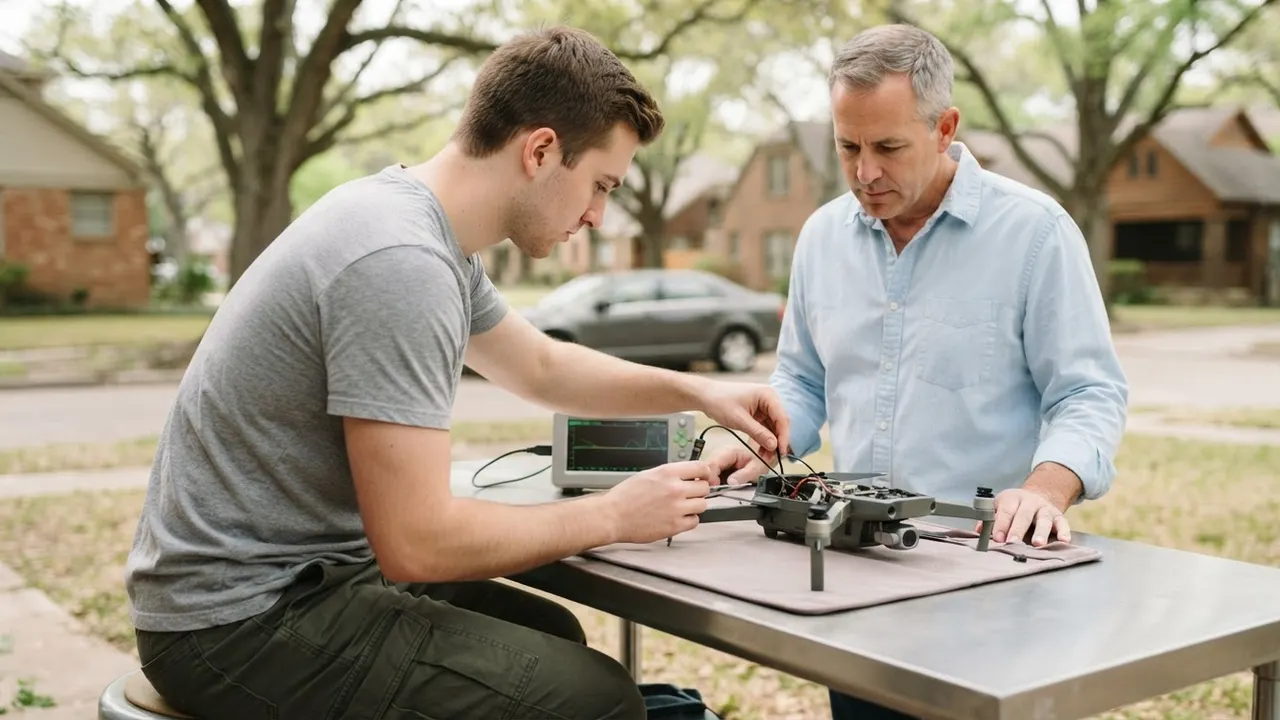
Drone sensor calibration Houston TX is the process of resetting and re-zeroing the IMU, compass, barometer, and gimbal so the flight controller trusts the data it receives. We run each axis on an IMU calibration stand, verify accelerometer and gyro drift with an oscilloscope, then re-level the gimbal on a flat granite block. A proper calibration takes 45 to 90 minutes and catches problems a quick field calibration never will.

Houston flying conditions beat up sensors fast. Summer heat pushes LiPo batteries past 110 degrees inside a closed case, and that swelling throws off the IMU baseline. Humidity along the Gulf Coast corrodes compass modules and causes the dreaded compass calibration error mid-flight. If you search for drone sensor calibration near me Houston and keep getting the same drift, the fix is a bench calibration, not another field spin.

  • ✓ Stable hover, no drift
  • ✓ Fewer compass errors
  • ✓ Level gimbal footage
  • ✓ Longer motor and ESC life
What's included

What our calibration service includes

Every calibration package covers the core sensor work. If we find damage during the process, we call you with a quote before doing anything else. Here is what is standard on every bench visit.

✓

IMU accelerometer and gyro reset

We run the six-face accelerometer routine on a leveled IMU calibration stand and re-zero the gyro. This is the step that fixes drift, toilet-bowl hover, and poor altitude hold. Verified twice before we move on.

✓

Compass and magnetometer tune

The compass gets calibrated on a non-metallic table away from chargers and compressors. We verify heading accuracy against a known reference. Houston's rebar-heavy construction makes this step critical for reliable return-to-home.

✓

Gimbal roll and pitch alignment

We true the gimbal with a calibration tool and a bubble level, then confirm the horizon on a 4K test clip. A level gimbal is what makes your footage usable for clients or inspections.

✓

Barometer and altitude check

We test the barometer against a known altitude reference and confirm altitude hold is stable. Drifting altitude readings cause sudden climbs or drops, and this check catches them before they show up mid-job.

✓

Test flight and written report

Every drone gets a 10 to 15 minute test flight in open air. You receive the flight log and a written summary of every adjustment, plus a 1-year workmanship warranty on the calibration itself.

How it works

How our calibration process works

01

Intake and diagnostics

You drop the aircraft off or we meet you at a shop partner in Harris County. We log the serial number, note any crash damage, and pull the flight logs. A multimeter check on the battery and a visual pass on the propellers and landing gear takes about 20 minutes. You get a call with findings the same day.

02

Sensor sweep

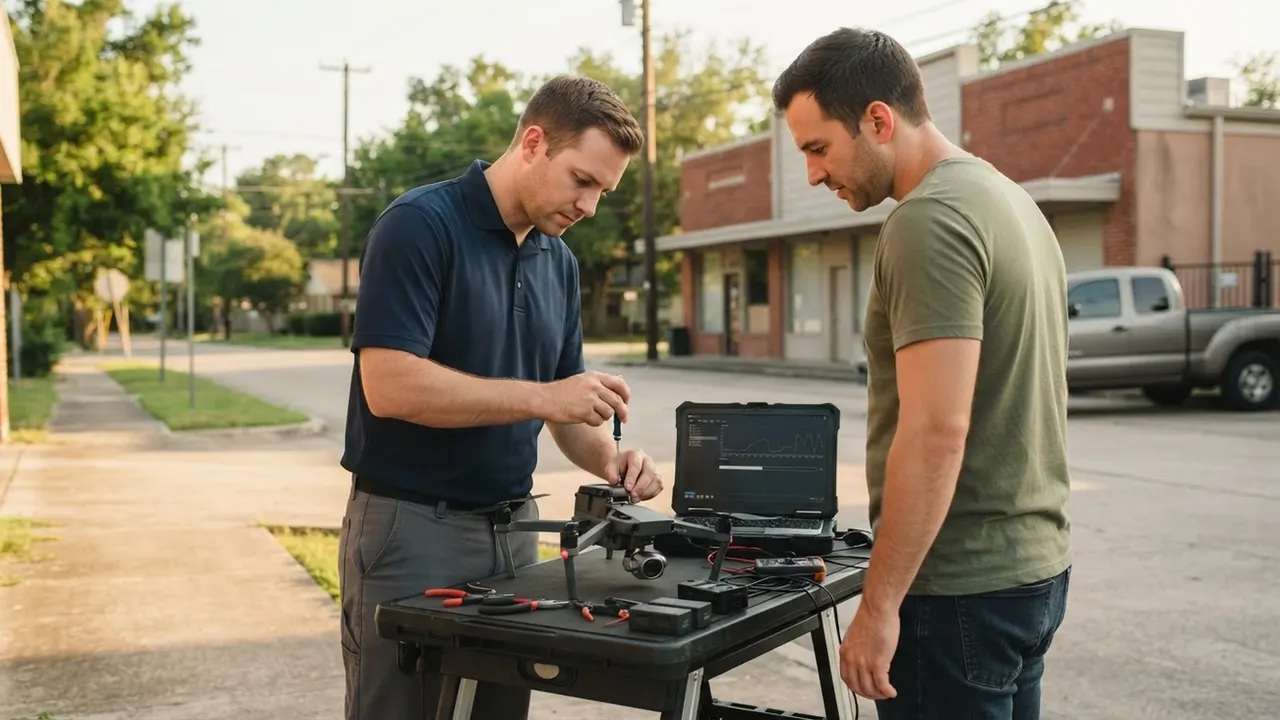
We connect the flight controller to our bench rig and read raw IMU, compass, and barometer data. An oscilloscope shows gyro noise and accelerometer drift that the app never displays. This step catches firmware issues, a failing gimbal, or a compass module that has taken on water. Takes 30 to 45 minutes.

03

IMU and compass calibration

The aircraft goes on an IMU calibration stand leveled to 0.1 degrees. We run the six-face accelerometer routine, then re-zero the gyro. The compass gets calibrated on a non-metallic table away from the shop's compressors and chargers. Each pass is verified twice before we move on.

04

Gimbal and camera alignment

We true the gimbal roll and pitch with a calibration tool, check the camera module for a black screen or focus drift, and confirm the horizon line on a 4K test clip. If the gimbal is damaged from a crash, we quote the repair before touching it. This step runs 20 to 30 minutes.

05

Test flight and sign-off

Every calibrated drone gets a 10 to 15 minute test flight in an open field. We check hover stability, return-to-home accuracy, and gimbal level in real conditions. You get the flight log, a written summary of what was adjusted, and a 1-year workmanship warranty on the calibration.
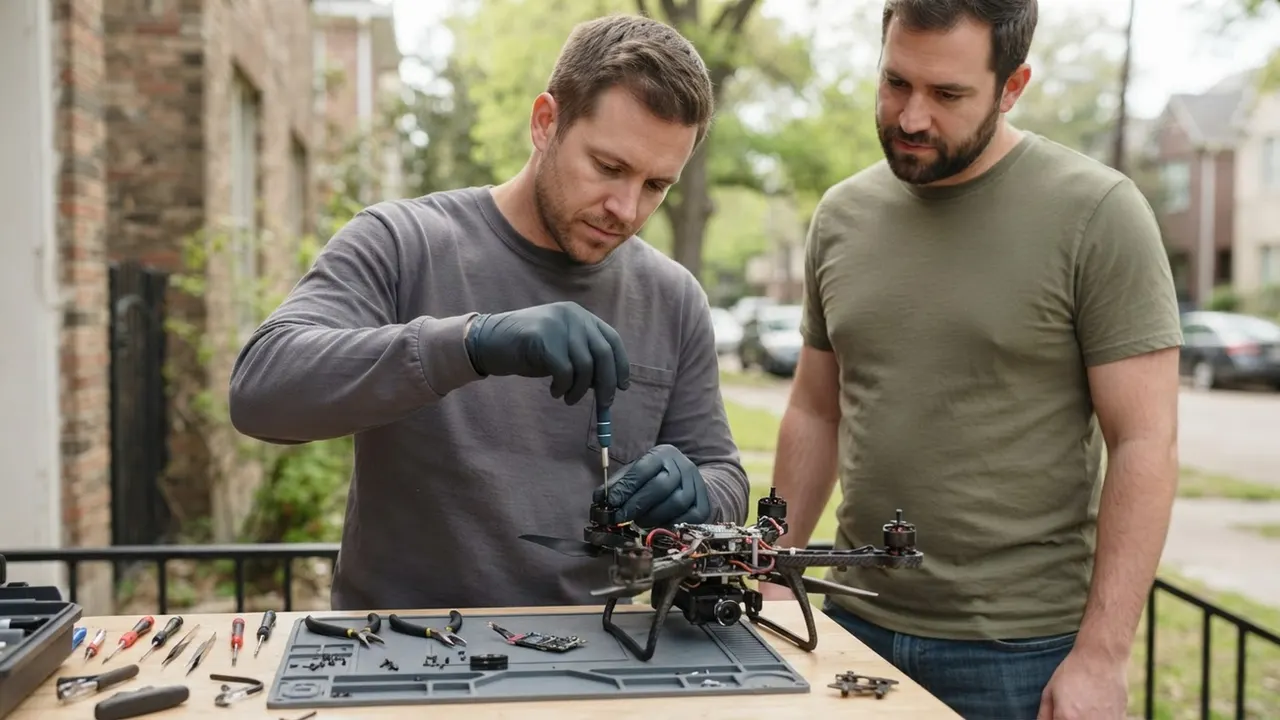
Tools & methods

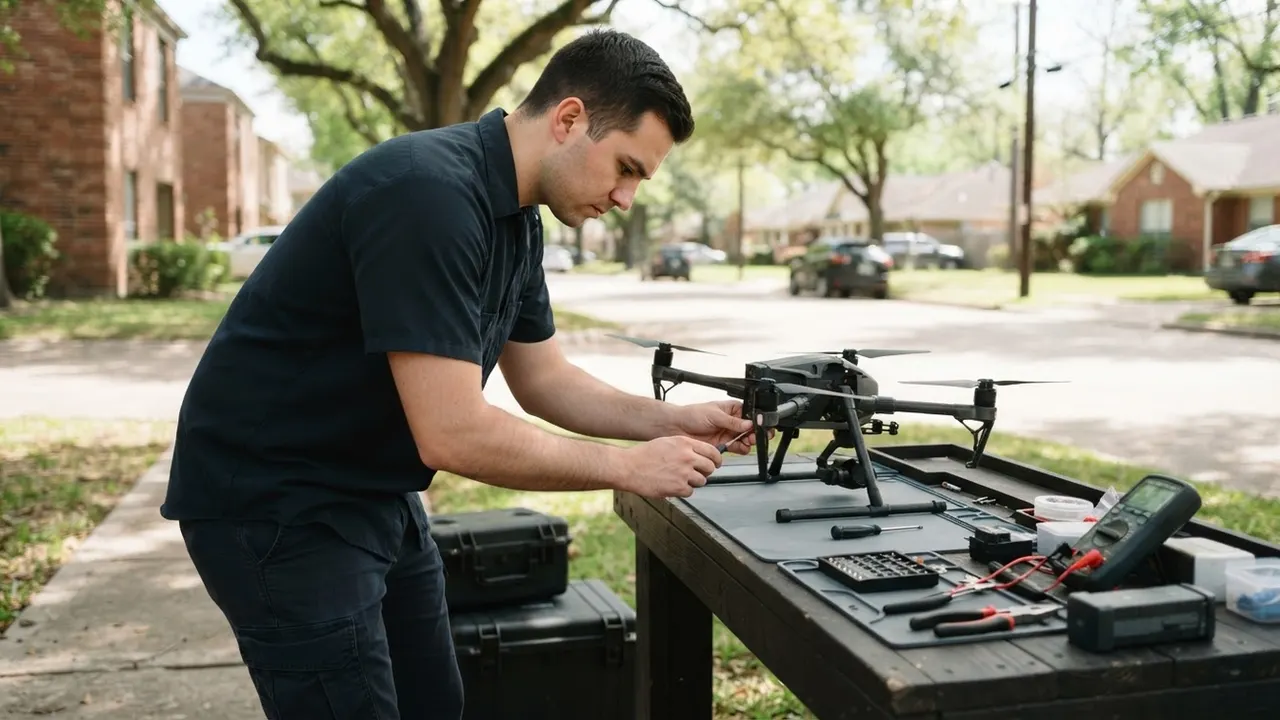
Tools and methods on our bench

Purpose-built equipment, used by trained technicians — so the job is done accurately the first time.

IMU calibration stand

Levels the aircraft to 0.1 degrees for the six-face accelerometer routine. Without a level stand, the calibration baseline is wrong from the start.

Oscilloscope

Reads raw gyro and accelerometer signal noise that the app never shows. Catches failing sensors before they cause a flyaway.

Multimeter

Tests LiPo battery voltage under load, checks motor winding resistance, and verifies ESC output. Catches electrical problems that look like sensor faults.

Gimbal calibration tool

Trues the gimbal roll and pitch axes to a known level reference. The difference between a crooked horizon and a clean shot.

Propeller balancer

Balances every propeller set to reduce vibration. Unbalanced props confuse the IMU and ruin gimbal footage.

Compressed air blower

Clears dust and debris from motors, gimbals, and vents. Houston pollen and dust build up fast and cause overheating.

Thermal imaging camera

Checks motor and ESC temperatures after a test flight. Hot components signal a failing part or a sensor problem causing over-correction.

Real results

Before and after.

Mavic 3 drifting two feet in hover

Before

A Bellaire roof inspector brought in a DJI Mavic 3 that drifted two feet left in every hover. Gyro drift read 4.2 degrees per second on the oscilloscope, and the compass showed a 12-degree heading error. The drone was unusable for paid inspections.

After

After a six-face IMU calibration and compass tune, gyro drift dropped to 0.1 degrees per second and heading error fell under 1 degree. Hover held within four inches. The customer flew 30 inspection jobs in the next month with no drift complaints.

Autel EVO gimbal tilting off horizon

Before

A real estate videographer in The Heights had an Autel Robotics EVO with a gimbal tilting two degrees off horizon. Client footage was unusable and reshoots were eating into her schedule. The gimbal ribbon cable showed early wear.

After

We replaced the ribbon cable, trued the gimbal roll and pitch on the calibration tool, and recalibrated the IMU. The horizon came back level on a 4K test clip. She shot four listings the following week with no tilt issues.

Holy Stone quad after tree crash

Before

A Clear Lake hobbyist crashed a Holy Stone quad into a tree. After the crash it would not hold a hover at all. The frame was bent, one landing gear leg was cracked, and the IMU baseline was off by 6 degrees.

After

We straightened the carbon fiber frame, replaced the landing gear, and ran a full IMU and compass calibration. The drone flew better than new two days later. Hover held steady and return-to-home landed within three feet of launch.

Problems we solve

Sensor problems we fix for Houston pilots

Most drone complaints trace back to a sensor that is out of spec. Here are the ones we see every week, and what happens if you keep flying on bad data.

Ask a pro →
01

Drone drifts left or right in hover

We re-zero the accelerometer and gyro on a leveled stand, then verify hover in ATTI mode. Most drift complaints are gone after one bench calibration. If a motor or propeller is contributing, we catch it in the same visit.

↗
02

Compass calibration error mid-flight

We recalibrate the magnetometer away from interference and check the compass module for corrosion. If the module has taken on water, we replace it. You get a verified heading and a return-to-home that lands where it launched.

↗
03

Gimbal tilts and footage is crooked

We true the gimbal roll and pitch with a calibration tool, check the ribbon cable, and verify the horizon on a test clip. If the gimbal motor is failing, we quote the repair before touching it.

↗
04

Altitude hold wanders up and down

We test the barometer against a known reference and recalibrate it. If firmware is the culprit, we flash the latest build and recalibrate. Altitude hold comes back within a foot or two.

↗
Transparent pricing

What calibration costs in 2026

$95 - $220 for standard calibration; $250 - $650 if crash or water damage repair is needed

Typical 2026 pricing for drone sensor calibration in Houston runs $95 to $220 depending on the airframe and how many sensors need work. A basic IMU and compass tune sits at the low end. A full IMU, compass, and gimbal calibration on a DJI Mavic or Autel Robotics EVO lands in the middle. If diagnostics uncover crash damage, water damage, or a failed gimbal, we quote that repair before starting. No surprise invoices.

A calibration costs far less than replacing a drone or losing a client over bad footage. We quote before we start, document every adjustment, and back the work with a 1-year warranty.

01Number of sensors

An IMU-only tune costs less than a full IMU, compass, and gimbal calibration. Most customers need all three, and bundling them is cheaper than booking separate visits.

03Damage found during diagnostics

A bent frame, cracked landing gear, or failed gimbal motor adds repair cost. We call you with a number before touching anything. Most customers approve the work because it is cheaper than replacing the drone.

04Battery condition

Swollen or failing LiPo batteries need replacement before calibration holds. We test every pack under load. A new battery adds to the bill but prevents the drift from coming back.

Proof you can check

Credentials and reviews

✓
FAA Part 107 Remote Pilot CertificateFederal Aviation Administration
✓
Manufacturer Authorized Repair CertificationDJI and Autel Robotics
✓
ISO 9001 Aligned Bench ProceduresInternal quality program
✓
OSHA Safety ComplianceOccupational Safety and Health Administration
Customer reviews

What Houston pilots say

★★★★★
“My Mavic 3 was drifting two feet on every hover and I could not trust it over a roof. Houston Drone Repairs Pros ran a full IMU and compass calibration and showed me the before-and-after numbers. Hover is dead steady now. I have flown 30 inspection jobs since with zero drift issues.”
MT

Marcus T.Roof inspector, Bellaire

✓ Verified
★★★★★
“I crashed my Holy Stone into a tree and after that it would not hold a hover at all. They found a bent frame, fixed it, and recalibrated everything. Picked it up two days later and it flies better than when it was new. Fair price and they explained what went wrong.”
DR

Danny R.Hobbyist, Clear Lake

✓ Verified
Good questions

Frequently Asked Questions

+1 281 555 4468 →

Most calibrations run $95 to $220 in 2026, depending on the airframe and how many sensors need work. A basic IMU and compass tune sits at the low end. A full IMU, compass, and gimbal calibration on a DJI Mavic or Autel Robotics EVO lands in the middle. If we find crash damage or a failed gimbal, we quote that separately before starting.

Houston Drone Repairs Pros runs a calibration bench in Harris County and serves the whole metro, from Downtown Houston and The Heights to Katy, Pearland, and Clear Lake. Call +1 281 555 4468 and we will set a drop-off time. Same-day slots are usually open on weekdays, and we can meet you at a partner location if you are outside the loop.

Heat, humidity, and hard landings all push sensors out of spec. Houston summers cook LiPo batteries and warp IMU baselines, while Gulf humidity corrodes compass modules. Add a crash or a rough landing and the accelerometer drifts. Once the flight controller trusts bad data, you get drift, toilet-bowl hover, or a flyaway. A bench calibration resets all of it.

Yes. Every calibration ends with a 10 to 15 minute test flight in an open field. We check hover stability, return-to-home accuracy, and gimbal level in real air, not just on the bench. You get the flight log and a written summary of every adjustment. If the test flight shows any remaining drift, we go back to the bench at no extra charge.

Ready when you are

Book Drone sensor calibration Houston TX today

Stop flying a drone that drifts. Call Houston Drone Repairs Pros at +1 281 555 4468 and we will get your sensors tuned, tested, and back in the air. Same-day slots, flat bench pricing, and a 1-year workmanship warranty on every calibration.

Book calibration +1 281 555 4468 →
Request an appointment

Get your drone back in the air

Call us at +1 281 555 4468 or stop by the shop. We are open Monday through Friday, 8 a.m. to 6 p.m., and we answer emergency calls 24/7 for commercial operators. Most diagnostics are done the same day you drop off.

Call anytime+1 281 555 4468Email the office[email protected]
Office hoursOpen 24 hours · 7 days a week
Request received — our team will be in touch shortly.
Tap to call+1 281 555 4468