Drone water damage repair: what to do in the first hour
Drone water damage first hour Houston TX: cut power, pull the battery, skip the rice, and get the airframe on a bench within 24 hours before corrosion sets in.
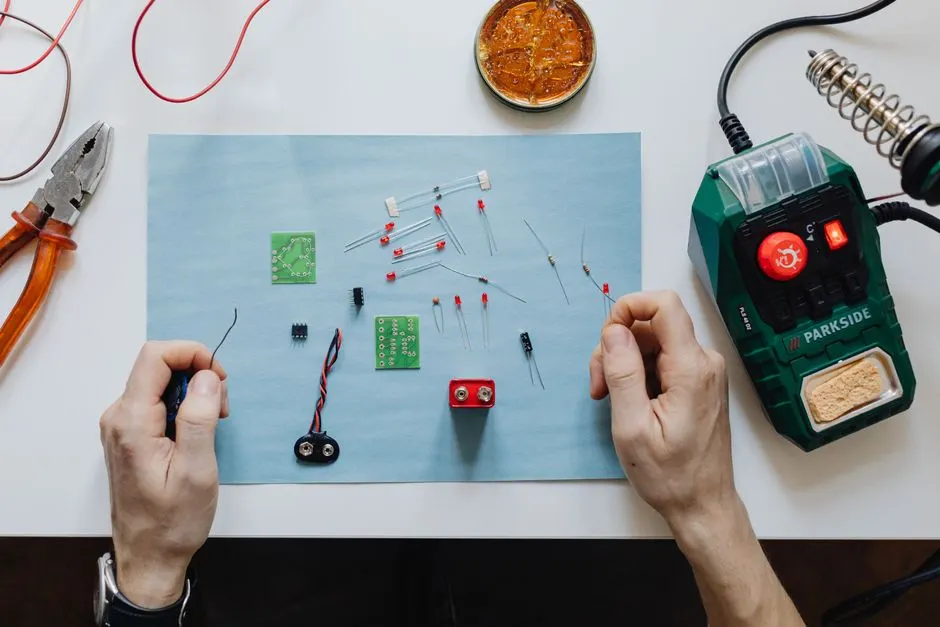
In the first hour after a drone goes into water, cut all power, pull the battery, and get the airframe to a bench - do not power it on to "test" it. That single decision is the difference between a $150-$250 board-level cleanup and a $500-$900 replacement of the flight controller, ESC stack, and gimbal. The rest of this post walks through the exact sequence we run at our Houston bench, why our local water chemistry makes corrosion faster here than in most of the country, and the mistakes that quietly total a drone before it ever reaches a technician.
Drone water damage first hour Houston TX response is a damage-control protocol: it is the sequence of physical actions you take in the 60 minutes after a drone is submerged, splashed, or rained on, and it exists to stop current flow and corrosion before either one becomes permanent.
The first hour, minute by minute
Houston drone water damage repair outcomes track almost perfectly with how fast the airframe was de-energized, so treat the first 60 minutes as a checklist, not a panic.
- 0-2 minutes: Retrieve the drone. If it is in a bayou, ditch, or pool, do not wade in - the water is the hazard, not the drone. Kill the motors from the controller if they are still spinning, then power the controller off too.
- 2-5 minutes: Power the aircraft off if it is somehow still on. Press and hold the button until every LED is dark.
- 5-8 minutes: Remove the battery. On a Mavic, Air, or Mini, that is a slide-and-lift; on a Phantom, it is a rear latch. If the pack is swollen or warm, set it on concrete outside, away from anything flammable, and leave it there for 30 minutes.
- 8-15 minutes: Remove the microSD card, the gimbal cover, and any ND filters. Those are the cheapest parts to save and the easiest to forget.
- 15-30 minutes: Blot - do not wipe - the shell with a microfiber towel. Tilt the drone nose-down so water drains out of the motor bells and the gimbal housing.
- 30-60 minutes: Bag the drone with a desiccant pack and call a repair bench. Do not put it on a charger, do not put it in rice, and do not spin the props to "see if it still works."
If you are not sure whether the drone took on water internally, a bench Drone diagnostics Houston TX session with a current-limited power supply will tell you in about 20 minutes whether the board is drawing normal idle current or shorting on one of the rails.
Why the first hour decides the repair bill
Water does not kill drones - electricity plus water does, and the second-place killer is corrosion, which starts within minutes and accelerates for the first 24 to 72 hours.
Two things happen the moment a powered drone hits water. First, the water bridges traces that were never meant to touch, and current flows where it should not. That is what pops ESCs, fries the flight controller, and takes out the gimbal's ribbon cable. Second, dissolved minerals in the water begin oxidizing solder joints and connector pins. The visible damage shows up in hours; the invisible damage keeps working on the board for days.That is why the single most valuable thing you can do is remove the battery. A drone sitting in a bag with no battery is chemically stable for a day or two. A drone sitting in a bag with the battery still in it is a slow-motion short circuit.
We see this constantly on the west side of town, where a lot of our customers fly over Buffalo Bayou and the Addicks and Barker reservoir spillway areas. A drone that goes in that water and gets to us within 24 hours usually needs a board clean, a motor flush, and a gimbal ribbon - call it $180 to $320 in 2026 pricing. The same drone that sat in a closet for a week with the battery in it typically needs a full flight controller and ESC stack, which pushes the ticket to $500-$900, and on some older airframes that is more than the drone is worth.
What to do in the first hour of drone water damage in Houston TX
What to do in the first hour of drone water damage in Houston TX comes down to four moves: kill power, pull the battery, dry without heat, and get it on a bench.
Kill power and pull the battery
Every second the battery is connected, current is finding a path it should not. Pull the pack before you do anything else - before you dry the shell, before you take photos for your insurance claim, before you call anyone.
If the battery itself went in the water, treat it as compromised. A wet LiPo can vent, swell, or catch fire hours later, and Houston's summer heat makes that worse. Set it on a concrete slab outdoors, away from the house, and do not charge it. Bring it to us and we will test it under load; if it is done, a Drone battery replacement Houston TX is usually a same-day swap.
Dry it the right way
Airflow and desiccant, not heat. A hair dryer on high will push water deeper into the motor bells and can warp the gimbal housing. A bag of rice does almost nothing - rice absorbs humidity from the air, not water trapped inside a sealed airframe, and the dust it leaves behind is one more thing we have to clean off the board.
What actually works: a 1-gallon zip bag, two or three silica gel packs, and 24 hours at room temperature. If you have a food dehydrator that runs at 95-104°F, that is acceptable. An oven is not.
Do not power it on to "test" it
This is the mistake that costs people the most money. A drone that got wet and was never re-powered has a good chance of a cheap repair. A drone that was powered on "just to see" after a dunking usually has at least one shorted rail, and shorted rails take components with them.
If you want to know whether it survived, let a technician do it with a current-limited supply. That is what our Drone water damage repair Houston TX bench does first on every wet airframe.
Why Houston water is harder on drones than fresh water
Houston's water is not neutral, and that changes the repair math - the same dunking that is a minor event in a mountain lake is a serious one in a Harris County bayou.
Three local factors matter:
- Mineral content. Our tap water and much of our surface water runs hard, with high calcium and magnesium. Those ions plate onto connector pins and accelerate galvanic corrosion between dissimilar metals - typically the aluminum motor mounts and the steel screws holding them.
- Gulf-adjacent humidity. Houston averages 75% relative humidity most of the year, and it is higher in the summer. A drone that is "mostly dry" on the outside can still be holding moisture against the board for days.
- Storm water and runoff. Water that ran off a roof, a parking lot, or a construction site carries grit and hydrocarbons. That grit is abrasive inside motor bearings, and the hydrocarbons leave a film that traps moisture against the PCB.
Practically, that means a drone recovered from a Houston bayou needs a proper board clean with isopropyl alcohol and a soft brush, not just a dry-out. We also flush and re-lubricate motor bearings on any drone that went into moving water - a Drone motor repair Houston TX that costs $40-$70 per motor now is much cheaper than replacing a bearing-seized motor later.
If the drone went into salt water anywhere along the coast - Galveston, Seabrook, the Kemah area - tell us that up front. Salt water is a different protocol entirely, and the clock is much shorter. We treat salt-water drones as same-day emergencies and start the rinse within hours of arrival.
Common mistakes that turn a $180 repair into a $600 one
The expensive mistakes are almost always the same five, and they all happen in the first hour.
- Powering it on to check. The single most expensive habit. If the drone is wet, every second of power is a chance to short a rail.
- Leaving the battery in. Even with the drone off, a connected pack keeps the power distribution board live and can feed a short.
- Using heat to dry. Hair dryers and ovens warp plastics, cook gimbal ribbon cables, and push water deeper into sealed housings.
- Rice. It does not work, and the starch dust is a contaminant we have to remove before we can even inspect the board.
- Waiting a week to bring it in. Corrosion does not pause. A drone that arrives on day one is a cleaning job; the same drone on day seven is often a parts job.
One more: do not try to spin the props by hand to "drain" the motors. That pushes grit into the bearings. Tilt the drone and let gravity do it.
When to call a professional
Call a professional the moment the drone has been in any water for more than a splash - especially bayou water, pool water, or salt water - or any time it was powered on while wet.
At Houston Drone Repairs Pros, we run every wet airframe through the same sequence: full teardown, ultrasonic or manual board clean, corrosion inspection under magnification, motor flush and re-lube, gimbal ribbon test, and a current-limited power-up before anything gets reassembled. If the board is salvageable, we tell you. If it is not, we tell you that too, and we quote the parts before we touch them.
We also handle the related damage that usually shows up alongside water intrusion - a Drone gimbal repair Houston TX for the ribbon and motor assembly, a Drone camera repair Houston TX when the lens housing took on moisture, and a Drone frame repair Houston TX when the shell cracked on impact with the bank or the pool floor.
If your drone is a work machine - inspection, mapping, thermal, or ag - we know downtime is the real cost. Tell us the model and the payload when you call and we will tell you what we have on the shelf before you drive over.
Frequently Asked Questions
What to do in the first hour of drone water damage in Houston TX?
Cut power, pull the battery, remove the SD card and gimbal cover, blot the shell, and bag the drone with desiccant. Do not power it on. Get it to a repair bench within 24 hours - corrosion in Houston's hard water starts within minutes and accelerates for the first three days.
How to fix drone water damage in Houston Texas?
The fix is a teardown, board clean with isopropyl alcohol, corrosion inspection, motor flush, and a current-limited power-up test. Most freshwater dunks that arrive within a day need 2-4 hours of bench time. Salt water or bayou water takes longer and often needs parts.
Where to get drone water damage repair in Houston TX?
Bring it to a shop that does board-level work, not a general electronics store. Houston Drone Repairs Pros handles water intrusion on DJI, Autel, and custom airframes, and we will tell you up front whether the repair makes financial sense for your model.
How much does drone water damage repair cost in Houston TX?
Typical 2026 pricing runs $150-$250 for a freshwater dunk that gets to us within 24 hours, $300-$500 when the flight controller or ESC stack needs replacement, and $500-$900 for salt water or a drone that sat wet for a week. Diagnostics are quoted before we start.
Can I fix drone water damage myself in Houston TX?
You can handle the first hour - power off, battery out, desiccant bag - and that alone saves most drones. The board clean and power-up test need a current-limited supply and magnification. Powering a wet drone on to "test" it is what turns a cheap repair into an expensive one.
Get help with Drone repair in Houston
If your drone is wet right now, stop reading and pull the battery. Then call us - we will tell you whether to bag it and drive over, or whether it is a same-day emergency.
Call Houston Drone Repairs Pros at +1 281 555 4468 and we will get your airframe on the bench before the corrosion wins.